 Poli Alert Politics & Civics
Related Articles



Iran accused the United States on Tuesday of committing “a clear violation of the ceasefire” after American forces launched what the Pentagon described as defensive strikes near the Strait of Hormuz, escalating tensions even as negotiations to end the war appeared to be advancing.
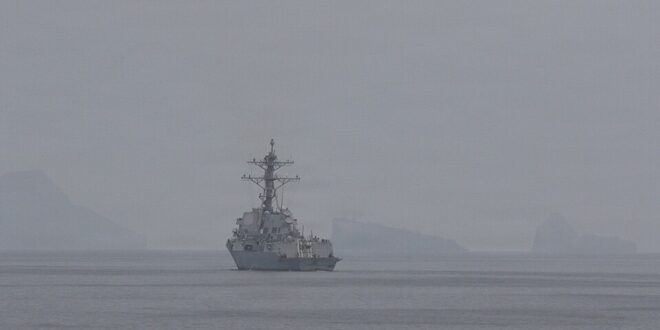
The U.S. military said late Monday that it carried out “self-defense strikes” targeting missile launch sites and Iranian boats allegedly attempting to deploy naval mines near Bandar Abbas. A U.S. defense official said the strikes were aimed at protecting American personnel and maritime operations in the region.
The renewed attacks came as Marco Rubio said negotiations with Iran were nearing completion.
“A deal could be finalized in a couple of days,” Rubio told reporters during a trip to India, adding that negotiators were now debating “a word, a sentence.”
But Tehran issued a sharply worded condemnation Tuesday, accusing Washington of undermining the fragile seven-week ceasefire that took effect April 8.
American forces had “committed a violation of the ceasefire in the Hormuz region over the past 48 hours,” Iran’s foreign ministry said in a statement.
Iran warned that it “holds the American regime responsible for all consequences arising from these hostile acts” and vowed it would “leave no act of aggression unanswered.”
The statement also accused the Trump administration of acting in “bad faith” while negotiations remained underway.
U.S. says operations remain defensive
Despite the confrontation, neither side announced the collapse of the temporary ceasefire that followed months of fighting triggered by U.S. and Israeli strikes against Iran beginning Feb. 28.
“U.S. Central Command continues to defend our forces while using restraint during the ongoing ceasefire,” Navy Capt. Tim Hawkins, a CENTCOM spokesman, said in announcing the strikes.
Iran’s Islamic Revolutionary Guard Corps claimed Tuesday it had shot down an American MQ-9 drone and forced another U.S. drone and an F-35 fighter jet to retreat after coming under fire. The Pentagon did not immediately comment on those claims.
The latest exchange came at a particularly delicate moment in diplomacy.
Senior Iranian negotiators were in Qatar this week as mediation efforts intensified. Iranian news agencies reported that Tehran is seeking the release of billions of dollars in frozen assets held abroad as part of a broader framework agreement.
Iranian Parliament Speaker Mohammad Bagher Ghalibaf remained in Qatar overnight for continued discussions, according to a diplomat familiar with the talks.
A senior Trump administration official told NBC News that negotiators are discussing a preliminary memorandum of understanding that could formally end the war and reopen the Strait of Hormuz, one of the world’s most critical shipping lanes.
The proposed framework would reportedly give both sides 60 days to negotiate a permanent peace agreement.
Trump links talks to broader Middle East diplomacy
Trump introduced a new complication into negotiations Monday by publicly tying any Iran agreement to expansion of the Abraham Accords.
The president urged countries including Qatar, Saudi Arabia and Pakistan to join the diplomatic framework.
A senior Arab official rejected the idea of linking the two issues, saying the immediate priority should be ending the conflict and reopening Hormuz before pursuing broader regional normalization efforts involving Israel.
“We need to get this done, then we start looking at resolving other issues,” the official said.
Trump also reiterated demands that Iran surrender or destroy its enriched uranium stockpile, a longstanding sticking point in negotiations.
In a social media post Monday, Trump said the material “will either be immediately turned over to the United States to be brought home and destroyed or … destroyed in place.”
A senior White House official said the position had already been communicated privately to Iranian negotiators and did not represent a new demand.
Tehran continues to insist its nuclear program is peaceful and maintains it has no intention of developing a nuclear weapon.
Meanwhile, Iranian Supreme Leader Mojtaba Khamenei warned Tuesday that the United States would no longer have safe operating positions in the region.
“The ticker of time will not go back and nations and countries of the region will no longer be shields of American bases,” Khamenei wrote on social media.

