 Poli Alert Politics & Civics
Related Articles



The Justice Department has subpoenaed four New York Times journalists over reporting about security concerns involving President Donald Trump’s newly retrofitted Air Force One aircraft, escalating the administration’s ongoing confrontation with the news media and drawing sharp criticism from press freedom organizations.
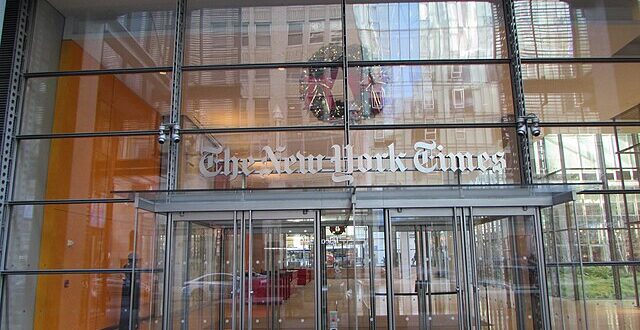
The subpoenas require Times reporters Julian E. Barnes, Eric Lipton, Tyler Pager and Eric Schmitt to appear before a federal grand jury in Manhattan next week, according to the newspaper. The Times said federal agents delivered several of the subpoenas directly to reporters’ homes.
The investigation centers on a Times report about security considerations involving the new presidential aircraft, a jet donated by Qatar that the U.S. government spent approximately $400 million modifying for presidential use before it entered service last week.
According to a person familiar with the matter who spoke on condition of anonymity because they were not authorized to discuss the issue publicly, FBI Director Kash Patel and other senior Justice Department officials met at the White House on Friday before the subpoenas were issued.
DOJ defends investigation
The Justice Department said the investigation targets unauthorized disclosures of classified information rather than journalists themselves.
“To be clear, reporters are not the targets, those leaking classified information are,” the department said in a statement.
The department added that it values the role of the press while maintaining that it has a responsibility to investigate unauthorized disclosures involving national security information.
“We are not going to ignore the law and stop investigating the people who work in the administration and think it’s okay to leak classified information impacting national security,” the statement said.
Times condemns subpoenas
The New York Times criticized the decision to compel testimony from its journalists.
“The appearance of federal law enforcement agents on the doorstep of news reporters should shock the conscience of any American who believes in the Constitution and the press freedom it protects,” Times attorney David McCraw said in a statement.
Press freedom organizations also condemned the move.
Bruce D. Brown, president of the Reporters Committee for Freedom of the Press, said the subpoenas departed from long-standing Justice Department practices designed to protect journalists and limit compulsory testimony to extraordinary circumstances.
Adam Steinbaugh, a senior attorney with the Foundation for Individual Rights and Expression, warned the action could discourage journalists and government officials from engaging in constitutionally protected newsgathering activities.
Air Force One report at center of dispute
The subpoenas stem from reporting about Trump’s use of two presidential aircraft during his recent overseas trip.
The president traveled aboard the newly commissioned Air Force One to Turkey but departed on one of the older presidential aircraft before later switching back to the new plane at Royal Air Force Mildenhall in England for the flight home.
The Times, citing anonymous sources, reported that the change occurred after the Secret Service raised concerns that the newer aircraft lacked certain advanced defensive systems, including some antimissile capabilities, during heightened tensions with Iran.
Trump denied that security concerns prompted the aircraft switch, saying the stop in England allowed military personnel stationed there to view the new aircraft.
When asked during the trip whether Iran posed a credible threat to Air Force One, Trump replied, “I have a threat all the time. I’m No. 1 on their list.”
Part of broader media conflict
The subpoenas represent the latest chapter in Trump’s broader conflict with major news organizations during his second term.
Earlier this year, the Justice Department issued subpoenas seeking testimony from reporters at The Washington Post and The Wall Street Journal as part of separate leak investigations. Those subpoenas were later withdrawn.
In April, then-Attorney General Pam Bondi rescinded a Biden administration policy that limited prosecutors’ ability to obtain journalists’ records during leak investigations. The revised policy restored prosecutors’ authority to use subpoenas, search warrants and court orders while requiring that such actions be narrowly tailored and generally provide advance notice to journalists.
The Justice Department has historically pursued leak investigations across multiple administrations, but efforts to compel journalists to testify before grand juries have remained relatively rare and have often generated opposition from media organizations and First Amendment advocates.

