

Energy Secretary Chris Wright said Sunday that gasoline prices in the United States have likely peaked but could remain elevated for months, signaling a shift from earlier Trump administration predictions that prices would fall quickly.
Appearing on CNN’s “State of the Union,” Wright said it remains unclear when Americans might see gas prices drop below $3 per gallon, walking back his earlier March forecast that such a decline could happen within weeks.
“I don’t know,” Wright said when asked for a timeline. “That could happen later this year. That might not happen until next year. But prices have likely peaked.”
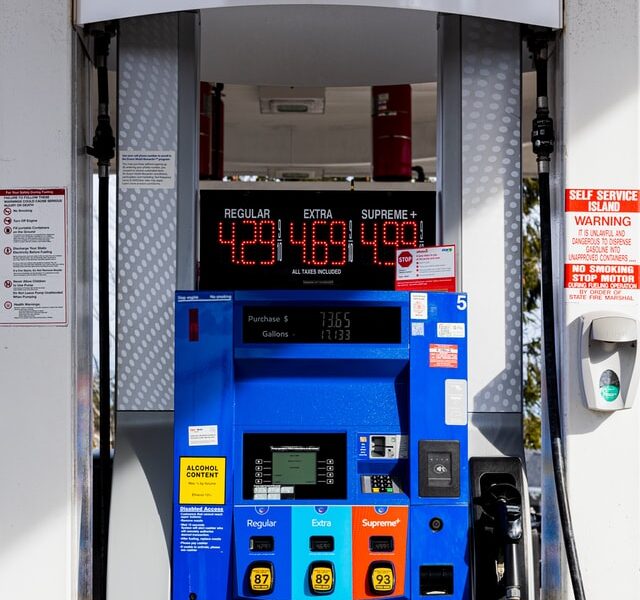
Gas prices have surged since late February, following U.S. and Israeli airstrikes on Iran that escalated into a broader regional conflict. Before the war, the national average for a gallon of regular gasoline stood at $2.98, according to AAA. As of Sunday, prices had climbed to about $4.05 per gallon.
The increase has been driven largely by instability in the Strait of Hormuz, a critical global shipping route through which a significant share of the world’s oil supply passes. Iranian actions to restrict maritime traffic in response to U.S. pressure have reduced shipments and pushed global oil prices higher.
The persistence of high fuel costs presents economic and political challenges for President Donald Trump, who campaigned in 2024 on lowering energy prices.
Earlier this year, Trump repeatedly described rising gas prices as a “short-term” effect of the conflict. In recent weeks, however, he has acknowledged that prices could remain elevated through the fall — and potentially be slightly higher by November.
Wright echoed that more cautious outlook, saying prices could fall later this year but may take until next year or beyond to approach earlier levels. He added that, when adjusted for inflation, prices near $3 per gallon would still be “pretty tremendous.”
The administration has defended its approach, emphasizing that national security priorities remain paramount even as energy costs rise.
Officials argue that maintaining pressure on Iran — including a naval presence affecting shipping routes — is necessary to achieve broader strategic goals. At the same time, the White House has sought to reassure Americans that markets will stabilize, pointing to Wright’s assessment that prices have likely peaked.
Democrats seized on Wright’s comments as evidence that the administration lacks a clear plan to reduce costs.
“I guess they’re surrendering,” said Rep. Tom Suozzi, a New York Democrat representing a competitive district.
Democratic National Committee Chairman Ken Martin said in a statement that rising prices are hitting working families hardest, adding that many Americans “can’t afford the Trump presidency.”
Sen. Andy Kim (D-N.J.) also criticized the administration, writing on social media that officials do not “have a plan to lower gas prices or get us out of this mess.”
Energy industry figures say the direction of gas prices will depend heavily on developments in the Middle East and the pace at which oil production and shipping can recover.
Dan Eberhart, an oil executive and Republican donor, said the situation reflects a common dynamic in energy markets.
“Oil prices rise like a rocket and fall like a feather,” he said, suggesting that even if supply improves, consumers may not see immediate relief.
The price spike underscores the vulnerability of global energy markets to geopolitical shocks, particularly in and around the Strait of Hormuz.
Disruptions in the waterway can quickly ripple through economies worldwide, increasing costs not only for fuel but also for transportation and consumer goods. Historically, energy price spikes have influenced voter sentiment in the United States, especially ahead of major elections.
With the Iran conflict ongoing and a fragile ceasefire still uncertain, the outlook for gas prices remains closely tied to geopolitical developments.
Analysts say a sustained drop in prices would likely require restored shipping through the Strait of Hormuz, increased oil production and broader regional stability — conditions that may take months to achieve.
For now, Wright’s revised forecast signals that Americans should prepare for higher fuel costs in the near term, even if the worst of the surge may be over.