Poli Alert Politics & Civics
Related Articles



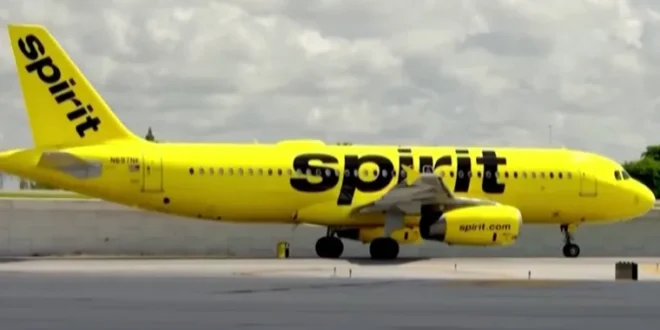
Spirit Airlines abruptly shut down operations early Saturday, canceling all flights and leaving thousands of travelers stranded after failing to secure emergency funding to stay afloat.
The troubled budget carrier said it had begun an “orderly wind-down” after negotiations with creditors and the federal government collapsed.
“To our Guests: all flights have been cancelled, and customer service is no longer available,” the airline said in a statement.
The sudden closure marks a dramatic end for a company that had been attempting to emerge from its second bankruptcy in less than a year. Executives said a sharp spike in fuel costs — driven in part by the ongoing war with Iran — ultimately pushed the airline beyond recovery.
“Despite the Company’s efforts, the recent material increase in oil prices and other pressures on the business have significantly impacted Spirit’s financial outlook,” the company said. “With no additional funding available … Spirit had no choice but to begin this wind-down.”
Spirit had sought financial assistance from the White House in recent weeks, and President Donald Trump initially signaled openness to a deal. But talks unraveled Friday, with Transportation Secretary Sean Duffy citing disagreements between the company and its creditors.
“It had to be a good deal,” Duffy said, adding that both sides ultimately failed to reach an agreement. “Those two things never materialized.”
Spirit CEO Dave Davis said the airline needed “hundreds of millions of additional dollars of liquidity” that it could not secure.
“We thought we were going to get the liquidity we needed,” Davis told The Wall Street Journal, adding the company did not intend to leave passengers stranded.
Travelers stranded, scrambling
The shutdown took immediate effect, with no Spirit flights in the air at the time — but the ripple effects were felt instantly at airports across the country.
Passengers arriving for scheduled departures found empty check-in counters and little guidance. Many were forced to scramble for last-minute alternatives, often at significantly higher prices.
Spirit said customers who booked directly would receive automatic refunds, while others would need to go through third-party agents. The airline warned it would not cover additional costs such as hotels or rebooking expenses unless passengers had travel insurance.
Duffy encouraged customers to pursue chargebacks through credit card companies and announced agreements with major carriers — including United Airlines, Delta Air Lines, JetBlue and Southwest Airlines — to cap fares for stranded Spirit passengers.
“We’ve activated our airline partners to ensure passengers are not stranded,” Duffy said.
Industry scramble and job losses
The shutdown is expected to have sweeping effects across the aviation industry, including the loss of roughly 17,000 jobs.
Airlines and trade groups, including Airlines for America, said carriers are offering “rescue fares,” expanding routes and helping reposition stranded crews.
JetBlue said it would expand service in Fort Lauderdale, one of Spirit’s largest hubs, while American Airlines said it was reviewing options to add capacity on former Spirit routes.
Employees reacted with shock and grief. Some shared tributes on social media after learning they were out of work overnight.
“This isn’t the ending I imagined,” one flight attendant wrote.
Long decline culminates in collapse
Spirit’s shutdown caps years of financial instability. Once one of the most profitable U.S. airlines, the company built its brand on ultra-low fares and à la carte pricing.
But it struggled to recover from the COVID-19 pandemic, faced rising costs and saw demand weaken among budget travelers.
A proposed merger with JetBlue in 2022 — which would have created the nation’s fifth-largest airline — was blocked by federal regulators on antitrust grounds. Within months, Spirit filed for bankruptcy protection, and a subsequent restructuring failed to stabilize the business.
Duffy called the blocked merger a “massive mistake,” arguing it weakened the low-cost airline sector.
“I want a healthy group of low-cost carriers,” he said. “That’s going to give the American people different options.”
Instead, he warned, Spirit’s collapse could accelerate consolidation, with larger airlines gaining more control over pricing and routes.
Broader economic pressures
While Duffy said Spirit’s problems predated the Iran conflict, the recent surge in oil prices appears to have been the final blow.
Fuel is one of the largest expenses for airlines, and prices have spiked sharply amid geopolitical tensions, squeezing already thin margins for budget carriers.
The result: a sudden collapse that has disrupted travel nationwide and raised fresh questions about the stability of the low-cost airline model in an era of volatile energy markets.