Poli Alert Politics & Civics
Related Articles


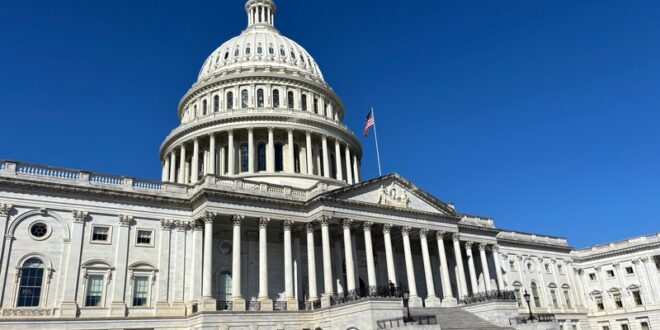
Congress on Thursday approved a short-term extension of a key U.S. surveillance authority, narrowly avoiding its expiration while punting a broader fight over reforms to warrantless intelligence collection.
The measure, which extends the program through June 12, now heads to President Donald Trump’s desk after clearing both chambers with bipartisan support.
The temporary extension keeps in place a critical provision of Foreign Intelligence Surveillance Act known as Section 702, which allows intelligence agencies to collect communications of foreign targets abroad — but has long drawn scrutiny for potentially sweeping in Americans’ data.
The Senate approved the extension earlier Thursday by unanimous consent, and the House followed with a 261-111 vote. The move came despite the House’s recent passage of a longer, three-year reauthorization, underscoring ongoing disagreements with the Senate.
Lawmakers faced a Friday deadline to renew the authority or risk disrupting intelligence operations at agencies including the CIA, NSA and FBI.
“I don’t like kicking the can down the road,” said Senate Majority Leader John Thune. “But that’s where we are.”
Earlier this month, Congress had already passed a brief stopgap extension after a late-night standoff, highlighting the difficulty of reaching consensus on surveillance policy.
At the center of the impasse is whether to impose new limits on how the government accesses Americans’ communications collected under Section 702.
Civil liberties advocates and a coalition of lawmakers in both parties have pushed for requiring a warrant before searching for U.S. citizens’ data. Intelligence officials argue such restrictions would hinder national security operations.
Rep. Jamie Raskin, the top Democrat on the House Judiciary Committee, said he supported the temporary extension to allow time for negotiations.
“I won’t oppose this short extension, but only because it is my fervent hope … it will give us the time to work together … to implement meaningful reforms,” Raskin said.
Opposition also came from some Republicans, including Rep. Thomas Massie, who argued the program violates constitutional protections.
“A short-term infringement of the Constitution is still an infringement of the Constitution,” Massie said on the House floor.
The Trump administration and intelligence officials have pressed Congress for weeks to secure a long-term reauthorization, warning that uncertainty could undermine intelligence gathering.
House Republicans had attempted to advance a three-year extension, but the effort became entangled in unrelated policy disputes, including a provision to ban a central bank digital currency — a measure Senate leaders rejected.
Thune said Senate Republicans could not take up the House-passed bill in its current form.
“What they sent us, we weren’t going to be able to process over here,” he said.
The fight over Section 702 reflects a broader tension between national security priorities and civil liberties concerns that has persisted since the program’s creation after the Sept. 11 attacks.
While intelligence agencies view the authority as indispensable for tracking foreign threats, critics argue its scope has expanded too far, allowing for incidental collection of Americans’ communications without sufficient oversight.
The issue has increasingly divided Republicans, with some aligning with Democrats in calling for stricter safeguards.
With the program now extended until June 12, lawmakers face renewed pressure to negotiate a long-term deal that can pass both chambers and secure the president’s signature.
Thune said Congress would “get to work in earnest” with the White House to reach an agreement, though divisions over surveillance limits suggest another contentious debate ahead.