Poli Alert Politics & Civics
Related Articles



Four years after the fall of Roe v. Wade, abortion — which defined the 2022 midterms and much of the subsequent presidential campaign — has largely receded from the spotlight as 2026 candidates focus on issues of affordability, the proliferation of data centers and the prolonged war in Iran.
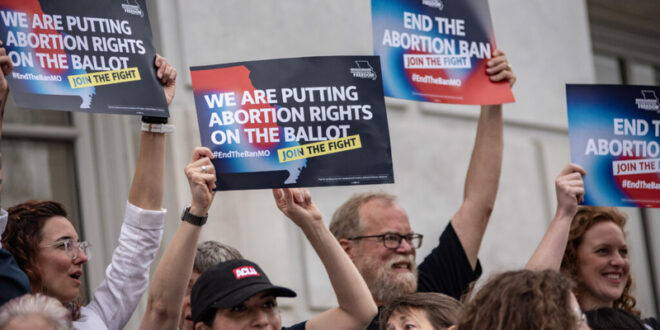
But in four midterm races spanning different regions of the country, voters will have a chance to weigh in directly on how their states approach abortion.
One ballot measure could overturn a strict ban. Another could undo abortion rights protections voters secured just two years ago. And in two others, voters won’t change what abortion access looks like, but they will have a chance to strengthen existing protections by amending their state constitutions.
Here is a breakdown of where abortion is back on the ballot.
Idaho
Residents of Idaho will have a chance to repeal the state’s strict abortion ban — which allows the procedure only in very limited circumstances — by voting on Proposition 1. If approved, it would pass a law protecting abortion until fetal viability — which is typically at about 23 to 25 weeks of pregnancy — as well as rights to contraception, fertility treatment, pregnancy-related healthcare and miscarriage care. After viability, abortions would be allowed only to protect the life or health of the pregnant person.
Idaho’s measure comes after a monthslong effort from organizers, who gathered more than 100,000 signatures from across the state.
But unlike in other states that have voted on abortion rights, which often allow amendments to their constitutions, Idaho’s citizen petition process only allows for voters to pass laws through direct vote. That means lawmakers could repeal the measure, restoring Idaho’s near-total ban even if Proposition 1 passes.
Some Idaho Republicans, including Gov. Brad Little, have vowed to do just that. The GOP holds majorities in both chambers of Idaho’s legislature, though every member of the state Senate and House of Representatives is up for election this fall.
Missouri
Missouri voters already weighed in on abortion two years ago when they voted in support of Amendment 3, which added a reproductive rights provision to the state’s constitution and guaranteed the right to an abortion up until fetal viability.
Republican lawmakers are trying to undo that with a new ballot measure — also called Amendment 3 — that would amend Missouri’s constitution and reverse the 2024 measure. It would ban abortions in almost all cases, with exceptions in cases of rape and incest — but only in the first trimester of a pregnancy — and in medical emergencies throughout pregnancy.
The measure would also add language to the state constitution banning gender-affirming care for transgender minors, even though it is already illegal in Missouri.
Missouri’s Republican leaders have backed reversing Amendment 3. Claudia Kehoe, the state’s first lady, is listed as the treasurer for the political action committee behind the campaign.
The state attorney general has reportedly spent $167,000 of public funds on advertising that warns patients about the purported dangers of abortion clinics, with ads running across the state months before the election. This sort of government-funded advertising right before an abortion-related election is unusual. The last such effort was in Florida in 2024.
Nevada
Nevada voters will weigh in again on a proposal to amend their state constitution so that it guarantees the right to an abortion up until fetal viability, with exceptions afterward for the life or health of the pregnant person.
It’s a question voters have faced before. In Nevada, citizen-initiated constitutional amendments need to win voter approval in two even-numbered election years. In 2024, voters took the first step, passing Question 6 with more than 63 percent of voters approving.
Abortion in Nevada is already legal until 24 weeks of pregnancy. But a constitutional amendment offers more secure abortion rights protections than a law, since it is harder to repeal or be undone by a state court.
Virginia
Virginia’s measure, Question 1, would enshrine existing law into the state’s constitution, establishing a right to “reproductive freedom.” That includes protecting abortion in the first and second trimesters — which is already legal in the state — as well as access to contraception, fertility care, pregnancy-related care and miscarriage care.
The measure would also allow abortions in the third trimester if necessary to protect the life or physical or mental health of the pregnant person, or if the fetus is not viable.
Virginia is the only state in the South not to ban abortion at or before 12 weeks of pregnancy.
This story was originally reported by Shefali Luthra of The 19th. Meet Shefali and read more of their reporting on gender, politics and policy.