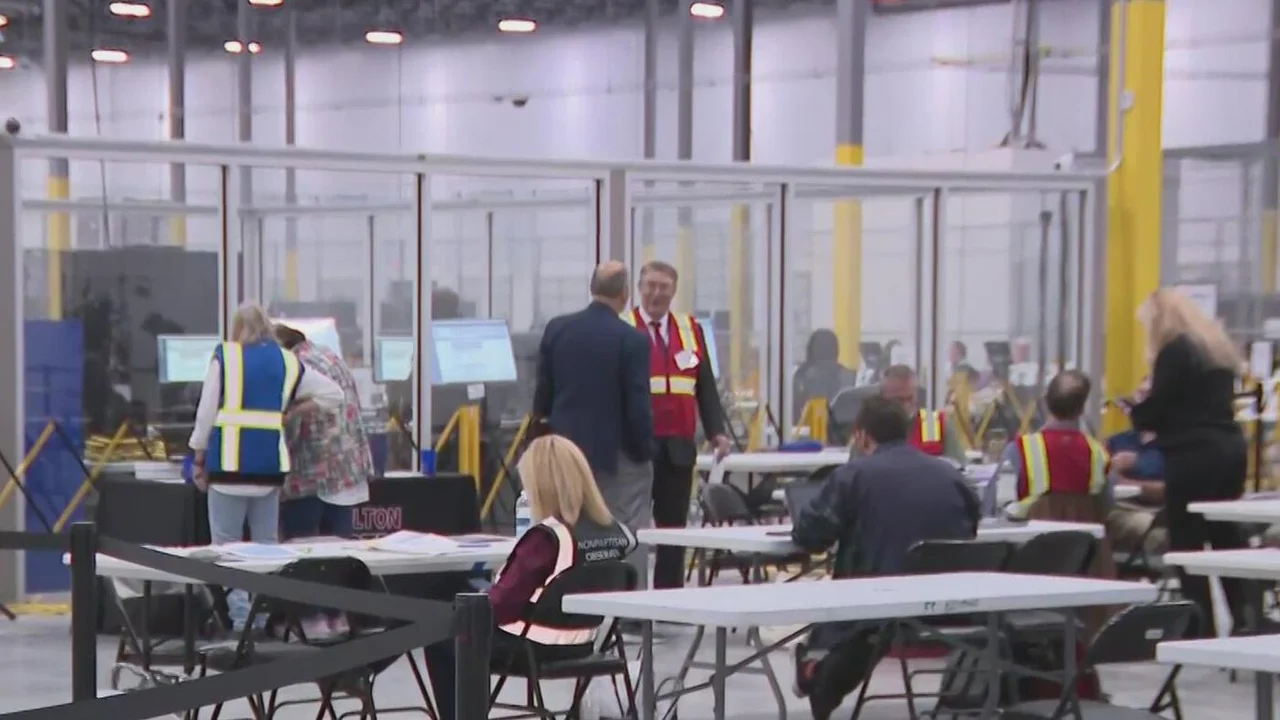
A federal judge on Tuesday, November 24, threw out a lawsuit that tried to stop Texas election certification unless every paper ballot from the midterm election was counted by hand, Democracy Docket reported.
U.S. District Judge Matthew Kacsmaryk, who was appointed by Donald Trump, dismissed the case brought by the Potter County Republican Party and its chairman, Daniel Rogers. The suit was filed October 27 against Potter County Elections Administrator Christy Benge. On November 14, the plaintiffs added Alexander Hale, the Republican who lost Texas’s 7th Congressional District to Democratic Rep. Lizzie Fletcher by roughly 70 percent to 27 percent.
The plaintiffs argued that voting machines and the state’s cybersecurity could not be trusted and that every paper ballot had to be hand counted before the results could be made official. They also argued that letting each county decide how to investigate discrepancies in its vote totals treated voters unequally under the Fourteenth Amendment, which guarantees equal protection of the law.
The political news that affects your wallet, your rights and your vote, broken down in plain language. Free in your inbox.
In a 13 page ruling, Kacsmaryk found the plaintiffs lacked standing, which is the legal right to bring a lawsuit. To have standing, a person must show they suffered a real and specific injury, not a possible or imagined one. Kacsmaryk called the hacking claims “speculation layered on speculation” and wrote, “Plaintiffs fail to demonstrate that adversaries have ever affected a single ballot in all of Texas.”
He also found that discrepancies the plaintiffs pointed to in Harris, Dallas, Randall and Lubbock counties did not show any injury to voters in Potter County. Adding Hale did not help the case, he ruled, because Hale’s congressional district does not include Potter County. Kacsmaryk wrote that the case “cannot be a Trojan horse for circumventing Article III’s most basic limitation on judicial power,” referring to the part of the Constitution that limits federal courts to real disputes between parties who have been harmed.
The dismissal ends the request to halt Texas election certification, including the plaintiffs’ motion for a preliminary injunction, a court order that would have frozen certification while the case went on. The case was dismissed without prejudice, which means the plaintiffs are not barred from filing again. Kacsmaryk did not rule on whether the Texas audit procedures themselves are constitutional, Democracy Docket reported.
Benge had argued that the plaintiffs were asking for procedures that go beyond what Texas law requires. Democracy Docket reported that Rogers has promoted false claims about the 2020 election, including a suggestion that more people voted than were registered in 17 Texas counties.
For Texas voters, the ruling means the process of making the November results official moves ahead without a court ordered hand count. Texas also has local runoff elections on December 12, with early voting from November 30 to December 8, according to the Texas secretary of state’s office, which voters can contact to confirm their runoff dates, polling places and the status of Texas election certification.