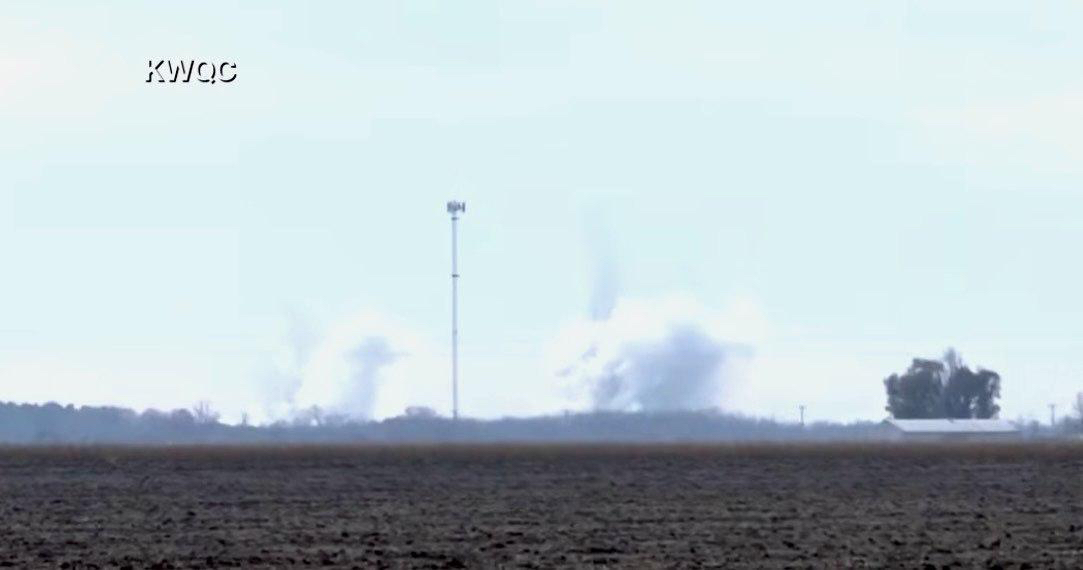
The U.S. Army carried out its controversial Iowa detonation Wednesday morning, destroying nearly five tons of unstable lead azide explosives despite concerns about potential toxic lead exposure in surrounding communities.
The Associated Press confirmed that the operation at the Iowa Army Ammunition Plant destroyed the nation’s entire stockpile of lead azide following several postponements and an unsuccessful legal challenge by environmental groups.
Army officials maintained that the deteriorating explosives posed an immediate safety threat and that destroying the material at the facility was the safest available option.
The political news that affects your wallet, your rights and your vote, broken down in plain language. Free in your inbox.
The Iowa detonation proceeded after the Eighth U.S. Circuit Court of Appeals lifted a temporary order blocking the operation and denied an emergency request to halt it. The decision allowed the Army to move forward while environmental litigation continues.
Federal officials recommended temporary evacuation for Middletown residents and communities extending five miles southwest of the ammunition plant. The Federal Emergency Management Agency provided transportation, hotel accommodations, meals and other assistance to displaced residents.
According to the Associated Press, FEMA also instructed people within 20 miles of the facility to remain indoors with their windows closed.
Concerns extend beyond residential neighborhoods. Federal officials estimated that approximately 350 farms could be in the path of potentially contaminated dust, raising questions about the safety of crops, livestock, soil and water supplies.
Missouri health officials said they anticipated a low risk to residents in their state, although potential exposure would depend on weather conditions and the movement of airborne particles.
Lead exposure can damage the brain and nervous system, interfere with childhood development and contribute to other serious health complications. Iowa health officials warned that young children and pregnant women are particularly vulnerable.
The Environmental Protection Agency collected more than 1,200 environmental samples before the operation to establish baseline conditions. Additional testing will help determine whether the explosions increased lead concentrations in surrounding communities.
An emergency permit issued by the EPA requires environmental monitoring, cleanup measures, public notifications and reporting.
Residents who evacuated ahead of the Iowa detonation will be notified when authorities determine it is safe to return. FEMA has offered temporary lodging through Friday, with additional assistance available to those who need it.
As of Wednesday morning, the extent of any lead contamination remained unconfirmed. Environmental testing will help determine whether additional public health restrictions, agricultural protections or cleanup efforts are necessary.