Poli Alert Politics & Civics
Related Articles


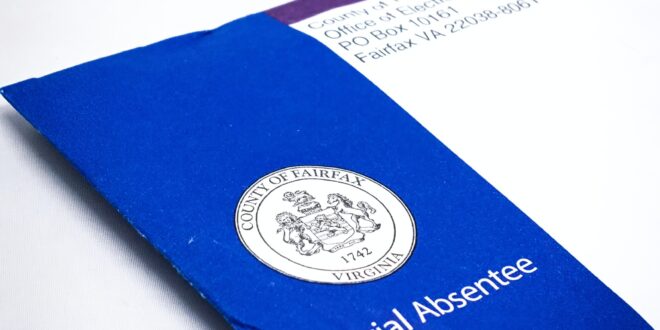
The U.S. Supreme Court ruled Monday that states may continue counting mail-in ballots received after Election Day so long as they were postmarked by the voting deadline, preserving election laws used across much of the country and rejecting a Republican-backed legal challenge.
In a 5-4 decision, the justices upheld a Mississippi law allowing absentee ballots postmarked by Election Day to be counted if they arrive within five days afterward. The ruling represents a setback for President Donald Trump and the Republican National Committee, which have sought to eliminate post-Election Day ballot receipt deadlines as part of a broader push to tighten election rules before this year’s midterm elections.
Justice Amy Coney Barrett authored the majority opinion, joined by Chief Justice John Roberts and the court’s three liberal justices — Sonia Sotomayor, Elena Kagan and Ketanji Brown Jackson.
Writing for the court, Barrett said federal election laws establish when voters must cast their ballots but do not require states to receive those ballots by Election Day.
“The election-day statutes require the electorate’s choice to be made on election day,” Barrett wrote. “That occurs so long as election day is the deadline for individuals to vote—as it is in Mississippi.”
She added that because Congress has not imposed a federal ballot receipt deadline, states retain the authority to count ballots mailed on time but delivered afterward.
The ruling preserves similar mail ballot grace periods in 18 states and U.S. territories. Several additional states also allow extended deadlines for military and overseas ballots.
Conservatives dissent
Justice Samuel Alito led the dissent, arguing the majority misinterpreted federal election law and created uncertainty over election administration.
“The majority’s holding spawns a slurry of troubling election-law questions and risks further undermining Americans’ confidence in election integrity,” Alito wrote.
The case originated after the Republican National Committee and Trump’s 2024 presidential campaign challenged Mississippi’s mail ballot law, arguing that Congress alone has authority to determine when federal elections end.
Although lower federal courts largely rejected similar lawsuits after the 2024 election, the conservative U.S. Court of Appeals for the 5th Circuit ruled in Republicans’ favor, setting up the Supreme Court review.
Decision preserves mail voting systems
Election officials have long defended ballot receipt grace periods, arguing they protect voters from postal delays, severe weather and other circumstances outside their control.
Washington Secretary of State Steve Hobbs previously said more than 250,000 ballots postmarked by Election Day arrived after Election Day during the 2024 election. Without the state’s grace period, those votes would not have counted, particularly affecting rural communities where mail delivery often takes longer.
Voting rights advocates praised Monday’s decision as protecting millions of absentee voters.
Samantha Tarazi, chief executive officer of Voting Rights Lab, said the ruling avoids major disruption ahead of the midterm elections.
“It protects the voices of military voters, rural voters, and millions of other Americans who vote by mail,” Tarazi said in a statement.
Trump renews push for election legislation
Trump criticized the ruling on social media, calling it “a tremendous loss” while renewing his call for Congress to pass the SAVE America Act, legislation that would impose stricter national voting requirements, including proof-of-citizenship standards and tighter mail voting rules.
Mississippi Republican Gov. Tate Reeves also opposed the decision despite it upholding his state’s current law.
Reeves urged the Mississippi Legislature to repeal the state’s ballot grace period and require absentee ballots to be received by 5 p.m. on Election Day.
Latest legal setback for Trump’s election agenda
The ruling marks another judicial defeat for Trump’s efforts to reshape election administration during his second term.
Last week, a federal judge blocked key portions of another Trump executive order aimed at restricting mail voting, continuing a series of court rulings limiting the administration’s election policies.
Monday’s decision ensures that existing mail ballot grace periods in Mississippi and other participating states will remain in effect for the 2026 midterm elections.