

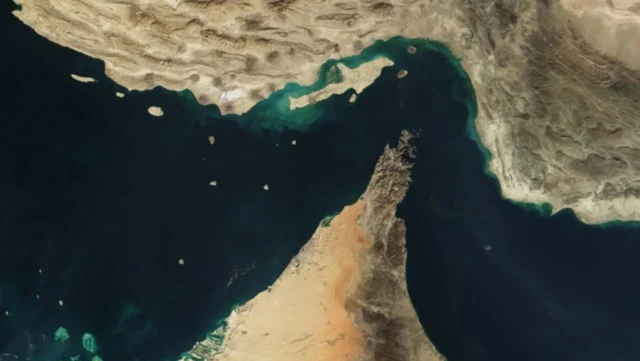
The Strait of Hormuz, a critical artery for global oil shipments, reopened Friday after a 10-day ceasefire linked to fighting between Israel and Lebanon, offering relief to global markets following weeks of disruption.
President Donald Trump announced the reopening, calling the waterway “COMPLETELY OPEN AND READY FOR BUSINESS,” while emphasizing that a U.S. naval blockade targeting Iranian vessels would remain in place until broader negotiations with Tehran are finalized.
Iranian Foreign Minister Abbas Araghchi confirmed the move, stating that commercial shipping could resume during the ceasefire period, provided vessels follow routes coordinated by Iranian authorities.
The reopening follows a U.S.-brokered ceasefire between Israel and Lebanon, where Israeli operations targeting Hezbollah had heightened regional tensions and contributed to Iran’s earlier decision to restrict maritime traffic through the strait.
The Strait of Hormuz carries roughly 20% of the world’s oil supply, making it one of the most strategically important waterways in global trade and energy markets. Its closure during the conflict triggered sharp increases in oil prices, with benchmarks at times exceeding $100 per barrel.
Markets reacted swiftly to the reopening. U.S. crude futures fell by nearly $10 per barrel to about $81.50, signaling investor optimism that supply disruptions may ease in the near term.
Still, analysts cautioned that shipping traffic may take time to normalize. Concerns over security risks — including the potential for missile or drone attacks near Iranian waters — could deter shipowners from immediately resuming regular routes.
“There will still be hesitation from shipowners as the matter of risk and insurance is still a sticky one,” said June Goh, an oil market analyst, noting that companies may wait for safe passage to be demonstrated before fully re-engaging.
The U.S. blockade, announced earlier this week, is part of a broader strategy by the Trump administration to pressure Iran into negotiations over its nuclear program. Trump indicated he would lift the blockade only after a comprehensive agreement is reached, suggesting talks could move quickly.
The conflict has underscored the geopolitical importance of the strait, particularly for major economies in Asia. Countries such as China rely heavily on oil shipments passing through the waterway, amplifying global concern when access is threatened.
Despite the reopening, tensions remain high. Iran has previously warned it could again restrict access in response to U.S. or Israeli military actions, while American officials have kept open the possibility of further escalation if negotiations falter.
The ceasefire itself remains fragile. Israeli Prime Minister Benjamin Netanyahu said Israel would maintain a “reinforced security buffer zone” in Lebanon and continue to push for Hezbollah’s disarmament. Lebanese President Joseph Aoun is expected to participate in further talks with U.S. and Israeli leaders in the coming weeks.
Trump has sought to separate the reopening of the strait from the Lebanon ceasefire, though the timing of the developments has linked the two diplomatically and strategically.
Global leaders, including officials from several European nations, have also begun discussions on potential multinational efforts to secure the waterway if hostilities resume.
For now, the reopening of the Strait of Hormuz offers a temporary reprieve for global energy markets, though the durability of that stability will depend on both the ceasefire’s longevity and the outcome of ongoing U.S.-Iran negotiations.