Poli Alert Politics & Civics

Related Articles

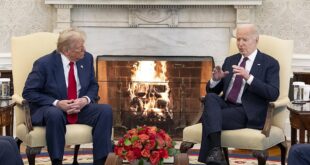

A Republican plan to steer $1 billion in taxpayer funding toward President Donald Trump’s White House ballroom project hit a major setback Saturday after the Senate parliamentarian ruled the proposal violated Senate budget rules.
Senate Parliamentarian Elizabeth MacDonough determined that the provision, tucked into a broader GOP funding package tied to immigration enforcement and border security, improperly extended beyond the jurisdiction of the Senate Judiciary Committee.
“A project as complex and large in scale as Trump’s proposed ballroom necessarily involves the coordination of many government agencies which span the jurisdiction of many Senate committees,” MacDonough told Senate offices. “As drafted, the provision inappropriately funds activities outside the jurisdiction of the Judiciary Committee.”
The ruling means the proposal would now require 60 votes to advance in the Senate instead of a simple majority through the budget reconciliation process — a major obstacle for Republicans in the narrowly divided chamber.
The funding package sought to combine billions for immigration enforcement agencies, including ICE and Border Patrol, with $1 billion linked to Trump’s ballroom initiative at the White House complex.
Republicans quickly signaled they would attempt to salvage the proposal. A GOP leadership aide said Senate Republicans had already begun rewriting the language before Saturday’s ruling based on feedback from Senate officials.
A spokesperson for Republicans on the Senate Judiciary Committee also said “conversations and revisions are continuing, as they have been for days.”
Still, it remains unclear whether Republicans can revise the measure in a way that complies with Senate rules. The current budget resolution only permits reconciliation language from the Senate Judiciary Committee and the Senate Homeland Security and Governmental Affairs Committee. If Senate officials determine the ballroom project falls under another committee’s jurisdiction, Republicans may be forced to abandon the funding effort altogether.
Senate Democrats immediately blasted the proposal.
Senate Budget Committee ranking member Jeff Merkley, an Oregon Democrat, said “the American people shouldn’t spend a single dime on Trump’s gold-plated ballroom boondoggle.”
“While we expect Republicans to change this bill to appease Trump, Democrats are prepared to challenge any change to this bill,” Merkley added. “We cannot let Republicans waste our national treasure on a mission of chaos and corruption while turning a blind eye to the needs of the American people.”
Ryan Wrasse, a spokesman for Senate Majority Leader John Thune, downplayed the ruling, calling it part of the normal reconciliation review process.
“Redraft. Refine. Resubmit. None of this is abnormal during a Byrd process,” Wrasse wrote on X, referring to the Senate’s Byrd Rule, which limits what can be included in reconciliation legislation.
The ruling also intensified scrutiny over the administration’s shifting explanation for the ballroom funding.
Trump previously claimed the White House ballroom project — which he estimated would cost roughly $400 million — would be privately financed.
But Senate Republicans later unveiled a proposal including approximately $1 billion in federal spending associated with the project. According to a memo obtained by NBC News, the funding breakdown included $220 million for hardening the White House complex, $180 million for a visitor screening facility, $175 million for training and another $175 million for security enhancements tied to Secret Service protectees.
The White House has argued the taxpayer funds would specifically cover “security adjustments and upgrades” related to the broader ballroom construction effort.
Some Republicans have also voiced concerns about using federal dollars for the project.
Sen. Rand Paul, R-Ky., and Sen. Susan Collins, R-Maine, both said the ballroom should be funded privately, consistent with Trump’s earlier promises.
Kansas Republican Sen. Roger Marshall said after reviewing the proposal this week that he still had questions and remained undecided.
The dispute comes as Republicans attempt to use the reconciliation process to push through a sweeping package tied to immigration enforcement, border security and other Trump administration priorities without Democratic support.