Poli Alert Politics & Civics
Related Articles



President Donald Trump’s decision to suspend tariffs on certain ground beef imports triggered an unusual backlash from Republicans on Friday, with lawmakers from major cattle-producing states warning that the policy could undermine American ranchers even as the administration seeks to lower grocery prices.
Trump announced Friday that the United States would allow up to 300,000 metric tons of ground beef imports without the usual out-of-quota tariff, with the president saying importers had committed to selling the beef at 25% below current market prices.
Trump said the move would help reduce costs for consumers while giving the nation’s cattle herd room to recover.
But Republicans representing agricultural states quickly criticized the policy, arguing that increased imports could weaken prices for domestic producers and make it harder for ranchers to rebuild depleted herds.
GOP senators criticize Trump policy
Nebraska Sens. Deb Fischer and Pete Ricketts, both Republicans, separately criticized the decision, saying lower grocery prices should not come at the expense of American cattle producers.
“I’m extremely disappointed by this decision from the White House,” Fischer said. “We all want lower grocery prices, but as I’ve said for months, we cannot do it at the expense of American producers.”
Ricketts similarly warned that relying on cheaper foreign beef could harm Nebraska ranchers.
“I appreciate the Administration’s work to lower grocery prices,” Ricketts said. “Short term policy shifts do not equal long term solutions.”
Sen. Tim Sheehy, R-Mont., also expressed concern, saying the policy could make it harder for American ranchers to rebuild their herds.
“The reality is this action will make it more difficult for American ranchers to rebuild our herd and bring prices down for the American people,” Sheehy said.
Rep. Ashley Hinson, R-Iowa, who is running for Senate with Trump’s endorsement, was even more direct.
“I want to lower prices but this is a bad idea,” Hinson said.
She argued that policymakers should instead reduce regulatory and production costs for cattle producers and pursue market-based solutions.
Sen. Chuck Grassley, R-Iowa, also urged the administration to prioritize American cattle producers and continue efforts to combat the screwworm parasite threatening livestock.
Trump defends decision
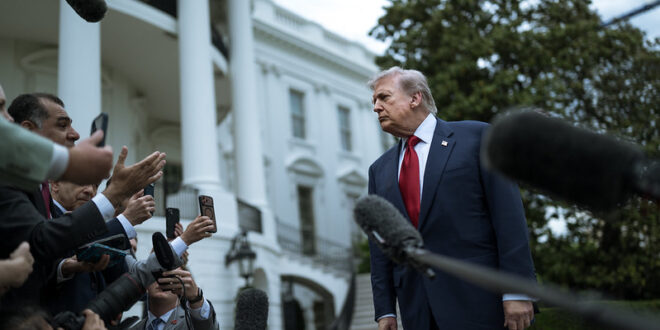
Trump defended the policy Friday when reporters asked him about criticism from fellow Republicans.
“Well, we want to get the beef prices down,” Trump said at Joint Base Andrews. “That’s what people want. That’s what the voters want, and that’s what I want.”
Trump said ranchers recognize that the industry needs additional help to bring prices down.
“The ranchers are great. They’re my people. I love the ranchers,” he said.
Trump did not identify which companies had agreed to sell the imported beef at a 25% discount or which countries would supply the additional imports.
The administration also has not detailed how the policy would affect existing tariff structures beyond Trump’s announcement.
Cattle herd faces historic shortage
The dispute comes as American consumers face elevated beef prices and the U.S. cattle industry struggles with a historically small herd.
Years of shrinking cattle supplies have contributed to higher beef prices. The American Farm Bureau Federation has said the U.S. cattle inventory is at its lowest level since 1951.
The shortage has created a difficult policy dilemma for the administration: increasing imports could provide consumers with additional supplies and potentially lower prices in the short term, while domestic ranchers argue that cheaper foreign beef could reduce the incentive to expand U.S. production.
The cattle industry is also dealing with the threat posed by New World screwworm, a flesh-eating parasite that targets livestock.
A case was detected in a U.S. calf earlier this year, marking the parasite’s first reported appearance in the country in decades and raising additional concerns about the nation’s cattle supply.
Beef imports have divided Republicans before
Trump’s latest move is not the first time his approach to beef imports has divided Republicans.
The president floated the idea of increasing beef imports last year, but Republican lawmakers from cattle-producing states pushed back.
Senate Majority Leader John Thune, R-S.D., said at the time that he opposed policies that could undermine domestic cattle producers.
“I represent a beef-producing state,” Thune said, noting that South Dakota has roughly four times as many cattle as people.
The latest announcement has revived those tensions, particularly as Republicans seek to balance Trump’s focus on lowering consumer prices with the interests of rural voters and agricultural producers who have traditionally formed a key part of the GOP coalition.
Cattle industry group warns of long-term damage
The National Cattlemen’s Beef Association also criticized Trump’s announcement Friday.
Colin Woodall, the organization’s CEO, said cattle producers share the administration’s goal of making food more affordable but argued that expanding imports is the wrong approach.
“Flooding the market with government-subsidized, below-market beef is not the way to rebuild the American cattle herd,” Woodall said.
He warned that the policy could discourage ranchers from expanding production.
“Today’s announcement and other market interventions throw cold water on the prospect of herd expansion and sacrifices long-term stability for short term messaging,” Woodall said.
The Republican criticism underscores the challenge facing Trump as his administration attempts to bring down food prices without further weakening an American cattle industry already dealing with historically low herd numbers, disease threats and rising production costs.
For now, the president and members of his own party remain divided over whether importing more beef is a temporary solution to high prices — or a threat to the long-term health of the U.S. cattle industry.