Poli Alert Politics & Civics
Related Articles

The U.S. military campaign against Iran has cost approximately $25 billion so far, a senior Defense Department official told lawmakers Wednesday, marking the first official price tag for a conflict that has stretched nearly two months with no clear endpoint.
The estimate, disclosed during a House Armed Services Committee hearing, comes as the Trump administration weighs a potential supplemental funding request that could reach as high as $200 billion.
Acting Pentagon comptroller Jules Hurst said the cost reflects spending on what the administration has dubbed Operation Epic Fury, including heavy use of munitions and ongoing operational expenses.
“Approximately to this day, we’re spending about $25 billion … most of that in munitions,” Hurst told lawmakers.
The conflict began earlier this year and has involved sustained U.S. air and naval operations in the region. Although a ceasefire has recently taken hold, officials have not outlined a clear timeline for ending the mission.
Hurst previously indicated that the first week of the war alone cost roughly $11 billion, underscoring the rapid pace of spending.
The $25 billion figure is significantly lower than some outside estimates, particularly given the high cost of advanced weapons systems and air defense replenishment.
Administration officials are now preparing a supplemental funding request to cover ongoing operations and restock depleted inventories, though they have not finalized the total amount.
Hurst said the request will be submitted “once we have a full assessment of the cost of the conflict.”
The hearing, originally focused on the Pentagon’s 2027 budget proposal, quickly shifted to questions about the financial and strategic trajectory of the war.
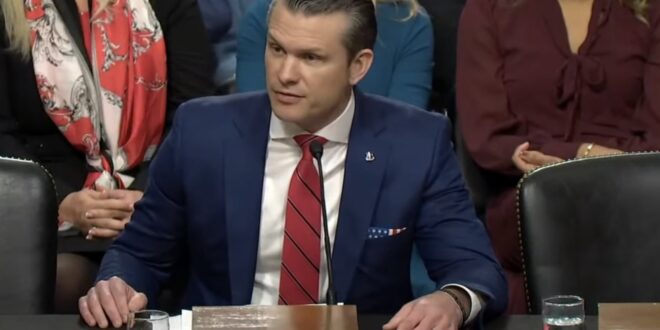
Defense Secretary Pete Hegseth defended the administration’s approach, while also criticizing detractors in Congress.
“The biggest challenge … are the reckless, feckless, and defeatist words of congressional Democrats — and some Republicans,” Hegseth said.
Military leaders, including Joint Chiefs Chairman Dan Caine, appeared alongside Hegseth but did not publicly dispute the cost estimate.
Lawmakers from both parties pressed for more transparency on the financial and strategic goals of the campaign.
Rep. Adam Smith, the top Democrat on the committee, said he had long sought a clear accounting of the war’s cost.
“I’m glad you answered that question, because we’ve been asking for a hell of a long time,” Smith told Hurst.
Smith also questioned the effectiveness of the military campaign, arguing that Iran’s core capabilities remain intact.
“As we sit here today, Iran’s nuclear program is exactly what it was before this war started,” he said. “They have not lost their capacity to inflict pain.”
The financial disclosure comes amid broader concerns about the sustainability of the campaign and its strategic outcomes.
Analysts note that prolonged military engagements often require significant follow-on funding, particularly to replenish precision-guided munitions and maintain force readiness.
The potential $200 billion supplemental request would place the conflict among the more expensive recent U.S. military operations, depending on its final scope.
The Pentagon is expected to submit its formal supplemental funding request in the coming weeks, which will require congressional approval.
Lawmakers are likely to scrutinize both the cost and objectives of the campaign as part of that process, especially given the absence of a clearly defined end state.
For now, the $25 billion figure offers the first official glimpse into the scale of the conflict — even as key questions about its duration, cost and strategic impact remain unresolved.