Poli Alert Politics & Civics
Related Articles

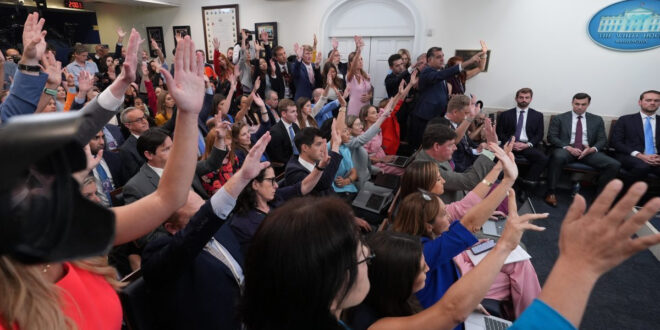
A federal judge on Tuesday blocked President Donald Trump’s administration from enforcing its ban on journalists from CNN, MS NOW and Politico at the White House, ruling that the news organizations are likely to succeed in arguing that the restrictions violated their constitutional rights.
U.S. District Judge Timothy Kelly, a Trump appointee, granted the outlets’ request for a preliminary injunction, restoring their reporters’ access to the White House grounds while the lawsuit proceeds.
In a 26-page decision, Kelly found that the administration’s revocation of the journalists’ hard passes likely violated their First Amendment protections for freedom of the press and their Fifth Amendment right to due process.
The judge said Trump’s actions could discourage journalists and news organizations from publishing reporting that displeases the president.
“It is likely that President Trump’s revocation of Plaintiffs’ hard passes is the sort of action that would deter a reasonable reporter or news organization from publishing stories to which he objects,” Kelly wrote.
The ruling marks another legal challenge to the administration’s efforts to restrict access for news organizations that have drawn Trump’s criticism. It also leaves in place protections for the three outlets as the broader dispute over presidential authority and press access moves through the courts.
Judge questions administration’s justification
Trump announced the ban in September, accusing CNN, MS NOW and Politico of publishing what he called “FAKE NEWS.” Reporters from the three organizations were turned away from the White House the following day, and the Secret Service took their press credentials.
The outlets sued on Sept. 21, arguing that the restrictions were retaliation for their reporting and violated the First Amendment. They also said the administration denied them due process by revoking their access without prior notice or an opportunity to respond.
The White House later sent letters formally notifying the organizations of the decision and giving them until Sept. 25 to respond. The administration argued that the outlets had violated standards of professionalism and published articles that raised national security concerns.
But Kelly questioned whether those explanations matched the president’s stated reasons for imposing the ban.
At a hearing last week, the judge noted that Trump had publicly criticized the outlets for negative coverage before the Justice Department offered national security and professional standards as justifications in court.
Trump “seems to have said publicly and on several occasions” that he was acting for one set of reasons, Kelly said, while the government was now presenting another explanation.
In Tuesday’s decision, Kelly said the administration had not provided evidence that national security concerns initially drove the president’s decision to revoke the journalists’ credentials.
Trump did not mention national security when he announced the ban or when reporters asked him about his reasons later that day, the judge wrote. Kelly said the administration appeared to use national security language later to describe alleged inaccuracies and unfairness in the outlets’ coverage.
The judge also questioned the White House’s reliance on articles it said threatened national security or spread falsehoods. Most of the cited stories were written by journalists who did not hold White House hard passes, according to the decision.
One Politico article identified by the administration concerned negotiations with Iran and was based on a White House-organized press call. Reporters on the call were instructed to attribute comments to a “senior administration official,” according to court records.
Kelly characterized the cited reporting as commonplace and said the White House’s letters appeared to blur concerns about protected speech with claims involving national security.
First Amendment protections at issue
The preliminary injunction follows an earlier order in which Kelly temporarily restored the organizations’ access while the case continued. That earlier decision focused on the outlets’ due process claims rather than resolving their First Amendment arguments.
The latest ruling addresses both constitutional questions and finds that the outlets are likely to prevail on their claims.
The organizations argued that the ban would make it harder for their reporters to cover the president and the executive branch. They also said punishing news outlets because of their coverage could discourage journalists from pursuing stories that the administration opposes.
The outlets’ attorney, Theodore Boutrous, welcomed the ruling, saying the president had publicly acknowledged that he wanted to punish reporting he disliked and influence how the organizations covered him.
Boutrous said the restrictions harmed the news organizations, press freedom and the public’s access to information.
The White House has maintained that the administration can enforce standards for journalists who receive access to the presidential complex. The case raises questions about how far that authority extends when access restrictions are challenged as retaliation for editorial coverage.
Trump has threatened other media outlets
The dispute is part of a broader conflict between Trump and news organizations whose reporting he has criticized. The president has repeatedly described unfavorable coverage as “fake news” and has threatened to restrict access for outlets he accuses of unfair reporting.
The administration has also fought a separate legal battle with The Associated Press over its refusal to adopt Trump’s preferred name, “Gulf of America,” for the Gulf of Mexico after his executive order sought to rename it.
The AP sued after the White House restricted its access to certain events, including those involving the Oval Office and Air Force One. A federal appeals court allowed some of those restrictions to remain in place while the case proceeds, but the legal dispute over the AP’s access is separate from the lawsuit brought by CNN, MS NOW and Politico.
Trump warned when announcing the latest ban that other news organizations could face similar restrictions.
The preliminary injunction does not resolve the case permanently. It prevents the administration from enforcing the challenged ban while the litigation continues, leaving the courts to determine the legality of the restrictions as the case moves forward.
Trump previously said on Truth Social that the Justice Department would appeal if Kelly ruled against the administration. Any appeal could prolong the legal fight over press access and the limits of presidential authority to exclude journalists from the White House grounds.