

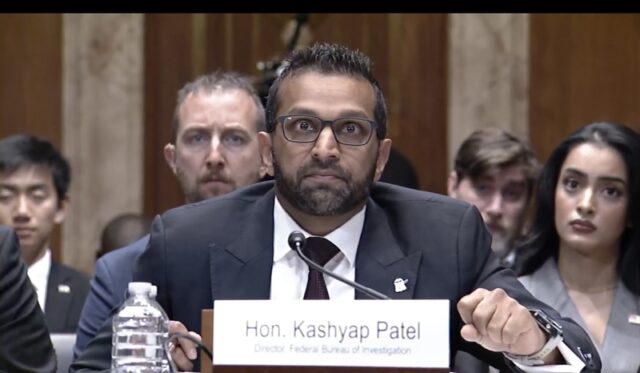
FBI Director Kash Patel filed a $250 million defamation lawsuit Monday against The Atlantic, accusing the publication of publishing a “malicious” and false report about his conduct and leadership at the bureau.
The lawsuit, filed in the U.S. District Court for the District of Columbia, stems from a story published Friday that alleged Patel drank excessively and had unexplained absences from FBI headquarters. Patel’s attorneys called the article a “sweeping, malicious, and defamatory hit piece.”
The report, written by journalist Sarah Fitzpatrick, described an incident on April 10 in which Patel was temporarily locked out of an internal FBI computer system — an episode the article said led him to believe he had been fired and prompted a series of calls to aides and allies.
Patel’s legal team acknowledged the lockout occurred but characterized it as a “routine technical problem” that was quickly resolved. The lawsuit disputes claims that Patel “panicked” or engaged in erratic behavior, saying the FBI informed the magazine before publication that rumors of his firing were unfounded.
The complaint alleges the article contains “demonstrably and obviously false” statements that have harmed Patel’s reputation. His attorneys argue that anonymous sources cited in the report are “partisans with axes to grind” who lacked direct knowledge of the events described.
The lawsuit also rejects claims about Patel’s personal behavior, stating he “does not drink to excess” and that such conduct “has never been a source of concern across the government.”
Additionally, the filing denies suggestions that Patel has used his position to target political adversaries, asserting that personnel decisions at the FBI are based solely on ethics and mission integrity.
In an interview on “Fox Business Sunday,” Patel said he intends to fight the allegations aggressively.
“You want to attack my character, come at me. Bring it on. I’ll see you in court,” he told host Maria Bartiromo.
Patel’s attorney, Jesse Binnall, said in a statement that the lawsuit seeks accountability for what he described as “malicious falsehoods,” adding that “defamatory speech is not free speech.”
The FBI did not immediately respond to requests for comment regarding the lawsuit or the April 10 incident.
Response from The Atlantic
Anna Bross, senior vice president of communications for The Atlantic, said the publication stands by its reporting.
“We will vigorously defend The Atlantic and our journalists against this meritless lawsuit,” she said in a statement.
The lawsuit comes amid ongoing tensions within the FBI following leadership changes under President Donald Trump. Patel, who was confirmed in February 2025 in a largely party-line Senate vote, has overseen a series of personnel decisions, including the dismissal of employees involved in past investigations related to Trump.
Some former FBI officials have filed lawsuits challenging those firings, adding to the legal and political scrutiny surrounding Patel’s tenure.
The dispute also highlights the increasingly adversarial relationship between public officials and media organizations, with high-profile defamation cases becoming more common in politically charged environments.
Patel’s leadership has occasionally drawn attention beyond official duties. Earlier this year, he appeared in widely circulated videos celebrating with the U.S. men’s hockey team at a Winter Olympics event, including footage showing him drinking beer in a locker room while Trump addressed the team by phone.
According to prior reporting, Trump expressed dissatisfaction with Patel following the incident, underscoring tensions within the administration.
The case is expected to move forward in federal court, where Patel will need to meet a high legal bar for defamation as a public official, including proving that the publication acted with actual malice.
Legal experts say the outcome could hinge on the credibility of the article’s sources and whether The Atlantic can substantiate its reporting.