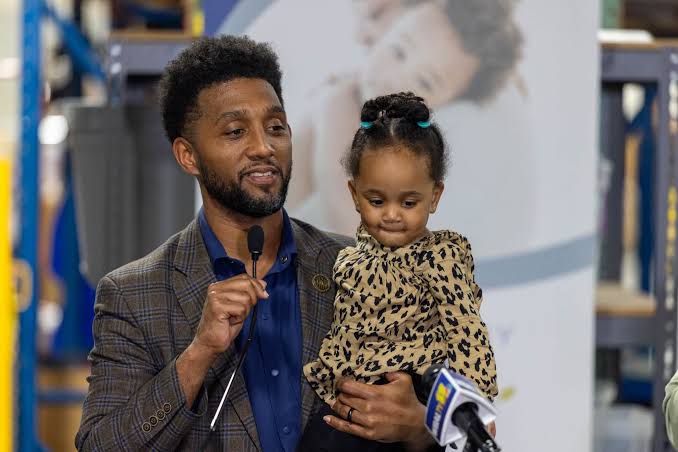
Baltimore families with newborn babies could soon receive direct cash assistance after voters overwhelmingly approved the Baltimore Baby Fund, a city program designed to help parents cover the costs of raising a child during the earliest stages of life.
The measure, approved in the November 3 election, establishes a permanent funding mechanism for financial assistance to eligible families following the birth of a child. The program is intended to reduce financial pressure on new parents, particularly those struggling with housing expenses, child care, food, diapers and other necessities.
The initiative represents a significant development for a city where many families face economic challenges that can make the first year of a child’s life especially difficult.
The political news that affects your wallet, your rights and your vote, broken down in plain language. Free in your inbox.
According to unofficial results from the Maryland State Board of Elections, Question I received 104,926 votes in favor and 44,437 against, with 70.25% supporting the amendment as of the latest published count. All 295 Election Day precincts had reported, although the results remained subject to final certification.
Under the amendment, Baltimore must contribute the equivalent of three cents for every $100 in taxable property value to the fund annually. The money will come from existing property tax revenue rather than a newly imposed tax. The Maryland Child Alliance, which organized the campaign, estimates that the arrangement could generate approximately $17 million in its first year, according to The Baltimore Banner.
The fund can also receive private donations and grants. Once deposited, the money must remain dedicated to improving the economic stability of families with newborns. City officials cannot redirect it toward unrelated expenses or use it to replace funding already allocated to newborn assistance programs.
However, voter approval does not automatically guarantee cash payments to every family with a newborn. The amendment establishes the fund but leaves decisions about how the money will be distributed to Mayor Brandon Scott and the Baltimore City Council. The Baltimore Banner reports that the 2026 measure, unlike an earlier proposal, does not explicitly require direct payments.
Scott has publicly supported the initiative, describing it as an opportunity to provide financial assistance that could help reduce childhood poverty. His administration and the City Council will now be responsible for determining eligibility requirements, the types of assistance available and how families can apply.
The vote also marks a comeback for an initiative that encountered legal obstacles two years earlier. In 2024, organizers pursued a proposal that would have provided direct payments to new parents, but the measure was blocked from appearing on the ballot following a legal challenge. The revised 2026 proposal instead establishes a dedicated funding source while allowing elected officials to design the program.
For Baltimore parents, several important questions remain unanswered, including whether assistance will be universal or income-based, how much individual families might receive and whether benefits will take the form of direct payments or other financial support.
The program could be particularly significant for low-income households, where the expenses associated with childbirth and caring for an infant can consume a substantial portion of family income. Financial assistance during that period could help parents afford basic necessities and manage expenses while recovering from childbirth or taking time away from work.
The Baltimore Baby Fund also represents a longer-term commitment to family assistance because the funding requirement will remain in the city’s charter unless voters approve another amendment changing it.
With the measure approved, attention now turns to Baltimore’s elected leaders, who must determine how to turn the dedicated funding into benefits for families. Until those rules are adopted, residents should not assume that payments are available or that a specific benefit amount has been guaranteed.