Poli Alert Politics & Civics

Related Articles

President Donald Trump on Tuesday abruptly backed away from his call for U.S. allies to help secure the Strait of Hormuz, marking a sharp reversal just one day after urging other nations to “get involved” in protecting the critical global oil chokepoint.
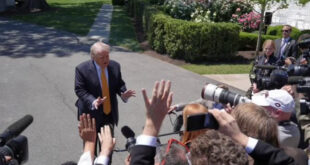
Speaking in the Oval Office alongside Irish Prime Minister Micheál Martin, Trump said additional military support was no longer necessary in the conflict with Iran.
“We don’t need any help, actually,” Trump told reporters, signaling a shift away from coalition-building efforts that had been underway since the war began.
Allies rebuff U.S. request
The reversal followed a notably cool reception from key European allies, exposing widening fractures within NATO as the conflict intensifies.
German Defense Minister Boris Pistorius dismissed the idea of joining U.S. operations, saying, “This is not our war.” Meanwhile, French President Emmanuel Macron said France would not participate in efforts to reopen the strait during active fighting, though it could assist after hostilities end.
Trump responded dismissively to Macron’s remarks, saying the French leader “will be out of office very soon,” despite Macron’s term running through 2027.
Sen. Lindsey Graham, a close Trump ally, said the president was deeply frustrated by the lack of support, warning that the economic consequences of failing to secure the strait “are going to be wide and deep for Europe and America.”
Strategic chokepoint under threat
The Strait of Hormuz, a narrow waterway between the Persian Gulf and the Gulf of Oman, is one of the world’s most vital oil transit routes. Iranian attacks on shipping have effectively disrupted traffic, contributing to rising global energy prices and political pressure in the U.S. ahead of midterm elections.
Trump had previously said “numerous countries” were prepared to assist, with Secretary of State Marco Rubio expected to announce a coalition. No such announcement has materialized.
‘America First’ approach under strain
The episode underscores the challenges of Trump’s “America First” foreign policy doctrine, which has long questioned the value of traditional alliances.
The president has repeatedly criticized NATO members for what he describes as unequal burden-sharing, arguing that the U.S. shoulders disproportionate costs for global security.
That stance has strained relations with European allies, many of whom contributed troops to U.S.-led wars in Iraq and Afghanistan. NATO’s mutual defense clause — Article 5 — has been invoked only once, following the September 11 attacks in defense of the United States.
Diplomats say the lack of consultation before the U.S. and Israel launched strikes against Iran further alienated allies, complicating efforts to build a unified response.
Comparisons to past coalitions
Analysts have contrasted Trump’s approach with that of President George H. W. Bush, who assembled a broad international coalition during the Gulf War in 1990–91.
That effort, built through extensive diplomacy, framed the conflict as a global response to Iraqi leader Saddam Hussein, according to former U.S. officials.
No comparable coalition existed at the outset of the current Iran conflict, diplomats said, with outreach to allies occurring only after military operations were already underway.
Broader geopolitical tensions
The dispute over Hormuz is unfolding amid broader tensions between the U.S. and Europe on multiple fronts, including Russia’s war in Ukraine.
Trump has drawn criticism for his handling of the conflict, particularly comments suggesting Ukrainian President Volodymyr Zelenskyy has been more difficult to negotiate with than Russian President Vladimir Putin.
European officials have also expressed frustration over the administration’s reluctance to impose tougher sanctions on Russia, further straining transatlantic ties.
Uncertain path forward
Despite Tuesday’s reversal, Trump indicated he had not fully abandoned efforts to secure international backing, saying he had not yet made a “full court press” for support.
Still, analysts warn the lack of allied coordination could limit the effectiveness of operations in the Strait of Hormuz and deepen divisions within NATO at a critical moment.
European officials, while critical of U.S. strategy, emphasized the importance of maintaining unity.
“To safeguard our security and stability, we have to stick together,” said Estonian lawmaker Marko Mihkelson.
SEO Elements
Meta description (≤160 characters)
Trump drops push for NATO allies to secure the Strait of Hormuz after European رفض, exposing deep divisions over the Iran war.
Focus key phrase