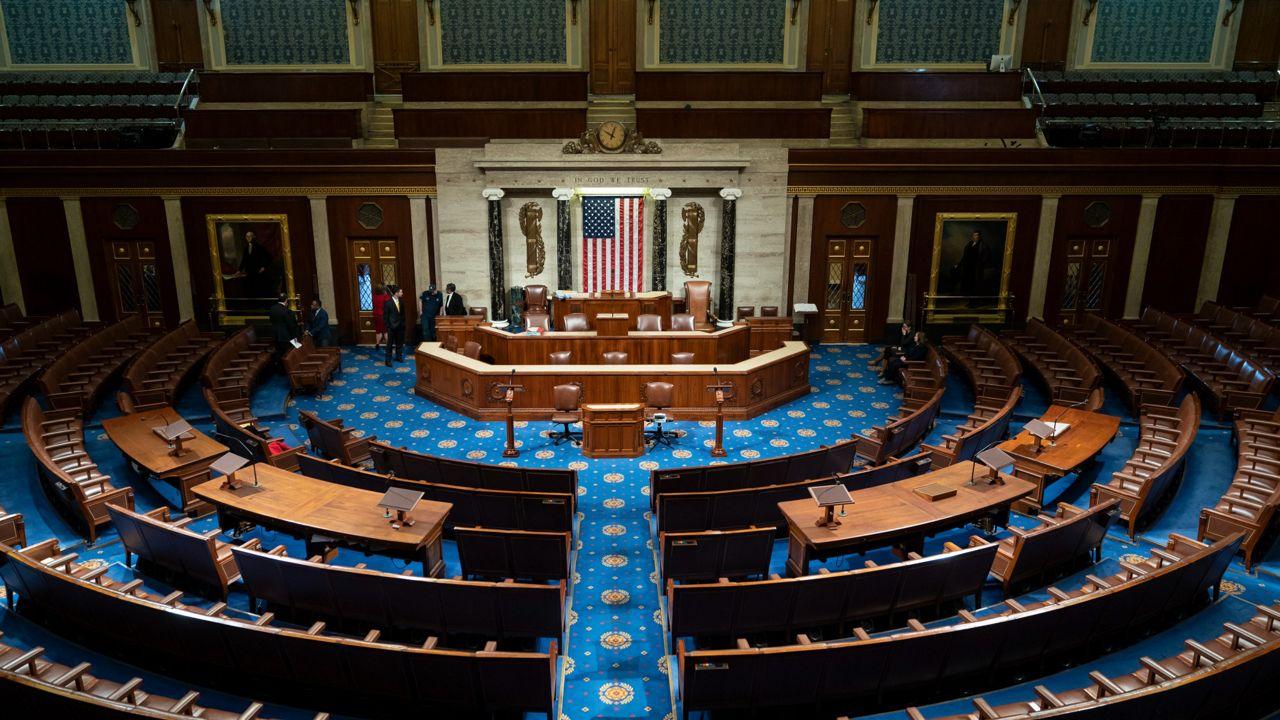
A federal appeals court has ruled that House proxy voting, the pandemic era practice that let members of Congress cast votes on behalf of absent colleagues, was unconstitutional when lawmakers used it to pass a giant 2022 spending law, and it blocked part of that law from being enforced against the state of Texas.
The full U.S. Court of Appeals for the Fifth Circuit, which hears federal appeals from Texas, Louisiana and Mississippi, decided the case 9 to 8 on Friday, according to Roll Call and The Washington Post. When every active judge on an appeals court hears a case together instead of the usual panel of three, it is called an en banc ruling, and it carries more weight inside that circuit.
The case centers on the Pregnant Workers Fairness Act, which requires employers to make reasonable accommodations for workers who are pregnant, recovering from childbirth or dealing with related medical conditions. Congress passed it as part of a roughly $1.7 trillion spending package in December 2022. Texas officials sued in 2023, arguing the package never properly passed the House because many members voted by proxy instead of showing up in person.
The political news that affects your wallet, your rights and your vote, broken down in plain language. Free in your inbox.
Judge Cory T. Wilson, writing for the majority, said the Constitution’s Quorum Clause requires members to be physically present. A quorum is the minimum number of members, a majority of the House, who must be present for the chamber to do business. Wilson wrote that “the Quorum Clause does not allow proxies to be included when establishing a quorum” and that “‘Proxy presence’ does not count.” Roll Call reported that only 201 members were physically present for the final House vote on the package, short of the 218 that make up a majority.
Eight judges dissented in two opinions, Roll Call reported. Judge James Graves Jr., writing for himself and six colleagues, pointed out that both chambers have passed measures by unanimous consent for more than two centuries, a process that does not require a quorum to be counted.
The ruling reverses an earlier decision in the same case. A federal judge in Texas first sided with the state, a three judge Fifth Circuit panel overturned that decision in 2025, and Texas then asked the full court to rehear it.
For workers, the immediate effect is narrow but real. The decision keeps the Pregnant Workers Fairness Act from being enforced against the state of Texas as an employer, so state employees there lose that federal route to request pregnancy accommodations while the ruling stands. Inimai Chettiar, president of the worker advocacy group A Better Balance, said the decision “effectively erases essential rights to pregnancy accommodations for workers across Texas.”
House Democrats adopted proxy voting in 2020 during the COVID pandemic, and Republicans scaled it back after they took control of the chamber, Roll Call reported. Rep. Chip Roy, a Texas Republican who is leaving Congress, wrote on X that he had been “proud to be fighting unconstitutional proxy voting. This is a good result.”
The larger question is how far the ruling reaches. The 2022 package funded much of the federal government that year, and The Washington Post reported the decision could open the door to challenges against other laws passed while proxy voting was in place. Roll Call reported the ruling could be appealed to the Supreme Court, which would have the final say on whether votes cast by proxy count toward a quorum.