A coalition of 22 states and the District of Columbia sued the Trump administration Monday over a new housing rule that could eliminate federal rental assistance for approximately 20,000 families nationwide, including households with American citizens who are legally eligible for benefits.
The lawsuit, filed in the U.S. District Court for the District of Massachusetts, challenges a Department of Housing and Urban Development (HUD) rule scheduled to take effect Dec. 14. New York Attorney General Letitia James, California Attorney General Rob Bonta and Massachusetts Attorney General Andrea Joy Campbell are leading the legal challenge.
The housing rule targets families with mixed immigration statuses, meaning households that include both people who qualify for federal housing assistance and relatives who are ineligible because of their immigration status.
The political news that affects your wallet, your rights and your vote, broken down in plain language. Free in your inbox.
For nearly three decades, these households have received prorated assistance, meaning federal subsidies are calculated to cover only eligible family members. Under the new policy, an ineligible household member could disqualify the entire family from receiving assistance.
The changes affect public housing, Section 8 housing vouchers and other federally subsidized rental assistance programs.
According to HUD estimates cited by the attorneys general, approximately 78,100 people could be affected nationwide. About 55,000 are otherwise eligible for housing assistance, including American citizens and eligible immigrants.
Children account for approximately 65% of eligible individuals living in affected households, according to figures reported by Stateline.
“No child should lose their home over a parent’s immigration status,” Bonta said during a Monday news conference, according to The Associated Press.
California alone could see approximately 7,000 households affected.
The lawsuit also challenges new citizenship verification requirements that extend beyond families with mixed immigration statuses.
Under the new housing rule, American citizens receiving federal assistance would be required to provide their Social Security numbers and consent to citizenship verification through the federal Systematic Alien Verification for Entitlements database, commonly known as SAVE.
Recipients whose citizenship cannot be electronically confirmed would be required to produce additional documentation, such as a certified birth certificate, passport or naturalization certificate.
The attorneys general estimate that 3.8 million adult American citizens lack documents establishing their citizenship, while another 17.5 million face difficulties obtaining them.
James’ office also raised concerns about inaccuracies in the SAVE database, saying naturalized citizens and older Americans could encounter verification problems because of incomplete or outdated government records.
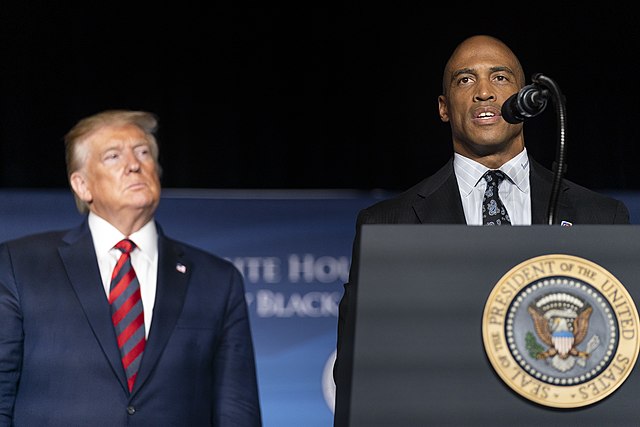
HUD Secretary Scott Turner defended the policy, arguing that federal housing resources should be reserved for eligible recipients.
Turner told Stateline that the administration expects the changes to redirect up to $218 million in housing subsidies to eligible Americans currently on waiting lists. That figure represents an administration projection rather than independently verified savings.
The states argue that Congress explicitly authorized prorated assistance for families with mixed immigration statuses and that HUD cannot eliminate those protections through administrative rulemaking.
Their lawsuit alleges violations of the Administrative Procedure Act, a federal law governing how agencies develop and implement regulations.
The coalition also warns that the policy could increase homelessness, place additional financial pressure on state and local governments and discourage private landlords from participating in federal housing programs.
HUD’s final regulation acknowledges potential displacement but retains certain temporary transition protections for existing households.
The attorneys general are asking the federal court to declare the housing rule unlawful and block its implementation. Without court intervention, the regulation is scheduled to take effect Dec. 14, although the effective date does not mean all affected families will immediately lose assistance.