


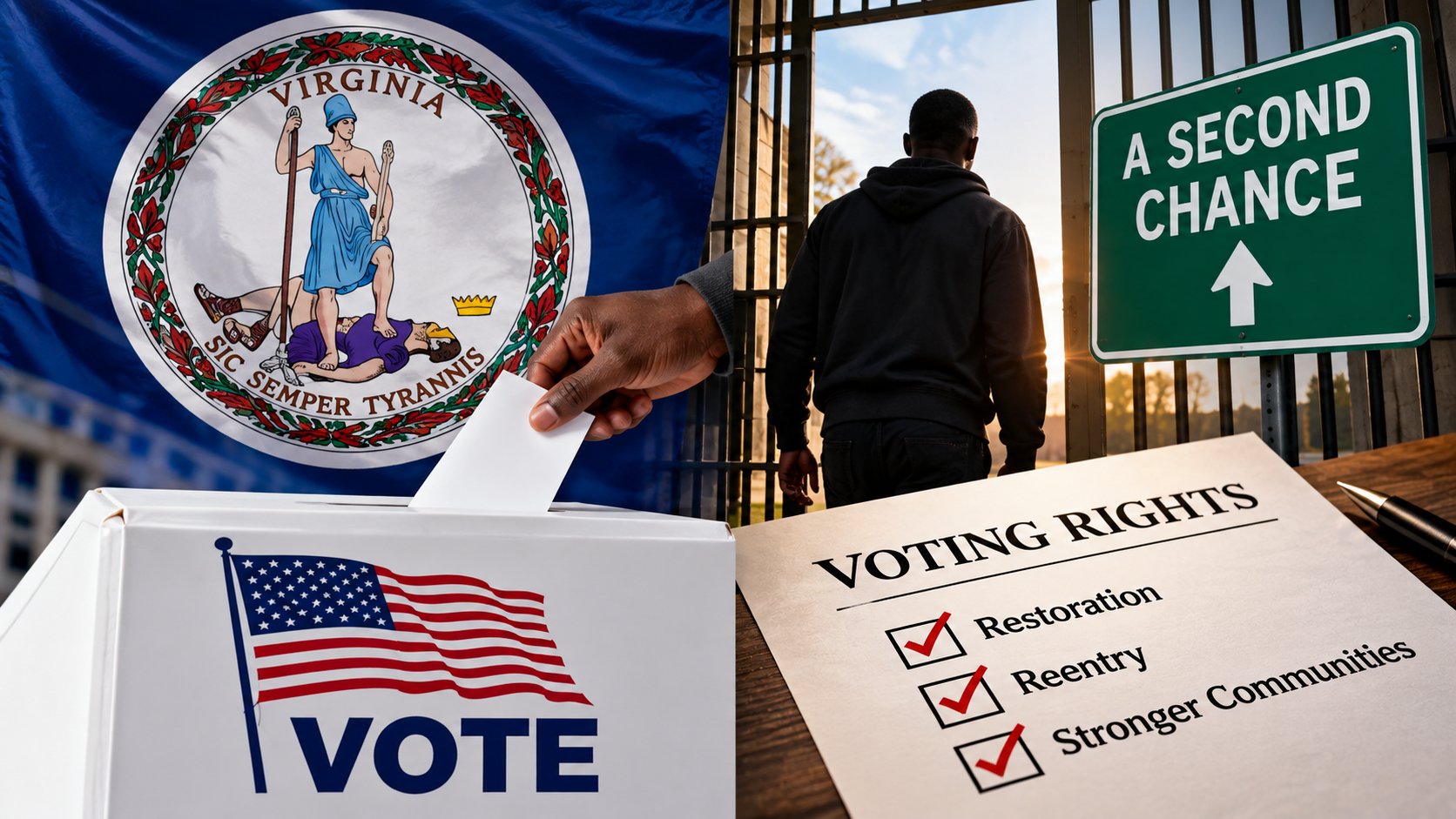
Virginia Question 3 would change the state constitution so that people convicted of a felony lose their right to vote only while they are incarcerated, with that right returning automatically when they are released, and voters will decide it on Tuesday, November 3.
Right now, a felony conviction in Virginia takes away the right to vote, serve on a jury, run for office and serve as a notary, among other rights, according to Ballotpedia’s description of the measure. Voting rights come back only when the governor restores them, one person at a time. Virginia Question 3 would remove the governor from that step for voting.
The amendment also declares a fundamental right to vote for qualified voters. It changes a second rule as well. The constitution now disqualifies people who have been “adjudicated to be mentally incompetent,” and the amendment would instead cover only people a court specifically finds lack the capacity to understand the act of voting, with rights returning once that capacity is restored.
The political news that affects your wallet, your rights and your vote, broken down in plain language. Free in your inbox.
Gov. Abigail Spanberger, a Democrat, has argued that Virginia is among the worst states at restoring rights to people who have finished their sentences, according to Ballotpedia. Del. Elizabeth Bennett-Parker, a Democrat and the sponsor, called the current system a relic of the 1902 constitution and said automatic restoration helps people return to their communities. Del. Mike Cherry, a Republican, said constitutional rights should be hard to take away and returned as quickly as possible. The campaign is led by the Virginia Right to Vote Coalition, with support from the ACLU of Virginia, the League of Women Voters and The Sentencing Project.
The Republican Party of Virginia opposes the measure. Former Del. Todd Gilbert, a Republican, argued that people convicted of felonies who never go to jail would keep voting with no other consequence. Former Del. Paul Milde, also a Republican, argued that the governor’s restoration process gives people a reason to rehabilitate. Former Del. Tim Anderson, another Republican, argued the new wording on mental capacity could let people who are mentally incapacitated vote.
A January Wason Center poll found 64 percent of Virginians in support and 30 percent opposed, according to Ballotpedia, which also reports that committees backing Virginia Question 3 have raised about $679,000 compared with about $10,500 for committees opposing it. A federal court ruling in January had already changed how some felony convictions affect voting rights in the state.
Question 3 is one of three constitutional amendments on the Virginia ballot. The other two would add protections for reproductive health decisions, including abortion, and remove the constitution’s ban on same sex marriage, according to a ballot guide from the group Take Action SWVA.
The sources reviewed do not give an effective date if voters approve it. Voters can confirm ballot details, hours and early voting rules with the Virginia Department of Elections.

