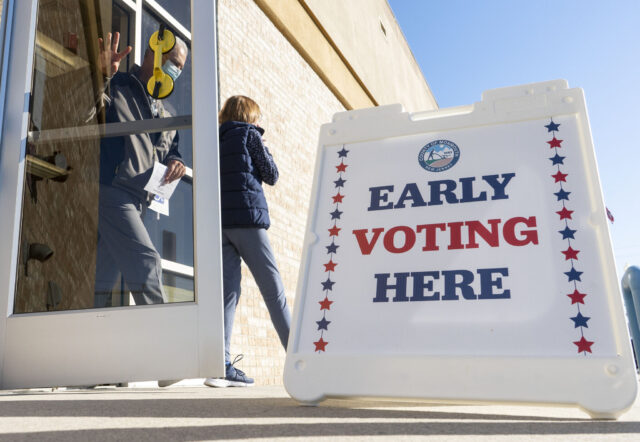
The midterm election deadlines are down to their final days in most states, with registration closed nearly everywhere and early voting wrapping up this weekend ahead of Election Day on Tuesday, November 3. This guide uses information from each state’s official election office, and voters should confirm their own polling place, hours and deadlines with that office, since rules can differ by county.
In Georgia, polls are open from 7 a.m. to 7 p.m., according to the Georgia secretary of state’s office, and anyone in line at 7 p.m. can still vote. Voters need a valid photo ID, and a free voter ID card is available at any county board of registrars office. Absentee ballots must reach the county registrar by 7 p.m. on Election Day. A voter who is handed a provisional ballot, which is a ballot set aside until officials confirm the voter is eligible, has three days after Election Day to resolve the problem.
Texas early voting ends Friday, October 30, the Texas secretary of state’s office said, and polls on Election Day are open from 7 a.m. to 7 p.m. statewide. The office tells voters to bring an approved form of ID and points to VoteTexas.gov for the list. In counties that do not use countywide polling, voters have to go to their assigned location.
The political news that affects your wallet, your rights and your vote, broken down in plain language. Free in your inbox.
North Carolina’s in person early voting ends Saturday, October 31 at 3 p.m., according to the State Board of Elections. Same day registration is offered during the early voting period, so the window closes with it. Mail ballots must be received by 7:30 p.m. on Election Day, and polls are open from 6:30 a.m. to 7:30 p.m. Those are some of the tightest midterm election deadlines in the country.
In Virginia, early in person voting ends at 5 p.m. Saturday, October 31, the Virginia Department of Elections said. The registration deadline was October 23, but the department says people who missed it can still register and vote a provisional ballot in person through Election Day.
Florida’s Division of Elections lists October 24 through 31 as the required early voting period, though county supervisors of elections can offer more days. The registration deadline was October 5 and the deadline to request a mail ballot was October 22. Voters who already have a mail ballot should ask their county supervisor of elections how and where to return it.
Michigan’s Department of State said early in person voting runs through Sunday, November 1, and some communities add hours on Monday. Mail ballots must be received by clerks by 8 p.m. on Election Day, and the state recommends using a drop box or hand delivering the ballot to avoid postal delays. Someone who is not registered can register at a local clerk’s office and vote in the same trip until 8 p.m. on Election Day.
Pennsylvania’s Department of State said completed mail ballots must be received by the county election office by 8 p.m. on November 3, and ballots that arrive after that cannot be counted. The deadline to apply for a mail ballot was October 27.
California polls are open from 7 a.m. to 8 p.m., the California secretary of state’s office said. Mail ballots must be postmarked on or before Election Day and received by county elections offices by November 10. Same day registration runs through Election Day, with the voter casting a provisional ballot.
Several states also have voting rules on the ballot itself. California’s Proposition 39 would require ID to vote, North Carolina voters will decide whether to write a photo ID requirement for mail ballots into the state constitution, and Virginia’s Question 3 would automatically restore voting rights to people with felony convictions once they leave prison. Poli Alert is covering those measures in separate stories, and voters in New York, Maryland, Illinois, Louisiana, Alabama and Washington DC can find their own hours and midterm election deadlines through their state or district election offices.
Results reported on election night are unofficial. Official results come after counties and states finish counting and certifying, and Poli Alert will report outcomes only after official sources or major news organizations have called a race and will say which.