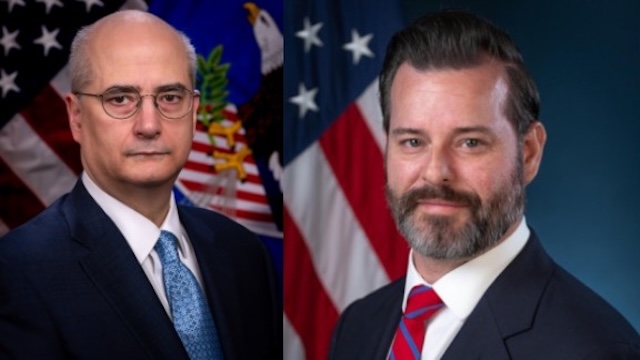
John Eisenberg, who led the department’s National Security Division, and Jason Reding Quiñones, the U.S. attorney for the Southern District of Florida, both stepped down Friday. Their departures follow Thursday’s resignation of Harmeet Dhillon, who headed the department’s Civil Rights Division.
The three departures within two days represent a significant shake-up for the Justice Department as the Trump administration prepares to face a Congress controlled by Democrats.
Attorney General Todd Blanche announced Quiñones’ resignation in a social media statement, praising his work on violent crime, drug trafficking, sex trafficking and transnational crime. Blanche also credited him with overseeing the indictment of former Cuban leader Raúl Castro.
The political news that affects your wallet, your rights and your vote, broken down in plain language. Free in your inbox.
Blanche did not publicly provide a specific reason for Quiñones’ departure.
Eisenberg’s resignation was also confirmed by Blanche, according to Reuters. However, the circumstances surrounding his decision and the identity of his potential replacement had not been publicly explained as of Friday.
Quiñones’ departure is particularly significant because his South Florida office oversaw a controversial investigation into alleged efforts by former Obama and Biden administration officials to undermine Trump and his political interests.
The investigation, described by the administration’s allies as a search for a broader conspiracy, targeted former intelligence and law enforcement officials connected to investigations of Trump’s 2016 presidential campaign and his first administration.
The Washington Post reported that the investigation had struggled to produce major criminal charges and experienced significant internal personnel departures. Former CIA Director John Brennan and former Director of National Intelligence James Clapper were among the prominent figures subpoenaed as part of the inquiry.
CNN reported that Quiñones had been under pressure from Justice Department leadership despite his willingness to pursue investigations involving Trump’s political opponents. The network also reported disagreements over the investigation’s progress.
His resignation raises questions about whether the investigation will continue under new leadership or undergo another change in direction.
The departures are also happening as Democrats prepare to assume control of Congress. With Republicans losing their congressional majorities, the Trump administration could face increased scrutiny of its Justice Department decisions, investigations and leadership appointments.
A Democratic-controlled Senate could also complicate the confirmation of Trump’s nominees to fill senior positions requiring Senate approval. The administration can still use acting officials to fill certain vacancies, subject to federal law.
Dhillon’s departure adds another dimension to the leadership changes. During her tenure, the Civil Rights Division underwent a major transformation, including changes to its enforcement priorities and the departure of a substantial portion of its workforce. The Associated Press reported that Dhillon described her resignation as voluntary and said she had decided weeks earlier to return to private practice.
For now, the Justice Department has not publicly established that the three departures were coordinated or directly caused by the midterm results. The timing, however, places the leadership changes at the center of questions about the department’s direction as the political balance in Washington shifts.
The next steps will include determining who takes over the vacant leadership positions and whether the department’s ongoing investigations will continue under the same priorities.