Poli Alert Politics & Civics

Related Articles

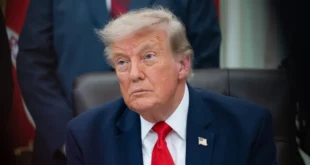
President Donald Trump secretly switched aircraft in Turkey last month after U.S. intelligence officials identified a credible Iranian threat against him, using an airport catering truck to move him from the plane journalists believed was carrying him to a smaller military aircraft, according to people familiar with the operation and materials reviewed by The Washington Post.
The extraordinary security maneuver allowed Trump to leave Turkey aboard a C-32A military jet while the White House publicly maintained that he had departed on the former Air Force One.
The operation concealed Trump’s actual whereabouts for hours from the American public, members of the White House press corps and some administration officials who believed they were traveling aboard the presidential aircraft.
The deception unfolded July 8 in Ankara, where Trump had attended a NATO summit as U.S. forces continued military strikes against Iran. Intelligence officials had flagged a specific threat involving an attack on Trump or his aircraft, prompting the additional security measures, according to reporting by The Washington Post, The New York Times and CBS News.
Trump had arrived in Turkey aboard a newer Boeing 747-8 gifted to the United States by Qatar. The aircraft had recently entered service as the new Air Force One but had drawn scrutiny over whether it possessed all of the defensive capabilities of the legacy presidential aircraft.
A presidential decoy
Trump publicly boarded the older blue-and-white Air Force One in full view of television cameras, waving goodbye before entering the plane.
But he did not remain aboard.
Minutes later, Trump and several aides were secretly transferred from the aircraft to a smaller C-32A using an airport catering truck. The vehicle was positioned alongside the opposite side of the plane from where journalists and other personnel were boarding, according to a U.S. official familiar with the operation.
Video reviewed by The Post appears to show the catering truck being raised to the level of the presidential aircraft before being driven toward the nearby C-32A.
The C-32A, a modified Boeing 757 commonly used to transport senior U.S. officials, had been flown to Turkey as part of the presidential travel operation. Defense Secretary Pete Hegseth also boarded the aircraft separately.
The flight traveled under the call sign “Reach 18,” rather than the Air Force One designation normally associated with an aircraft carrying the president.
Meanwhile, journalists and White House personnel boarded the legacy Air Force One, which later used the “AF1” call sign despite Trump not being aboard.
White House staff instructed reporters to close the plane’s window shades as the aircraft departed Turkey.
Why Trump was moved
The security operation came amid heightened concerns about Iranian retaliation against Trump and other U.S. officials.
Those concerns have deepened since the United States killed Iranian military commander Qassem Soleimani in 2020. Iranian officials and affiliated groups have repeatedly threatened retaliation against American officials involved in the operation.
Trump’s travel through Turkey presented an additional security challenge because the NATO ally shares a border with Iran.
The newer Boeing 747-8 Trump had used to reach Turkey had also become a subject of controversy. The aircraft, provided by Qatar for use as Air Force One, entered service with the administration in July but reportedly lacks some defensive countermeasures found on the older presidential aircraft.
The Trump administration has insisted that the aircraft is secure.
White House communications director Steven Cheung said the plane has been equipped with “high-level security protocols” designed to protect the president and his staff.
The Air Force has likewise said the aircraft is safe and equipped with the technology necessary to meet the presidential mission.
An unusual breach of transparency
Presidential travel is normally accompanied by members of the White House press corps, who serve as an independent record of the president’s movements on behalf of the public.
There have been instances in which presidents’ locations were temporarily concealed for security reasons. After the Sept. 11 attacks, for example, President George W. Bush was moved to an undisclosed location while officials withheld details of his whereabouts.
But the Trump operation went further by allowing the White House to maintain a public account that was not accurate about which aircraft carried the president.
Journalists aboard the legacy Air Force One were unaware that Trump had changed planes or that a specific threat had prompted the deception.
That raises questions about the balance between presidential security and the public’s ability to independently verify the president’s movements.
The Air Force One controversy
The episode also adds another layer to an increasingly contentious debate over the new aircraft gifted by Qatar.
Trump had promoted the new plane while traveling to Turkey but later announced that he would leave the country aboard the former Air Force One “for old time’s sake.”
Instead, the newer aircraft departed Turkey first while Trump secretly transferred to the C-32A.
The legacy Air Force One later continued toward Britain with journalists and White House staff aboard. After landing, Trump appeared before cameras and descended from the older aircraft, creating the appearance that he had traveled aboard it from Turkey.
The White House subsequently posted photographs identifying the legacy aircraft as the plane Trump used to arrive in Britain.
Trump later told reporters that the security precautions were necessary because of the threats he faces.
“I have a threat all the time,” Trump said, adding that he was “number one” on Iran’s list.
Security versus public accountability
The operation underscores the extraordinary security concerns surrounding the president during the conflict with Iran. It also highlights the difficult line between protecting a president from credible threats and maintaining public transparency about presidential movements.
The use of a decoy aircraft is not unprecedented. Similar tactics have been used by previous administrations when presidents traveled through dangerous areas or faced elevated security risks.
But the scale of the deception — involving multiple aircraft, military personnel, White House staff and journalists, some of whom were unaware of the president’s location — makes the episode particularly unusual.
The administration has not publicly explained the full circumstances surrounding the operation or disclosed how widely the deception was known within the government.
The episode also comes amid heightened scrutiny of the Trump administration’s handling of information involving presidential security, including its response to reporting about vulnerabilities in the new Air Force One and its subsequent efforts to identify journalists’ confidential sources.
Ultimately, the Turkey operation illustrates the competing demands surrounding presidential security: protecting the commander in chief from credible threats while preserving the public’s ability to know where its elected president is and how the government is protecting him.