Poli Alert Politics & Civics

Related Articles

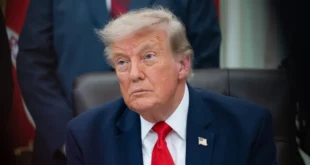

The Trump administration has approved just one applicant for its new “gold card” visa program, months after opening applications for the high-priced pathway to U.S. residency, according to Commerce Secretary Howard Lutnick.
Testifying before a House subcommittee on Thursday, Lutnick said the program — which requires a $1 million payment to the U.S. government — is still in its early stages, with hundreds of applicants awaiting review.
“They have approved, recently, one person, and there are hundreds in the queue,” Lutnick told lawmakers, adding that officials wanted to ensure the process was handled “perfectly.”
High price, slow rollout
The “gold card” visa, announced last year by President Donald Trump, is designed as a fast-track residency option for wealthy foreign nationals while generating revenue for the federal government.
Applicants must pay a $15,000 processing fee to the U.S. Department of Homeland Security in addition to the $1 million contribution. The Department of Homeland Security oversees the program, though Lutnick said the application process was only recently finalized in coordination with his department.
The program’s website promises approvals in “record time,” but the approval of just one applicant underscores a slower-than-expected rollout.
‘Most serious’ vetting process
Lutnick defended the pace, describing the screening process as exceptionally strict.
“The vetting process is the most serious … in the history of government,” he said, without providing specifics about the criteria used to evaluate applicants.
He did not disclose any details about the individual who has been approved, and the Commerce Department did not immediately respond to requests for additional comment.
Questions over funding and transparency
Lawmakers also pressed Lutnick on how the $1 million payments would be used. Rep. Grace Meng, a Democrat from New York, asked whether the funds would be earmarked for specific programs.
Lutnick said the money would go toward “the betterment” of the United States, but acknowledged that final decisions on how to allocate the funds would be made by the administration.
The lack of detail could draw scrutiny as the program expands, particularly given its potential to generate significant revenue if hundreds of pending applications are approved.
What comes next
With hundreds of applicants already in line, officials are expected to accelerate approvals in the coming months if the vetting system proves effective. Still, the slow start highlights the tension between speed and security in a program built around both rapid access and strict screening.
The initiative marks one of the most high-profile efforts by the Trump administration to reshape legal immigration policy around economic investment — a model used in various forms by other countries but now facing its first real test in the United States.