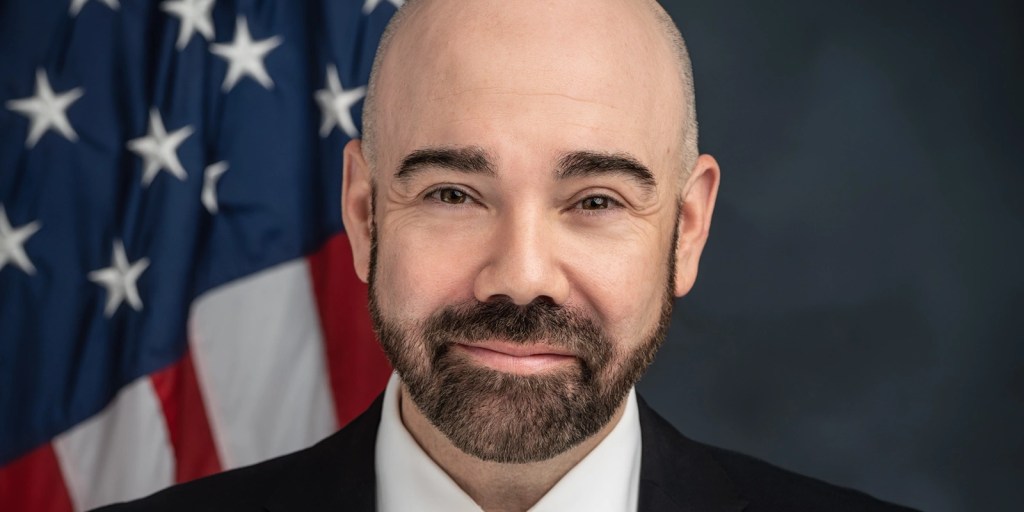
Donald Trump has selected Craig Trainor, a Justice Department official involved in the administration’s efforts to restrict diversity programs in schools, to serve as acting assistant attorney general for civil rights, placing him in charge of the federal division responsible for enforcing some of the nation’s most important anti-discrimination laws.
The appointment follows the resignation of Harmeet Dhillon, who stepped down November 5 after leading the Justice Department’s Civil Rights Division during a period of significant changes to its enforcement priorities.
Attorney General Todd Blanche announced Trainor’s appointment, putting him in charge of a division that investigates allegations of racial discrimination, protects voting rights, enforces fair housing laws and pursues cases involving misconduct by law enforcement agencies.
The political news that affects your wallet, your rights and your vote, broken down in plain language. Free in your inbox.
Trainor’s selection comes as the Trump administration continues efforts to eliminate diversity, equity and inclusion programs across the federal government and institutions receiving federal funding.
Before taking the acting leadership position, Trainor worked on the administration’s education-related civil rights agenda, including efforts to challenge school policies that federal officials contend unlawfully discriminate based on race.
The administration has argued that certain diversity initiatives violate federal civil rights laws by treating individuals differently because of their race. Civil rights organizations, meanwhile, have challenged efforts to restrict programs intended to address longstanding discrimination and expand educational opportunities.
The dispute has raised questions about how federal civil rights protections should be interpreted and enforced, particularly when policies designed to increase opportunities for historically underrepresented groups face allegations of discrimination.
The Civil Rights Division plays a central role in those disputes.
Created in 1957, the division enforces federal laws prohibiting discrimination based on race, color, religion, sex, disability and other protected characteristics, depending on the statute involved.
Its responsibilities include enforcing the Voting Rights Act, which prohibits racial discrimination in voting, and the Fair Housing Act, which prohibits discrimination in housing.
The division can investigate state and local governments, school districts, employers and other institutions. It can also bring federal lawsuits when officials determine that civil rights laws have been violated.
For Black Americans, the division has historically played an important role in challenging discriminatory voting practices, housing discrimination and unequal treatment by public institutions.
Its enforcement decisions can determine whether the federal government intervenes in disputes involving voting access, racial discrimination in schools or allegations of unconstitutional policing.
The division’s leadership also has considerable influence over which cases receive attention and how federal attorneys interpret existing civil rights protections.
Trainor’s appointment does not change those laws. However, his leadership will help determine how the Justice Department applies them and which enforcement priorities receive federal resources.
The transition also follows Dhillon’s departure after a tenure marked by changes to the division’s approach to civil rights enforcement under Trump.
As acting assistant attorney general, Trainor can oversee the division while serving in a temporary capacity. A permanent assistant attorney general generally requires presidential nomination and Senate confirmation.
The appointment does not itself establish whether the Justice Department will open, close or change any particular civil rights investigation.
The next developments will include whether Trainor announces additional enforcement priorities, changes the division’s approach to existing litigation or directs federal attorneys to pursue new cases involving school diversity policies.
Those decisions will help establish how the Justice Department intends to enforce federal civil rights protections under its new leadership.