Poli Alert Politics & Civics
Related Articles


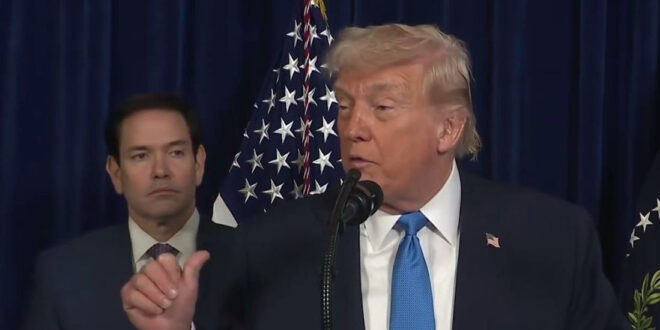
Donald Trump on Sunday sharply criticized Iran’s response to the latest U.S. peace proposal aimed at ending the ongoing conflict in the Middle East, calling Tehran’s position “totally unacceptable” as renewed clashes around the Strait of Hormuz threatened an already fragile ceasefire.
Trump’s comments came hours after Iranian state media reported that Tehran had delivered its counterproposal through Pakistani mediators.
“I have just read the response from Iran’s so-called ‘Representatives.’ I don’t like it — TOTALLY UNACCEPTABLE! Thank you for your attention to this matter,” Trump wrote on Truth Social without elaborating.
Markets reacted quickly Monday, with Brent crude oil prices jumping more than 3% to nearly $105 a barrel amid fears of further instability in the region. Stock markets were mixed in early trading.
In Tehran, Iranian Foreign Ministry spokesman Esmaeil Baqaei defended the proposal as “reasonable and generous” during a news conference carried by state media.
Baqaei said Iran’s demands included “ending the war, lifting blockades, halting maritime piracy, freeing frozen assets and ensuring security in the Strait of Hormuz and security in Lebanon and the region.”
Iranian outlets indicated the proposal largely mirrored Tehran’s previous negotiating position, including demands for a formal end to the war, reopening of the Strait of Hormuz, removal of naval vessels enforcing the U.S. blockade, the lifting of sanctions and an effective ceasefire in Lebanon. Tehran also reportedly sought an additional 30 days of negotiations and proposed that discussions regarding its nuclear program be handled separately in future talks.
Trump escalated his rhetoric Sunday in another Truth Social post, accusing Iran of “playing games with the United States” and warning that Tehran “will be laughing no longer.”
The latest exchange follows several days of escalating military confrontations in and around the Strait of Hormuz, despite both Washington and Tehran publicly maintaining that a ceasefire remains in effect.
Secretary of State Marco Rubio said Friday during a visit to Italy that the administration hoped Iran would provide a “serious offer.”
Rubio’s remarks came after U.S. warplanes struck two Iranian-flagged tankers that U.S. Central Command accused of violating an American naval blockade by attempting to enter an Iranian port in the Gulf of Oman.
Iran has claimed control over the Strait of Hormuz and said Thursday it attacked three U.S. destroyers in retaliation for American military actions in the region, including strikes on an Iranian merchant vessel. Tehran said ballistic missiles, cruise missiles and drones inflicted heavy damage on the U.S. ships, though American officials said the vessels escaped unharmed.
The U.S. later carried out airstrikes on targets on Qeshm Island and near the coastal city of Bandar Abbas.
On Saturday, Rubio and White House Middle East envoy Steve Witkoff met with Mohammed bin Abdulrahman Al Thanito discuss diplomatic efforts to end the war, according to a statement from Qatar’s government.
The talks also focused on Pakistan’s mediation role in easing tensions and restoring stability in the region.
Meanwhile, Qatar’s defense ministry said Sunday that a commercial cargo vessel traveling from Abu Dhabi was struck by a drone off the coast of Doha, sparking a small fire.
Iranian Foreign Minister Abbas Araghchi later spoke by phone with Qatar’s prime minister, according to Qatari officials.
Speaking Sunday on ABC’s “This Week,” U.S. ambassador to the United Nations Mike Waltz suggested the negotiations were progressing slowly because Iran’s leadership had been “devastated and fractured.”
Waltz also defended efforts to reopen the Strait of Hormuz, saying the administration was pushing for a new United Nations resolution condemning Iran’s actions in international waterways.
Energy Secretary Chris Wright said Sunday that the administration expected to formally receive Iran’s proposal soon and predicted that freedom of navigation through the strait would ultimately be restored.
“We know where this is going to end,” Wright said on CBS’s “Face the Nation.” “We don’t know the route to there, but at the end of the day, we’ll have free flow of traffic through the Strait of Hormuz, and we will have an end to the Iranian nuclear program.”
Wright also said on NBC’s “Meet the Press” that the administration remained open to policy ideas aimed at easing fuel costs for Americans, including a potential suspension of the federal gas tax.
The intensifying conflict has fueled growing domestic political concerns. A recent The Washington Post-ABC News-Ipsos poll found that Trump’s war in Iran is as unpopular as the Iraq War during its deadliest period in 2006 and the Vietnam War during the early 1970s.
According to the survey, 60% of Americans believe the conflict has increased the likelihood of a recession. More than four in 10 respondents said high gas prices have forced them to cut household spending or drive less, while more than three in 10 said they had altered travel or vacation plans.