Poli Alert Politics & Civics
Related Articles



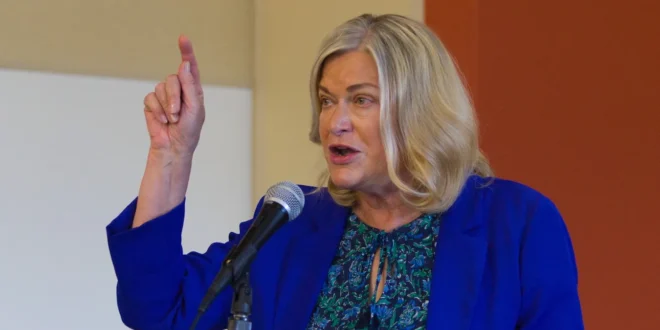
Sen. Cynthia Lummis of Wyoming announced Friday that she will not seek re-election next year, ending her Senate career after a single term and opening a safely Republican seat in one of the party’s strongest states.
Lummis, 71, cited the physical and mental toll of the job, saying she no longer felt able to commit to another six-year term.
“I am a devout legislator, but I feel like a sprinter in a marathon,” Lummis said in a statement. “The energy required doesn’t match up.”
Her decision represents a reversal after previously signaling openness to another run, and adds to a growing list of veteran lawmakers opting to step aside amid the demands of modern congressional politics.
Close Trump ally exits after one term
Elected in 2020, Lummis aligned herself closely with President Donald Trump and emphasized her support for his agenda in announcing her retirement.
“I am honored to have earned the support of President Trump and to have the opportunity to work side by side with him to fight for the people of Wyoming,” she said, adding that she intends to focus her remaining time in office on advancing legislation in 2026 and helping Republicans maintain control of the Senate.
Lummis’ departure comes at a moment when Republicans are seeking to solidify their Senate majority heading into the 2026 midterms, though her seat is expected to remain firmly in GOP hands.
Trump carried Wyoming by more than 45 percentage points in 2024. Lummis won her Senate race four years earlier by a similar margin.
Policy legacy centered on emerging technology
Despite serving just one term, Lummis carved out an influential role on technology policy, becoming one of Congress’ most prominent advocates for the cryptocurrency industry.
She spearheaded legislative efforts to regulate digital assets and pushed to position the United States as a global leader in cryptocurrency adoption. Earlier this year, she introduced legislation aimed at shielding artificial intelligence companies from certain liability lawsuits, provided they meet disclosure requirements.
At times, Lummis also broke with Trump. She was among several Republican senators who publicly raised concerns about the president’s decision to privately meet with investors tied to his $TRUMP meme token, citing potential ethical and regulatory issues.
GOP succession already taking shape
Republican strategists quickly signaled confidence that the seat will remain in the party’s column.
Alex Latcham, senior director of the Senate Leadership Fund — a super PAC aligned with GOP leadership — praised Lummis’ tenure, calling her conservative record “unquestioned.”
Her retirement immediately set off speculation about a successor, with Rep. Harriet Hageman, Wyoming’s lone member of the House, widely viewed as a leading contender. Two sources familiar with her thinking said Hageman is likely to run.
Hageman, 63, gained national attention after defeating then-Rep. Liz Cheney in the 2022 Republican primary, cementing her status as a Trump-aligned conservative in the deep-red state.
Tim Murtaugh, Hageman’s political adviser, said an announcement is expected next week.
In a statement Friday, Hageman praised Lummis as a fierce advocate for Wyoming’s interests.
“She knew that to do what’s right for our people, she had to first make sure folks in D.C. knew how their actions would affect us out west,” Hageman said. “There can be no question that the people of Wyoming are better off for having had Cynthia Lummis on their side.”
Another senior lawmaker steps aside
Lummis’ exit adds to a broader reshuffling ahead of the 2026 elections, as aging lawmakers reassess the toll of Senate service amid long sessions, constant travel and increasingly polarized politics.
While her departure is unlikely to alter the partisan balance in Wyoming, it gives Republicans an open-seat contest that could test the party’s internal dynamics in the Trump era — particularly as candidates vie to prove their allegiance to the former president and his agenda.