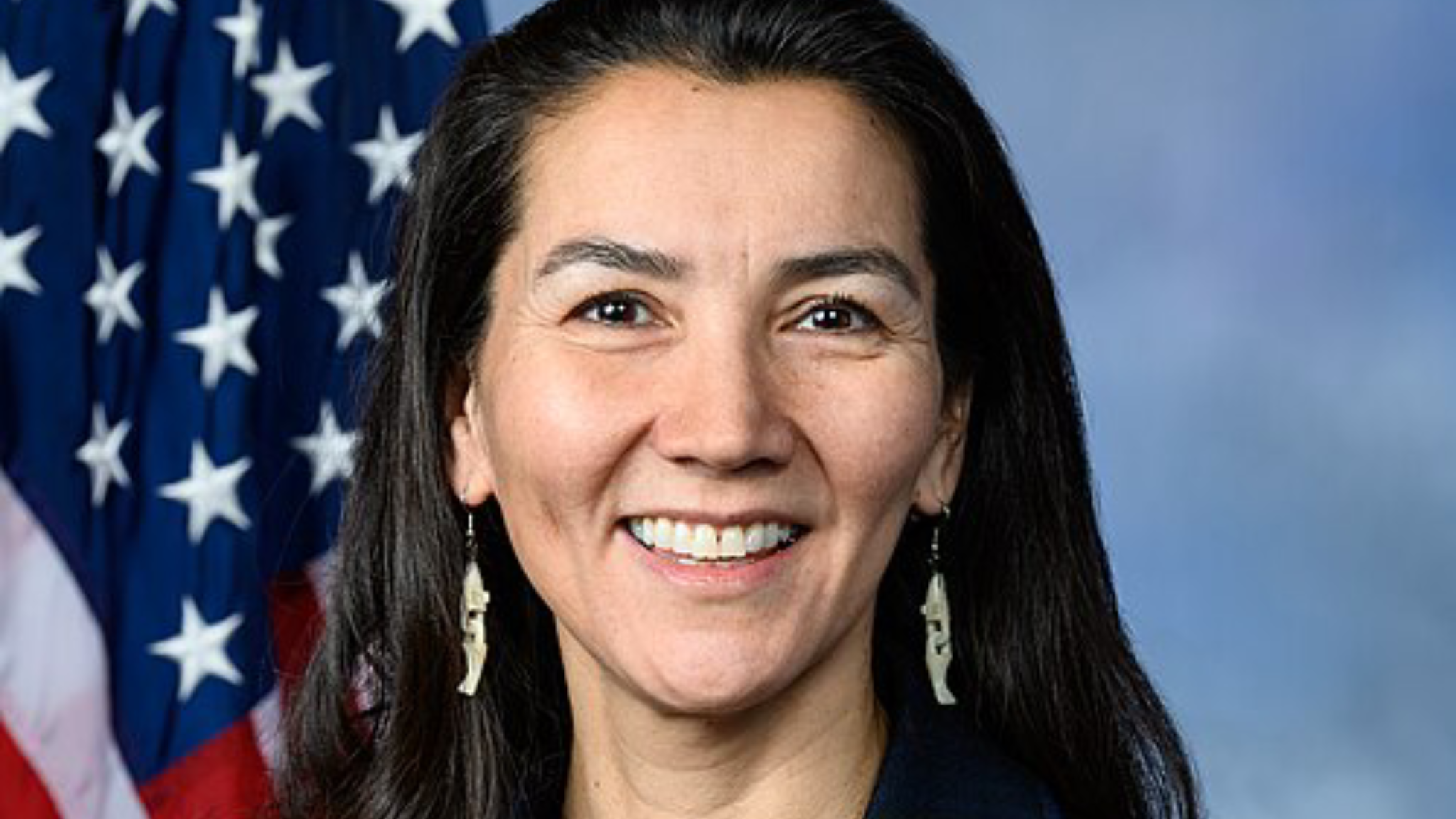
The second Dan Sullivan on Alaska’s ballot had no impact on the state’s U.S. Senate race, according to a new analysis from FairVote. Democrat Mary Peltola won that race over Republican Senator Dan Sullivan. FairVote is a nonpartisan group that advocates for ranked choice voting, and it published the analysis Thursday.
The other candidate was Daniel J. Sullivan Jr., a retired teacher from Petersburg who ran unaffiliated. To tell the two apart, the ballot listed the senator as Dan S. Sullivan and the teacher as Daniel J. Sullivan. Republicans tried and failed to get the teacher removed from the ballot.
The final numbers left little room for argument. Peltola won 144,573 first choice votes, or 50.10%. Senator Sullivan got 132,054, or 45.76%. Republican Gerald Heikes took 6,229, or 2.16%, and the second Dan Sullivan drew 4,829, or 1.67%.
The political news that affects your wallet, your rights and your vote, broken down in plain language. Free in your inbox.
Alaska uses ranked choice voting. Voters rank candidates in order of preference. If no one wins more than half of the first choice votes, the last place candidate is eliminated, and those ballots move to each voter’s next choice. This repeats until someone has a majority. Peltola cleared half on first choices alone, so no extra rounds were needed and no ballots ever moved.
The math holds even in the best case for the senator. If every vote for the second Dan Sullivan and every vote for Heikes had gone to Senator Sullivan, he would have had 143,112 votes. That’s still 1,461 short of Peltola.
FairVote also ran an unofficial ranked choice count using Alaska’s cast vote record, which is an anonymous digital record of how each ballot was marked. It found the second Dan Sullivan’s voters actually leaned toward Peltola. Among them, 34% ranked Peltola above the senator, 23% ranked the senator above Peltola and 43% ranked neither. Heikes voters went the other way: 41% ranked Senator Sullivan above Peltola, 18% ranked Peltola higher and 41% ranked neither. Peltola wins either way.
The findings cut against what Trump has been pushing since Election Day. He posted on Truth Social that “All votes going to the Fake Dan Sullivan” were cast “solely for the purpose of fraud and confusion” and should be given to the senator. He offered no evidence for the fraud claim. And the data shows that if those voters’ own rankings had counted, more of them would have gone to Peltola than to the senator.
The Justice Department also filed a lawsuit, which Trump said he ordered, to block certification of the race if the senator lost, pending an investigation into voter confusion. Peltola called it “flagrant corruption.” A federal judge dismissed the case, and the Justice Department has appealed to the Ninth Circuit. Alaska is aiming to certify the results by November 25.
The second Dan Sullivan’s campaign also drew scrutiny of its own. The New York Times reported allegations that members of Peltola’s team helped recruit him. Her campaign denied any involvement, and the allegations have not been proven.
Putting a candidate with a similar name or profile on the ballot to pull votes from a rival is called ballot stacking. In most states, where the candidate with the most votes wins, a candidate with 1.67% can swing a close race. Ranked choice voting cuts into that because voters can rank backups, and a ballot for a weak candidate moves to the voter’s next choice. FairVote’s analysis cited an Axios report that super PACs aligned with both parties spent more than $16.5 million this cycle promoting independent and third party candidates in over 40 Senate and House races.
The second Dan Sullivan aside, Peltola’s win was historic. She is the first Democrat to win a Senate race in Alaska since 2008 and will be the first Alaska Native to serve in the Senate. Her victory gives Democrats a 56 to 44 majority when the new Congress begins in January.