 Poli Alert Politics & Civics
Related Articles



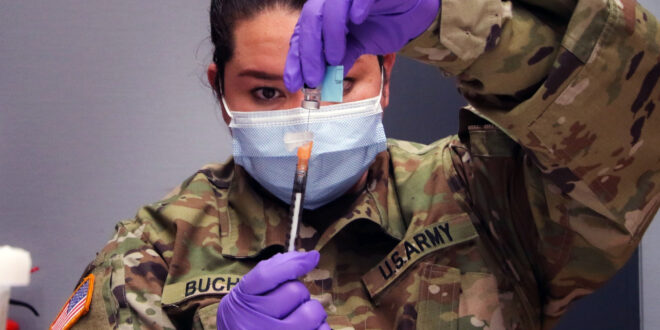
The Pentagon has reinstated mandatory influenza vaccinations for all new military recruits after Defense Secretary Pete Hegseth briefly made the vaccine optional earlier this year, a move that coincides with a significant flu outbreak at the U.S. Air Force’s primary basic training facility in Texas.
A Pentagon official confirmed Wednesday that boot camps across all military branches are once again requiring flu vaccinations for incoming recruits. The official, who spoke on the condition of anonymity because the details were not authorized for public release, said the decision followed previously approved exemption requests from the military services and was not directly prompted by the ongoing outbreak at Lackland Air Force Base.
The policy reversal comes as nearly 300 recruits have contracted influenza during a three-week outbreak at the Air Force’s basic military training center in San Antonio.
Vaccine Requirement Returns
In late April, Hegseth ended the military-wide flu vaccine mandate, citing “medical autonomy” and religious freedom. At the time, he allowed individual military branches to request exemptions if they believed mandatory vaccination remained necessary for mission readiness.
According to Pentagon officials, those exemption requests were finalized earlier this month.
Pentagon spokesman Sean Parnell confirmed that exemptions allowing mandatory vaccinations were approved for the Army, Navy, Air Force, the National Security Agency, and the Defense Health Agency. He declined to provide additional details regarding the scope of the exemptions.
Army and Navy officials have separately indicated they also sought authority to require flu vaccinations for personnel in specific high-risk assignments, including troops deploying overseas, healthcare workers, and child care personnel.
Flu Outbreak Continues at Lackland
The renewed mandate comes as Lackland Air Force Base continues battling a flu outbreak that has infected 275 recruits, according to Democratic Rep. Joaquin Castro, whose congressional district includes part of the installation.
A source familiar with the situation said that only about 40% of recruits elected to receive the flu vaccine after Hegseth made it voluntary.
Lackland processes approximately 700 new recruits each week. Military training environments have long been recognized as particularly vulnerable to infectious disease outbreaks because recruits live, sleep, train, and dine in close quarters while experiencing high physical stress and limited rest.
Recruits typically share large dormitories, communal shower facilities, and participate in group training exercises throughout the several-week boot camp.
Experts Say Military Settings Are Vulnerable
Although influenza activity is typically highest during the fall and winter months, health experts say outbreaks can occur year-round in densely populated institutional settings.
Dr. Arnold Monto, an emeritus professor at the University of Michigan and an expert on influenza, said concentrated outbreaks during warmer months are most often seen in military installations, cruise ships, and other environments where large numbers of people gather indoors.
“If you want to prevent flu outbreaks, it is especially necessary to vaccinate when there are group settings,” Monto said.
Advocacy Groups Welcome Policy Change
Public health advocates praised the Pentagon’s decision to restore mandatory vaccinations for recruits.
Families Fighting Flu, a nonprofit organization that promotes influenza prevention, said the previous policy unnecessarily increased health risks.
“For decades, the military prioritized the health and safety of troops and the public by requiring flu vaccine for recruits,” Executive Director Michele Slafkosky said in a statement. “It’s unfortunate that more than 200 individuals at Lackland Air Force Base became ill when that requirement was rescinded.”
She added that restoring the vaccination requirement “will save lives.”
Broader Context
Seasonal influenza vaccination has long been a standard component of military medical readiness. The Department of Defense has historically required recruits to receive numerous immunizations during basic training to reduce the risk of disease outbreaks that could disrupt operations and compromise force readiness.
While Pentagon officials insist the timing of the reinstated requirement is unrelated to the outbreak at Lackland, the decision restores longstanding military health policy as officials continue monitoring the spread of influenza among new recruits.

