Poli Alert Politics & Civics
Related Articles



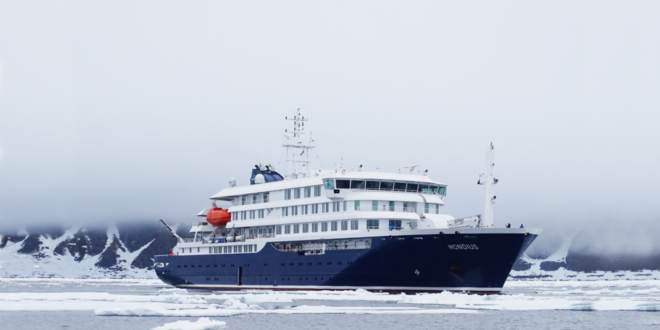
Passengers began disembarking Sunday from the Dutch-flagged cruise ship MV Hondius after the vessel arrived in Spain’s Canary Islands following a deadly hantavirus outbreak that killed three passengers and sickened several others.
Spanish nationals were the first to leave the ship after it docked at the port of Granadilla on Tenerife, the largest of the Canary Islands. Spanish health authorities said the 14 passengers were flown to Madrid, where they will remain under quarantine at a military hospital.
Officials said no one still aboard the ship was showing symptoms of hantavirus as evacuation operations continued Sunday. At least nine confirmed or suspected cases have been linked to the outbreak, including the deaths of a Dutch couple and a German woman.
The ship, operated by Oceanwide Expeditions, is carrying nearly 150 passengers from more than 15 countries, including 17 Americans. The vessel had sailed from Cape Verde to Tenerife after Spain agreed to receive the ship.
The company said passengers and most crew members would be evacuated Sunday and Monday using small launch boats carrying between five and 10 people at a time.
Under the multinational evacuation plan, flights were scheduled to transport passengers to several countries, including the Netherlands, Germany, Canada, France, United Kingdom and the United States. Australian authorities were expected to send a separate evacuation plane Monday for citizens from Australia and nearby nations.
Passengers and port workers wore face masks, hazmat suits and respirators during the evacuation process, although health officials stressed the risk to the public remains low.
Authorities said those leaving the ship would be screened for symptoms and kept isolated from the local population until departing Tenerife on evacuation flights.
The operation is being coordinated by Spanish health officials alongside Tedros Adhanom Ghebreyesus, head of the World Health Organization.
After all passengers disembark, a skeleton crew will sail the ship to Rotterdam, where it will undergo disinfection. Spanish authorities said the body of one passenger who died aboard the vessel will remain on the ship until arrival.
Americans to quarantine in Nebraska
The Centers for Disease Control and Prevention said it is sending epidemiologists and medical personnel to Tenerife to assess exposure risks for American passengers and determine monitoring requirements.
The Americans will be flown back to the United States aboard a medical repatriation flight coordinated by the CDC and the U.S. Department of Health and Human Services.
The flight will land at Offutt Air Force Base, after which passengers will quarantine at the biocontainment unit at the University of Nebraska Medical Center.
Michael Wadman, medical director of the National Quarantine Unit at the University of Nebraska Medical Center, said each American passenger will remain isolated in private rooms for an unspecified period.
Several other countries also announced quarantine protocols. France said its returning passengers would be hospitalized for 72 hours before quarantining at home for 45 days. British passengers and crew will also undergo medical observation upon arrival.
Officials say risk remains low
Hantaviruses are primarily spread through contact with rodent urine, droppings or saliva, according to the CDC. Symptoms can take up to eight weeks to appear after exposure.
Health officials believe the outbreak involves the Andes strain of hantavirus, the only known strain capable of limited human-to-human transmission.
Tedros said Sunday that the outbreak should not cause public panic.
“This is not another COVID, and the risk to the public is low,” he said.
Acting CDC Director Jay Bhattacharya echoed that assessment, saying asymptomatic people do not spread the virus and transmission generally requires close contact.
Former Food and Drug Administration Commissioner Scott Gottlieb urged caution but agreed the broader public risk remains limited.
“We have to be wary that perhaps there are things we don’t know fully about this virus,” Gottlieb said Sunday on Face the Nation.
Outbreak investigation continues
Investigators believe the outbreak may have originated before passengers boarded the ship.
According to WHO officials, a Dutch couple who later died had spent weeks bird-watching in parts of Argentina, Chileand Uruguay where rodents carrying the Andes virus are present.
The 70-year-old Dutch man developed symptoms April 6 and died aboard the ship April 11. His wife later became ill during a flight from St. Helena to Johannesburg and died April 26 after testing positive for hantavirus.
A German woman later died aboard the ship after developing symptoms April 28.
Several additional passengers have since been hospitalized in the Netherlands, Switzerland, South Africa and remote British territories in the South Atlantic.
The Hondius departed Ushuaia on April 1 for a South Atlantic expedition that included stops at the South Georgia and South Sandwich Islands, Tristan da Cunha and St. Helena before heading toward West Africa and the Canary Islands.