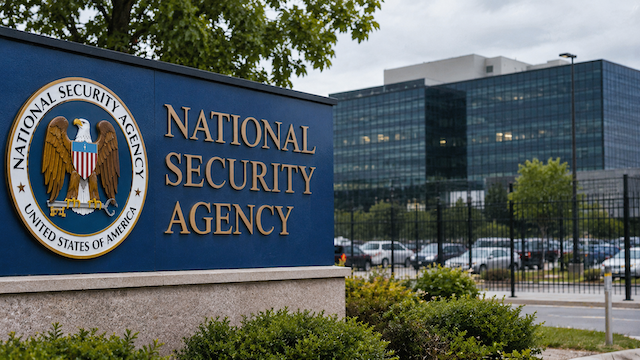
The National Security Agency’s highly classified communications network experienced a major outage Tuesday, disrupting intelligence operations and forcing officials to adjust work schedules and redirect some activities as technicians worked to restore service.
The disruption affected NSA Net, an internal classified network used by agency personnel to communicate and exchange sensitive intelligence information. The system supports the work of one of the federal government’s most secretive intelligence agencies, which is responsible for collecting foreign signals intelligence and helping protect national security systems.
CNN first reported the outage, while CBS News independently confirmed the disruption, citing sources familiar with the situation.
The political news that affects your wallet, your rights and your vote, broken down in plain language. Free in your inbox.
The classified NSA network outage affected operations at the agency’s headquarters at Fort Meade, Maryland, where thousands of military personnel, civilian intelligence employees and contractors support national security missions.
According to CBS News, agency officials implemented staggered employee arrival times to reduce pressure on the network. Some operations were also redirected to other NSA facilities while personnel worked to address the disruption.
The changes indicate that the outage affected more than routine office communications, although the agency has not publicly disclosed which intelligence activities were interrupted or whether critical national security missions were compromised.
Sources told CBS News that routine system patching may have contributed to the disruption. System patching involves installing software updates intended to correct vulnerabilities, improve performance or maintain security.
However, the precise cause of the outage has not been publicly established.
There has been no publicly confirmed evidence that the disruption resulted from a cyberattack, foreign interference or unauthorized access to classified information. The absence of such evidence does not establish what caused the failure.
Recorded Future News reported that the affected network was experiencing intermittent service, indicating that some functions may have remained available even as employees encountered significant disruptions.
The NSA plays a central role in America’s intelligence operations. Unlike the FBI, which primarily investigates federal crimes and domestic security threats, the NSA specializes in collecting and analyzing foreign electronic communications and other signals intelligence.
Its work includes monitoring foreign military communications, tracking international threats and providing intelligence to military commanders and federal policymakers.
Because much of the agency’s work involves classified information, employees rely on secure communications systems that are separate from ordinary public internet services.
A disruption to those systems can complicate the exchange of intelligence, delay certain analytical activities and require personnel to use alternative communications arrangements.
However, the reported outage does not establish that the NSA lost access to all classified intelligence systems or that every intelligence operation was suspended.
The disruption also raises questions about the agency’s ability to maintain continuity during technical failures. Intelligence organizations depend on backup infrastructure and alternative operating procedures to preserve essential functions when primary systems become unavailable.
The extent to which those safeguards were used during Tuesday’s outage has not been publicly detailed.
The incident comes as federal agencies continue to depend on complex computer networks to process classified information, coordinate security operations and support military decision-making.
For the NSA, the reliability of those networks is particularly important because its intelligence can inform decisions involving foreign threats, cybersecurity and American military operations overseas.
As of Tuesday, officials had not publicly provided a complete assessment of the outage’s impact, a confirmed explanation for the failure or a timetable for full restoration.
The central questions remain how the disruption began, how much intelligence work was affected and whether the incident exposed weaknesses requiring additional safeguards.