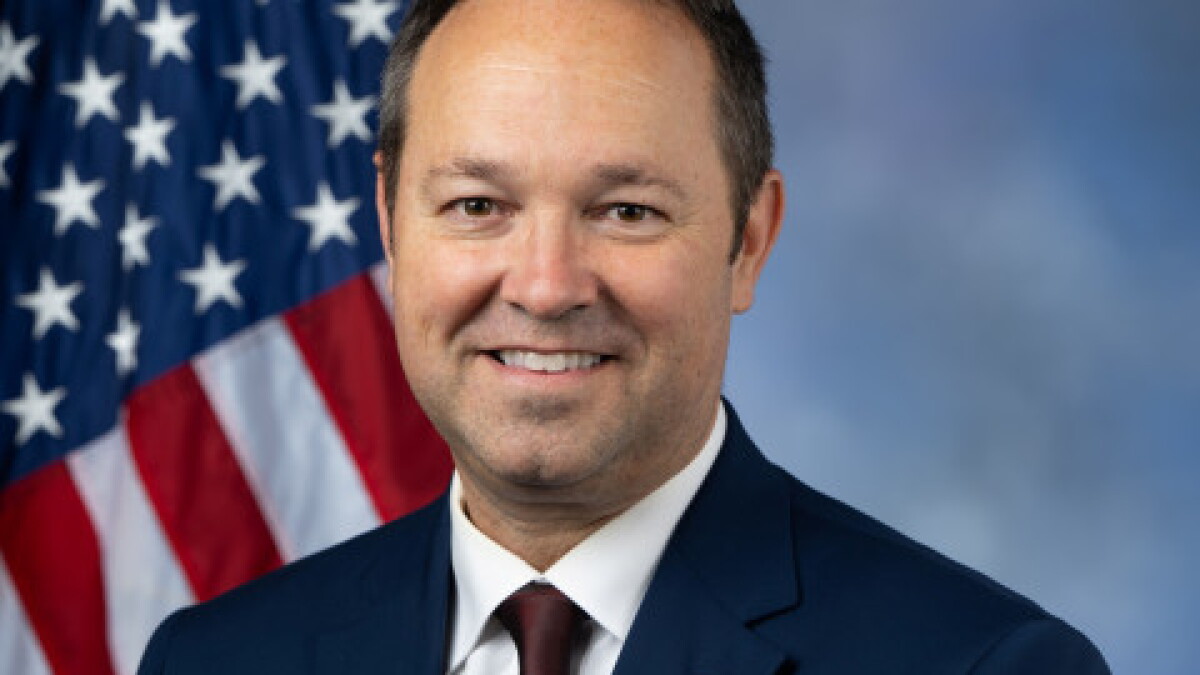
Republican Rep. Marlin Stutzman of Indiana said Democrats did not win the 2026 midterm elections as much as Republicans lost them, offering a blunt assessment of his party’s performance while defending Secretary of State Marco Rubio as a potential presidential candidate in 2028.
During an appearance on NewsNation, Stutzman suggested Republicans were responsible for their own electoral setbacks rather than crediting Democrats with winning over voters.
“I don’t think the Democrats realize that they didn’t win. Republicans lost,” Stutzman said.
The political news that affects your wallet, your rights and your vote, broken down in plain language. Free in your inbox.
His remarks came during a discussion about the Republican Party’s future following its election losses and whether the war with Iran contributed to voters turning against GOP candidates.
Stutzman also expressed support for Rubio, who has been closely associated with the Trump administration’s foreign policy and its military campaign against Iran.
But that position prompted a question about whether Rubio could represent a political solution for Republicans if the Iran war had contributed to their defeat.
“You’re all in for Marco Rubio, but he’s tied to the Iran War. So if you think the war cost you the election, how is he the fix?” the interviewer asked.
Stutzman responded by describing a different outcome for the military campaign, suggesting Republicans might have avoided political consequences if the United States had achieved its objectives without increasing gasoline prices.
“If we could’ve performed in Iran and taken out the IRGC, kept away any nuclear threat, and gas prices not go up, I don’t think we’d have a problem today related to that,” Stutzman said. “I think he’d be a tremendous candidate.”
The IRGC, or Islamic Revolutionary Guard Corps, is a powerful branch of Iran’s armed forces that plays a central role in the country’s military and security operations.
Stutzman’s response linked his assessment of the election to the war’s outcome and its economic consequences. Rather than rejecting the military campaign itself, he suggested that its execution and the financial impact on Americans contributed to Republican political difficulties.
The political consequences of the Iran war have become a major source of disagreement within the Republican Party. According to Reuters, frustration over rising living costs and the conflict helped Democrats capture both chambers of Congress in the November 3 midterm elections. Democrats gained at least 30 House seats and secured a Senate majority.
Trump has also acknowledged the war’s electoral impact. According to CBS News, Trump said on November 4 that the conflict contributed to Republican losses by driving up gasoline prices. However, he continued defending the decision to launch the military campaign, arguing that preventing Iran from obtaining nuclear weapons justified the consequences.
Rubio has taken a similar position. According to The Associated Press, the secretary of state defended the war on November 8, acknowledging that confronting Iran might not be politically popular while maintaining that the military operation was necessary to address a nuclear threat.
His position differs from Vice President JD Vance’s public emphasis on the war’s political costs. Both men have been discussed as possible Republican presidential contenders in 2028, raising questions about how the party will address the conflict during its next presidential primary.
Stutzman’s criticism also extends beyond the war. In a separate CNN appearance, the Indiana congressman called for changes within Trump’s administration, including the removal of Stephen Miller, whom Trump recently elevated to White House chief of staff.
According to The Washington Post, Stutzman argued that Miller’s approach to immigration and public messaging had alienated voters, particularly in the Midwest. He also criticized Trump’s decision to promote Miller following the election losses.
The congressman’s comments reflect an emerging debate among Republicans over whether their losses resulted primarily from unpopular policies, the administration’s handling of those policies or its failure to address voters’ economic concerns.
For Americans struggling with higher gasoline and household costs, the debate also raises questions about whether Republican leaders intend to change their approach to the Iran war or focus on how the conflict is managed and explained.
Stutzman has made clear that he believes Republicans need to acknowledge their mistakes. At the same time, his endorsement of Rubio suggests he does not necessarily view participation in the administration’s Iran policy as disqualifying for a future presidential candidate.
With Democrats preparing to take control of Congress in January and Republicans beginning to consider their political future, the debate over the Iran war, affordability and party leadership is expected to remain central to discussions about the 2028 presidential race.