


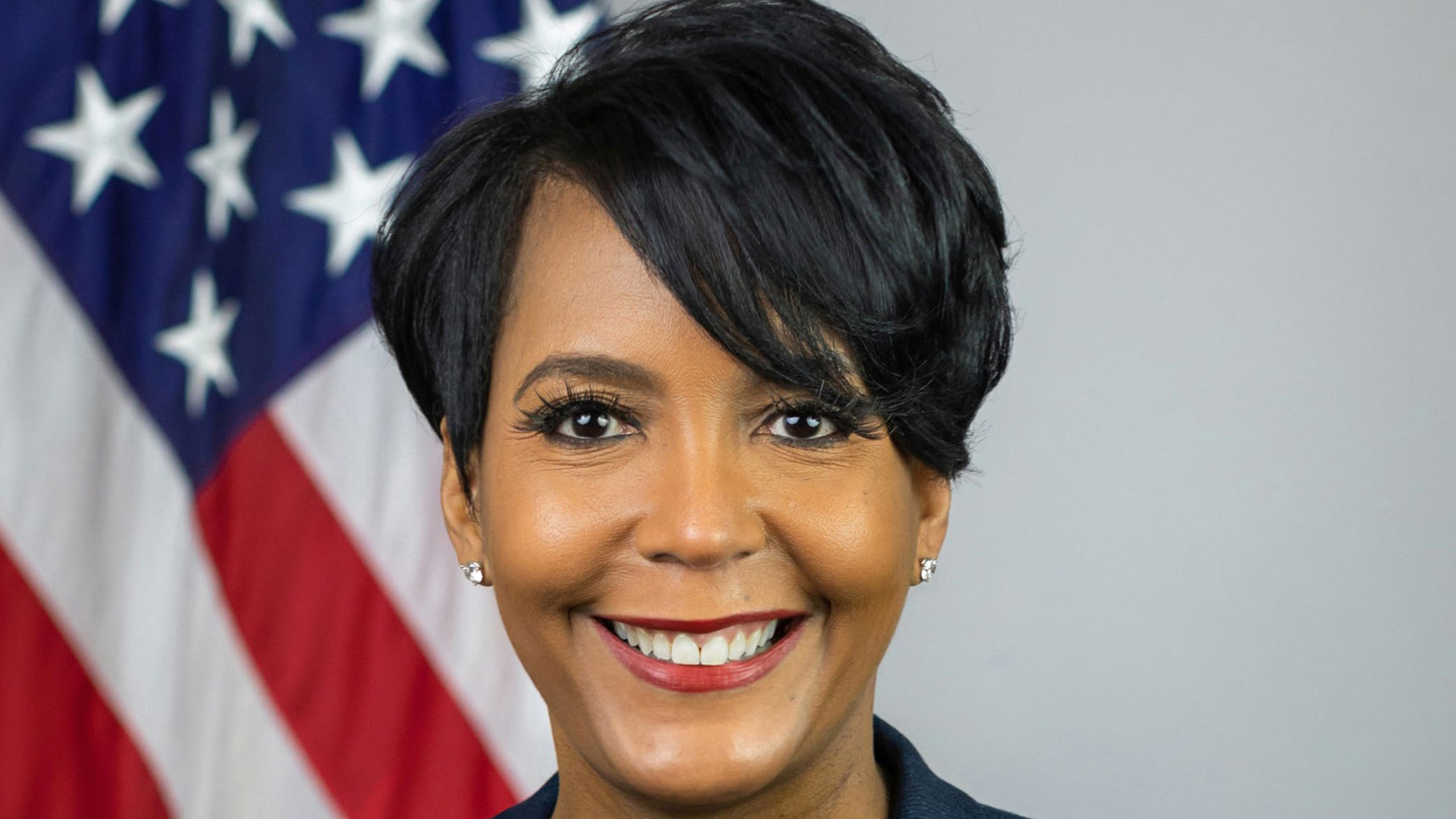
Keisha Lance Bottoms won the Georgia governor’s race on Tuesday, becoming the first Black woman ever elected governor of a U.S. state. The former Atlanta mayor defeated Republican billionaire Rick Jackson, with the Associated Press projecting her win on election night.
The victory breaks two barriers at once. Georgia had never elected a woman or a Black person as governor, and Bottoms is both. It also ends a long Republican run. The GOP has held the Governor’s Mansion since 2002, when Sonny Perdue beat Democrat Roy Barnes to become the first Republican elected governor in Georgia since Reconstruction, the period that followed the Civil War.
Keisha Lance Bottoms won while being massively outspent. Jackson, a healthcare executive and first time candidate who grew up in foster care before building a billion dollar fortune, poured more than $200 million of his own money into the race. Much of it went to ads attacking her four years as mayor of Atlanta, and his closing line, “bad mayors don’t make good governors,” became a Republican rallying cry across the state.
The political news that affects your wallet, your rights and your vote, broken down in plain language. Free in your inbox.
Bottoms made the race about Georgia’s future and about Trump. She tied Jackson to Trump at every turn as Trump’s approval ratings sank in Georgia. She also ran on big promises: expanding Medicaid, the government health insurance program for low income residents; guaranteeing access to the state’s prekindergarten program; letting local governments cut taxes on groceries; and pausing construction of new data centers, the massive buildings full of computer servers that power the internet and AI while using huge amounts of electricity and water. Sen. Jon Ossoff, who won his own reelection Tuesday, campaigned alongside her as if the two were on a joint ticket.
The story of Keisha Lance Bottoms starts in Atlanta. She is the daughter of soul singer Major Lance, who once opened for the Beatles. Her family lived comfortably until his career faded and he struggled with drug addiction. When she was 8, she came home from school to find police leading her father away in handcuffs on cocaine distribution charges. He went to prison, and the family lost its home in the Collier Heights neighborhood.
Her mother, Sylvia Robinson, worked low paying jobs before opening a beauty salon in Atlanta’s West End. Bottoms spent her weekends visiting her father in prison, an experience that shaped her belief in second chances.
She graduated from Florida A&M University, earned her law degree at Georgia State University, and worked as a prosecutor and a judge before winning a seat on the Atlanta City Council in 2009. In 2017, she entered a crowded mayor’s race as a long shot and won a narrow runoff against Mary Norwood.
Her time as mayor was tested from the start. A ransomware attack, where hackers lock up computer systems and demand payment, crippled city government. Then came the pandemic and the 2020 protests after George Floyd’s murder. Her impassioned plea for violent protesters to “go home” made her a national name and briefly put her in the conversation to be Joe Biden’s running mate. She later turned down an offer to join his Cabinet.
After Atlanta police killed Rayshard Brooks outside a Wendy’s in June 2020, the unrest deepened. On July 4 of that year, 8 year old Secoriea Turner was shot and killed near the burned out restaurant, and Bottoms faced hard questions about whether the city moved fast enough to restore order. She has said she still reflects on that. Violent crime rose, and critics labeled her an absentee mayor. She defended her record by pointing to raises for police officers and firefighters, balanced budgets and pandemic relief for residents and businesses.
In 2021, Keisha Lance Bottoms stunned Atlanta by announcing she would not seek a second term, even after launching a reelection campaign. A year later she joined the Biden White House as a senior adviser. Jackson hammered her for that decision throughout the race, accusing her of abandoning the city. She answered that she “ran through the finish line.”
Her road to the nomination opened when two major Democrats stepped aside. Rep. Lucy McBath dropped her plans as her husband battled cancer, and former state Sen. Jason Carter passed on another run as his wife underwent treatment for brain cancer. Bottoms still faced a crowded primary field and won the nomination outright in May with no runoff.
The fight is not over. Republicans still hold major power in Georgia, and her biggest promises will face resistance. Her first test could come before she is even sworn in. Gov. Brian Kemp and Republican lawmakers have discussed calling a special legislative session, which brings lawmakers back to the Capitol outside their normal schedule, to redraw political district lines and possibly limit the powers of the governor’s office before she takes over. Bottoms warned during the campaign that a move like that would damage Georgia’s reputation.
Keisha Lance Bottoms rarely leaned on the history of her campaign, but she often spoke about her family’s roots in Georgia, which go back at least five generations to a plantation in Crawfordville where her ancestors were enslaved. On the eve of the election, she traveled to the small east Georgia town to visit their graves. Generations ago, her family left Crawfordville for Atlanta by horse and buggy looking for a better life. Now one of their descendants will lead the state.

