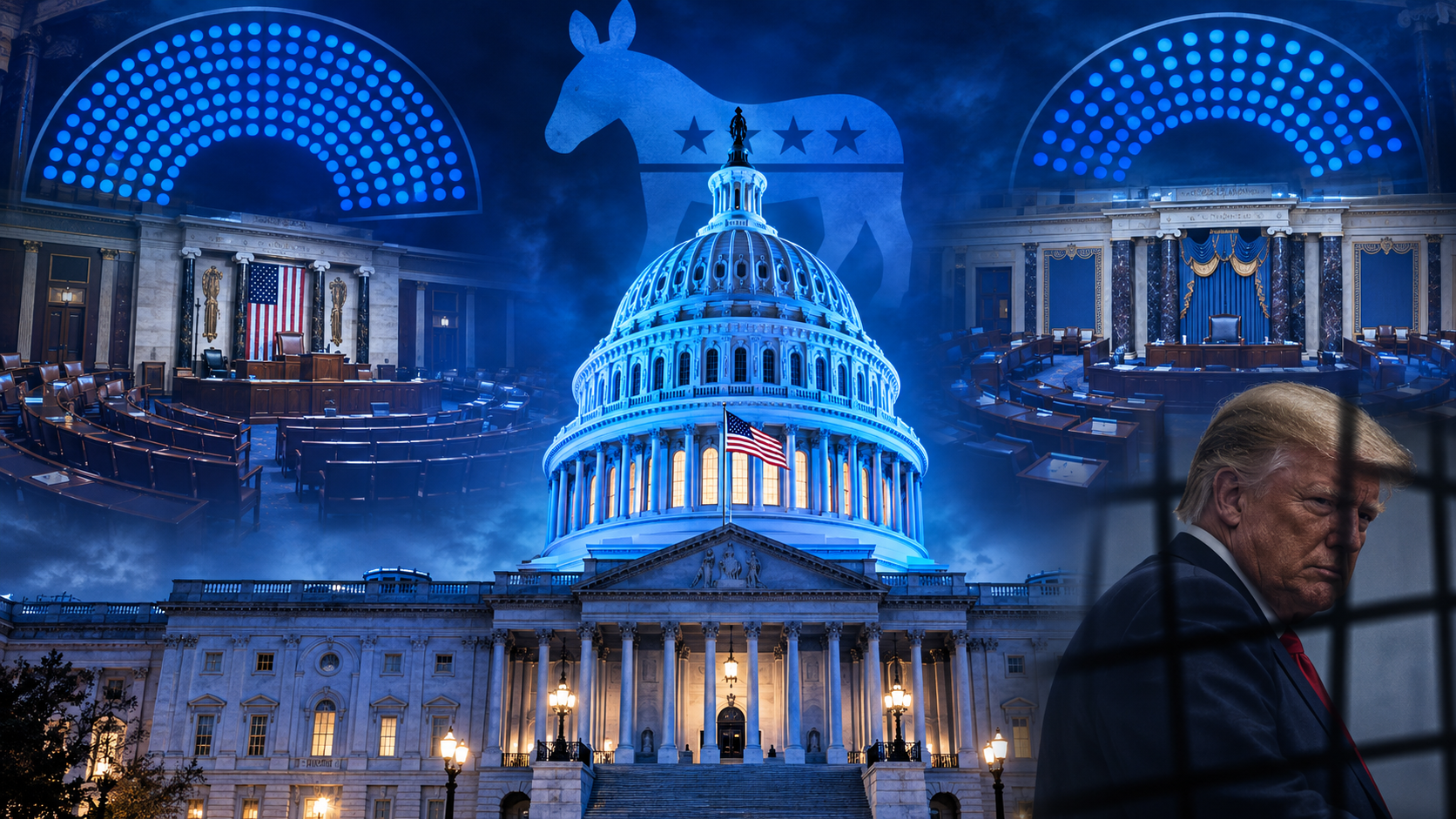
Democrats won control of Congress on Tuesday, taking back both the House and the Senate in a midterm election that reached deep into states Trump carried easily two years ago. NBC News projected both chambers for Democrats on election night, ending Republican control of Washington.
Republicans went into the night holding 53 of the Senate’s 100 seats, which meant Democrats needed to flip four to take the majority. They flipped at least seven. James Talarico won in Texas, the first time a Democrat has won statewide office there since 1994. Adam Hamilton won in Kansas, and Annie Andrews won in South Carolina, giving both states their first Democratic senators in decades. Former Gov. Roy Cooper won in North Carolina, Josh Turek beat Rep. Ashley Hinson in Iowa, and former Sen. Sherrod Brown took back a seat in Ohio by defeating Republican Sen. Jon Husted. In Maine, Sen. Susan Collins conceded to Democrat Troy Jackson, ending nearly 30 years in the Senate.
Democrats also held the seats they had to defend, including Sen. Jon Ossoff’s in Georgia and the open seat in Minnesota. NBC News currently counts 53 Democratic seats, with a few races, including Michigan and Alaska, still uncalled.
The political news that affects your wallet, your rights and your vote, broken down in plain language. Free in your inbox.
In the House, a party needs 218 of the 435 seats for a majority. Democrats blew past that number. As of Wednesday, NBC News had called 227 seats for Democrats, including 29 flips, and projects the party will finish with about 255 seats. The flips came from every corner of the map. Republicans Scott Perry, Ryan Mackenzie and Rob Bresnahan lost in Pennsylvania, as did Tom Kean in New Jersey, Bryan Steil and Derrick Van Orden in Wisconsin, and Zach Nunn in Iowa. In South Texas, Tejano singer and Latin Grammy winner Bobby Pulido flipped the 15th District.
Voters made their reasons clear. Frustration over rising costs drove turnout against Republicans, and the NBC News Exit Poll found that in Alaska and five of the six red states where Democrats flipped Senate seats, more than half of voters disapprove of how Trump is handling his job.
The new Congress is sworn in on January 3, 2027, and control of Congress changes what Trump can get done from that day forward. Every bill has to pass both the House and the Senate before it reaches his desk. With Democrats running both chambers, Republican legislation can be stopped before it ever gets a vote.
Congress also controls the money. Federal spending, including the funding bills that keep government agencies open, has to pass both chambers. That gives Democrats leverage to block funding for administration priorities they oppose and to push their own.
The Senate holds a power the House does not: it approves the people a president picks for his Cabinet, federal judges and Supreme Court justices. Under Republican control, Trump’s nominees moved through with Republican votes alone. Now they will need Democratic support. The Associated Press reported that Democratic control of the Senate could stall Trump’s hopes of keeping the Supreme Court moving in a conservative direction if a seat opens.
Then there is oversight, meaning Congress’s job of checking the executive branch. Congressional committees can issue subpoenas, which are legal orders forcing someone to testify or hand over documents. With Democrats chairing those committees, they can open investigations into the administration and call officials to answer questions under oath. The House also holds the power to impeach, which means formally charging an official with wrongdoing, though removing anyone from office takes a two thirds vote of the Senate.
Trump still has tools of his own. He can veto, or reject, any bill Congress sends him, and overriding a veto takes two thirds of both chambers, a margin Democrats do not have. He can also keep issuing executive orders, which are directives that run the federal government without a vote from Congress. To pass anything into law over the next two years, both sides will have to negotiate.