Poli Alert Politics & Civics
Related Articles



Sen. Josh Hawley is launching an investigation into Flock Safety’s sprawling network of license-plate cameras, demanding answers about who can access the personal data collected on millions of Americans as they drive around the country.
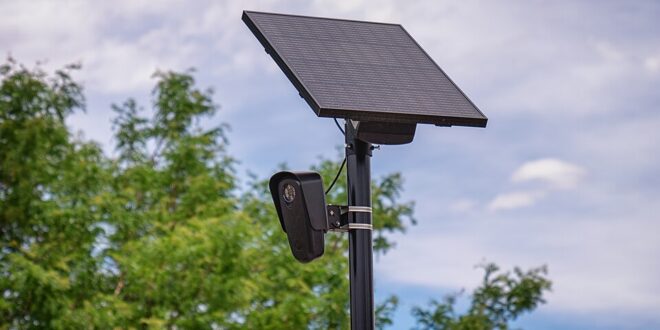
Hawley, R-Mo., chairman of the Senate Judiciary Subcommittee on Crime and Counterterrorism, sent a letter to Flock CEO Garrett Langley accusing the company of building an “unprecedented national surveillance network” with more than 120,000 cameras across 49 states.
According to Hawley’s letter, the network conducts roughly 20 billion vehicle scans every month, creating an enormous database that law enforcement agencies can search using artificial intelligence.
The Republican senator is now demanding that Flock explain who has access to that information, how it is being used and what safeguards are in place to prevent abuse.
“The overwhelming majority of Americans captured in those records did nothing wrong,” Hawley wrote.
His investigation comes as the rapid expansion of AI-powered surveillance technology is raising increasingly difficult questions about privacy, government access and the ability of Americans to know when their movements are being tracked.
Hawley argued that Flock’s technology goes far beyond traditional investigations because information collected by individual camera networks can be pooled into a national system.
“Instead of serving discrete local investigations, as contemplated by our constitutional processes and safeguards, these camera networks harness artificial intelligence to pool what they capture into a national database that customers can search,” he wrote.
Misuse of surveillance data
Hawley pointed to several cases in which police officers or other users allegedly exploited Flock’s system for reasons unrelated to legitimate investigations.
In St. Charles County, Missouri, a police department terminated its Flock contract after an audit found that a civilian employee had conducted searches for personal reasons.
In Milwaukee, prosecutors charged a police officer who allegedly used the system to search his girlfriend’s license plate 124 times and her former boyfriend’s plate 55 times.
The alleged misconduct was not initially detected by Flock’s safeguards. Instead, the former boyfriend reportedly discovered the searches after checking his own plate through a website that allows drivers to determine whether their vehicles have appeared in Flock’s system.
For Hawley, those incidents illustrate a fundamental problem: collecting vast amounts of information is easier than ensuring that everyone with access uses it appropriately.
“Once cameras collect driver data, uncertainty abounds in how your company and its customers can sell or use data,” he wrote.
False alerts raise another concern
Hawley also highlighted cases in which Flock’s technology allegedly produced false alerts that resulted in people being stopped or arrested.
He cited the case of a Florida woman who spent 13 days in jail and faced multiple felony charges after investigators mistakenly arrested her based on information from the Flock network.
“Errors and false positives add insult to injury,” Hawley wrote.
The senator also pointed to a California police department that determined 71% of its Flock alerts were wrong.
In Los Angeles, an audit found that officers had stopped 161 vehicles that had been incorrectly flagged as stolen, according to Hawley.
The examples raise concerns about the consequences when law enforcement treats an AI-generated alert as reliable despite the possibility of errors.
Hawley questions Flock’s commercial ambitions
Hawley also raised questions about Flock’s growing commercial value, noting that the company has reached an $8.3 billion valuation.
He warned that the pressure created by that valuation could encourage the company to seek new commercial uses for the massive trove of location and vehicle data it collects.
The investigation does not appear aimed at eliminating the technology altogether. Hawley acknowledged that law enforcement needs tools to investigate crimes and locate suspects.
But he argued that those tools cannot come at the expense of Americans’ basic privacy rights.
“Americans do not surrender their privacy rights when they drive to work, drop their kids off at school or go to church,” Hawley wrote.
He has given Flock until Sept. 8 to provide documents and information relevant to his investigation.
The inquiry could put renewed scrutiny on one of the fastest-growing forms of domestic surveillance — a system capable of recording where vehicles travel without requiring drivers to be suspected of committing a crime.