Poli Alert Politics & Civics

Related Articles


A fragile interim agreement between the United States and Iran faced its first major test Saturday after Tehran announced it had closed the Strait of Hormuz and warned that broader negotiations could collapse unless Washington fulfills key commitments and Israel halts military operations in Lebanon.
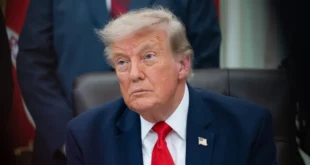
The developments came just days after President Donald Trump signed a temporary agreement intended to end the Iran war, reopen global shipping routes and launch 60 days of negotiations toward a broader accord addressing Iran’s nuclear program and regional security issues.
Iran’s military said the Strait of Hormuz had been shut in response to what it described as ongoing Israeli aggression in Lebanon and alleged U.S. failures to uphold the terms of the agreement.
In a statement broadcast on state television, Iran’s joint military command accused Washington of acting in “bad faith” and warned that additional measures could follow if hostilities continue.
“If the aggression continues, subsequent steps have been planned,” the statement said.
The announcement immediately raised concerns about global energy markets, given that roughly one-fifth of the world’s oil supply typically passes through the narrow waterway connecting the Persian Gulf to international markets.
U.S. Says Shipping Continues
Despite Iran’s declaration, the U.S. military said commercial shipping traffic continued through the strait on Saturday.
According to U.S. officials, 55 merchant vessels successfully transited the passage while transporting more than 17 million barrels of oil and other cargo.
It remains unclear whether Iran intends to fully enforce the closure or use it as leverage during upcoming negotiations.
Iran Signals Tough Stance Ahead of Switzerland Talks
Iran also confirmed that senior officials would travel to Switzerland for negotiations originally scheduled to begin Friday.
The delegation includes Foreign Minister Abbas Araghchi, parliamentary Speaker Mohammad Bagher Qalibaf, central bank officials and senior energy representatives.
However, Iranian officials cautioned that meaningful progress is unlikely unless Washington demonstrates compliance with existing commitments.
Foreign Ministry spokesperson Esmail Bagahei said the delegation’s primary objective is to ensure the United States fulfills obligations under the interim agreement.
“This trip is therefore about demanding that the other side fulfill its obligations,” Bagahei said.
He warned that failure to meet those commitments could jeopardize the entire agreement.
Lebanon Conflict Threatens Broader Agreement
A major source of tension centers on continued fighting between Israel and Hezbollah in Lebanon.
Iranian officials have repeatedly argued that a comprehensive ceasefire in Lebanon is essential to preserving the U.S.-Iran agreement.
An official with Hezbollah told The Associated Press that Iran has informed the group it will not reopen the Strait of Hormuz until Israel publicly commits to ending military operations in Lebanon and agrees to a broader ceasefire.
Violence intensified Saturday as Israeli strikes across southern Lebanon killed at least 16 people, including two children, according to Lebanese authorities.
Lebanon’s Health Ministry said the death toll from the latest conflict between Israel and Hezbollah has now surpassed 4,000.
Israel said its military targeted Hezbollah positions after militants launched dozens of rockets and projectiles into northern Israel overnight.
While both sides have discussed ceasefire arrangements, each accuses the other of violating previous agreements.
U.S. Negotiators Already in Switzerland
Vice President JD Vance confirmed that senior U.S. negotiators Jared Kushner and Steve Witkoff are already in Switzerland working through technical aspects of the negotiations.
Vance said he expects to join talks within days but acknowledged that the process remains highly delicate.
The talks are expected to focus on Iran’s nuclear activities, future sanctions relief, regional security concerns and long-term guarantees regarding freedom of navigation through the Strait of Hormuz.
Uncertain Future for Trump’s Iran Deal
The latest developments highlight the fragile nature of the agreement Trump promoted as a breakthrough capable of stabilizing the Middle East and preventing a broader economic crisis.
While the interim deal temporarily halted direct conflict between the United States and Iran, major disputes remain unresolved, including Iran’s missile program, sanctions relief, regional proxy conflicts and Israel’s military operations in Lebanon.
With negotiations set to begin in Switzerland and violence continuing across the region, diplomats now face mounting pressure to prevent the temporary ceasefire from unraveling before a final agreement can be reached.