

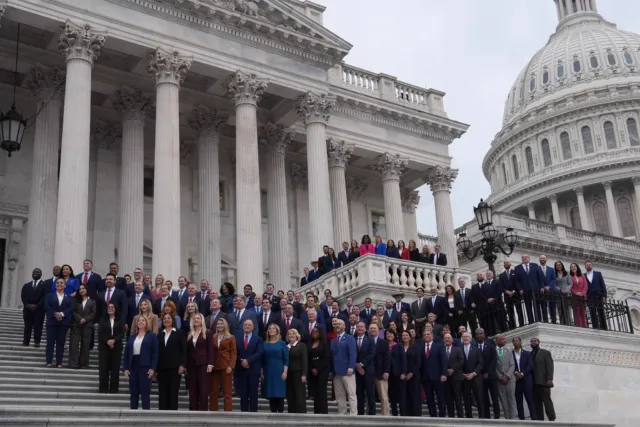
Democrats have secured their largest House majority of the 21st century, reaching at least 258 seats following a major election upset in North Carolina that added to the party’s sweeping gains in the 2026 midterm elections.
The milestone came after Democrat Chuck Hubbard defeated Republican Rep. Virginia Foxx, a longtime conservative lawmaker whose defeat contributed to a significant shift in the balance of power in Washington.
With four House races still unresolved, Democrats could increase their seat total before the new Congress convenes in January 2027.
The political news that affects your wallet, your rights and your vote, broken down in plain language. Free in your inbox.
The results give Democrats control of the House by a substantial margin, placing the party in a position to advance its legislative priorities, oversee federal agencies and challenge Donald Trump’s administration during the final two years of his term.
Democrats have gained 44 House seats in the 2026 elections, surpassing the 40 seats they flipped during Trump’s first midterm election in 2018. Republicans have secured at least 173 seats, leaving them with considerably less influence over legislation in the incoming Congress.
The Democratic victory is also historically significant. The party entered Congress with 257 seats following Barack Obama’s election in 2008. Democrats last won 258 House seats in the 1992 election, when Bill Clinton was elected to his first presidential term.
Hubbard’s victory in North Carolina’s 5th Congressional District was particularly notable because Foxx had represented the district since 2005. The race remained extremely close, with Hubbard prevailing by approximately 330 votes following a recount, according to CBS News and state election figures.
The incoming Democratic majority will also give House Minority Leader Hakeem Jeffries an opportunity to make history. Jeffries, who has secured his party’s nomination for speaker, would become the first Black person to lead the House of Representatives if elected when the new Congress convenes on January 3.
With at least 258 Democratic members, Jeffries would have substantially more flexibility in managing competing priorities within his caucus than outgoing Republican Speaker Mike Johnson, who frequently struggled to advance legislation with a narrow majority.
Democrats are also preparing to take control of the Senate, where they secured 56 seats after the 2026 elections. That would give the party control of both chambers of Congress while Trump remains in the White House, creating divided government.
Democratic leaders have outlined an ambitious legislative agenda for their first 100 days in power, with an emphasis on lowering household expenses, addressing health care costs and reversing Republican-backed reductions to Medicaid.
The party also plans to pursue legislation restoring enhanced Affordable Care Act premium tax credits, which previously helped millions of Americans reduce the cost of health insurance purchased through federal and state marketplaces.
However, Democratic control of Congress does not guarantee those proposals will become law. Trump would retain the authority to veto legislation, and Democrats would generally need 60 Senate votes to overcome a filibuster, a procedural obstacle that can prevent legislation from advancing without sufficient support.
Beyond legislation, Democrats are preparing to use congressional oversight authority to investigate the Trump administration. Committee chairs can hold hearings, request government records and issue subpoenas, which are legally enforceable demands for documents or testimony.
According to The Associated Press, Democratic lawmakers are considering investigations into Trump’s financial dealings, federal agency operations and the administration’s immigration enforcement policies.
Jeffries has also declined to rule out another impeachment effort against Trump. Impeachment would require a majority vote in the House, but removing Trump from office would require a two-thirds vote in the Senate following a trial.
Republicans, meanwhile, are preparing for a different role in Washington. Ohio Rep. Jim Jordan has been selected to lead House Republicans in the minority, replacing the party’s outgoing leadership structure following its election losses.
Jordan has pledged that Republicans will continue advocating for their legislative priorities and challenging Democratic proposals during the next Congress.
The remaining House contests include one race in Minnesota, one in Tennessee and two Louisiana races scheduled for December runoffs. Their outcomes will determine the final size of the Democratic majority.
For Democrats, the historic election results create an opportunity to pursue policy changes affecting health insurance, federal spending, immigration enforcement and government accountability. Whether those proposals become law will depend on negotiations within Congress and with the Trump administration.
The new Congress is scheduled to convene January 3, 2027, when lawmakers will elect House leadership and begin the next legislative session.