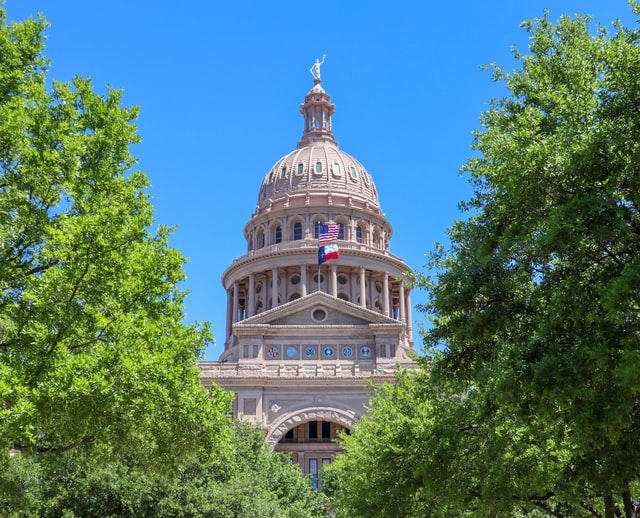
Democrats have taken control of the Texas House of Representatives for the first time since 2002, ending more than two decades of Republican control and marking a major shift in the state’s political landscape.
The Associated Press reported the Democratic victory Wednesday, November 4, following an election that delivered significant gains for the party across Texas and other parts of the country.
The outcome gives Democrats control of a legislative chamber in a state where Republicans have dominated state government for years. It also places the party in a position to influence legislation affecting public education, healthcare, voting rights, abortion policy, taxes and the state’s budget.
The political news that affects your wallet, your rights and your vote, broken down in plain language. Free in your inbox.
The victory comes after Republicans entered the election with an 88-62 advantage in the 150-member Texas House. Democrats needed to gain 14 seats to secure a majority.
The shift follows an election cycle in which Democrats also won major statewide contests, including the governor’s race and a U.S. Senate seat. Those victories suggest the Republican Party faced challenges beyond individual legislative districts.
One of the races drawing attention was Texas House District 121 in San Antonio. Democrat Zack Dunn defeated Republican incumbent Marc LaHood, ending a Republican hold on the district that dated back to 1981, according to Texas Public Radio.
Democrats also reclaimed District 118, where Kristian Carranza defeated Republican Jorge Borrego. The victories demonstrated the party’s ability to compete in areas where Republicans had maintained legislative support.
The election also followed an aggressive Republican redistricting effort in Texas. In 2025, Trump pushed state Republicans to redraw congressional boundaries to create additional Republican-friendly districts ahead of the midterms.
That effort sparked a national political fight over redistricting, with Democrats responding in other states by pursuing their own congressional map changes.
Rice University political science professor Mark Jones told the Associated Press that the Republican redistricting effort may have mobilized additional Democratic voters in parts of Texas. Jones also pointed to dissatisfaction with Trump and his policies as a factor in the election results.
The new Democratic majority will have an opportunity to influence legislation when lawmakers return to Austin for the 2027 legislative session. The Texas House plays a central role in approving state budgets, passing legislation and overseeing state agencies.
For Black Texans, the change in legislative control could affect debates over public education funding, healthcare access, voting rights, economic opportunity and criminal justice policy. However, winning the majority does not automatically guarantee that Democrats will pass their preferred legislation. The Texas Senate and governor’s office also play major roles in determining which proposals become law.
The next major question is who Democrats will elect as House speaker and how the incoming majority will organize its leadership and committee assignments. Committee chairs help determine which bills receive hearings and move forward for consideration.
After more than two decades of Republican control, Democrats will enter the next legislative session with a new level of influence over state policy.
The Associated Press described the election results as part of the largest single-election shift in partisan control of state governments since 2010.
For Texas Democrats, the challenge now moves beyond winning seats. They will have to demonstrate what their new majority can accomplish.