Poli Alert Politics & Civics
Related Articles



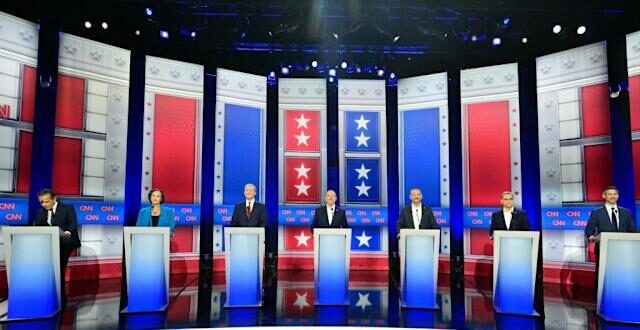
Seven candidates vying to succeed Gavin Newsom traded sharp attacks and policy clashes Tuesday night in a combative debate that underscored the unsettled nature of California’s governor’s race just weeks before the primary.
The two-hour forum at East Los Angeles College, broadcast on CNN, came as early voting began for the June 2 election. With no clear front-runner in the crowded field, candidates sought to distinguish themselves — often by targeting one another.
All are competing in California’s nonpartisan primary, where the top two vote-getters, regardless of party, advance to November.
Among the leading Democrats onstage were Xavier Becerra, Katie Porter, Antonio Villaraigosa, Matt Mahan and Tom Steyer. Republicans Steve Hilton and Chad Bianco focused their criticism largely on Democrats rather than each other.
Becerra under pressure
Becerra, who has recently climbed in the polls after Rep. Eric Swalwell exited the race, found himself a frequent target from both parties.
Rivals pressed him on a corruption case involving two former aides. One, Sean McCluskie, pleaded guilty to skimming funds from a campaign account, while another associate has denied wrongdoing. Becerra has not been accused of any crimes and denied any involvement.
“If I had been involved, the U.S. attorney would have had me in that indictment,” he said.
Candidates also criticized his tenure as U.S. health secretary, with Mahan arguing he failed to deliver results, while Steyer accused him of ties to oil interests. Becerra pushed back, highlighting Steyer’s past investments in fossil fuels.
Divisions over taxing the wealthy
Even among Democrats, differences emerged over a proposed billionaire tax expected to appear on the November ballot.
Porter called the measure flawed, arguing it would generate only one-time revenue and fail to address broader fiscal needs. Steyer said he would support the tax but acknowledged shortcomings, particularly its limited scope. Villaraigosa warned the state already relies too heavily on high-income taxpayers, contributing to budget volatility.
Porter confronts campaign setbacks
Porter, the only prominent woman in the race, sought to turn past controversies into a strength, emphasizing accountability and contrasting her demeanor with what she described as excessive infighting among her rivals.
“Californians can decide for themselves about my temperament,” she said, after stepping in to quiet a heated exchange among the candidates.
Her remarks followed scrutiny over past viral videos in which she clashed with a reporter and an aide — incidents she said she has addressed.
Personal attacks intensify
As the debate wore on, exchanges grew increasingly personal.
Villaraigosa called Bianco “a bully” and referenced his past association with the Oath Keepers, a far-right group. Bianco acknowledged his past membership but said he no longer belongs to the organization.
Villaraigosa also challenged Hilton over the 2020 election results, while Becerra jabbed at Steyer over foreign investments. The candidates repeatedly interrupted one another as they sought to land memorable lines.
Health care sparks policy clash
A discussion on single-payer health care exposed divisions among Democrats and put Becerra on the defensive.
Pressed on whether he would pursue a government-run system, Becerra emphasized expanding access through existing programs rather than offering a direct endorsement. Porter criticized that position, arguing it fell short of true single-payer coverage.
Villaraigosa and Mahan dismissed the debate as unrealistic, citing the high cost of implementing such a system in California.
The exchange echoed earlier statewide debates over health care policy, a recurring issue in California politics.