Poli Alert Politics & Civics
Related Articles



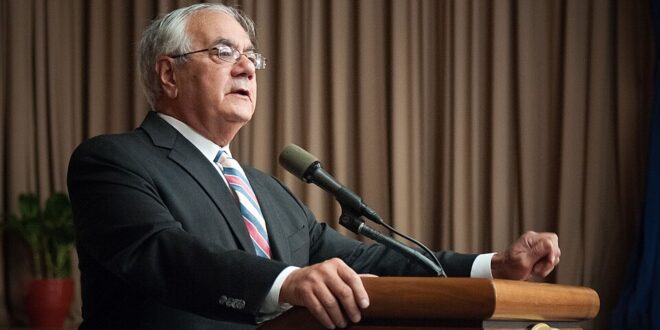
Barney Frank, the sharp-witted Massachusetts Democrat who became the first sitting member of Congress to publicly come out as gay and later helped craft one of the most sweeping financial reform laws in modern American history, has died at 86.
Frank’s longtime friend Jim Segel confirmed his death. The former congressman had entered hospice care earlier this year while battling congestive heart failure.
Over more than three decades in Congress, Frank built a reputation as one of Capitol Hill’s most intellectually formidable and outspoken lawmakers, championing LGBTQ+ rights, civil rights protections and aggressive financial regulation. His legislative legacy became permanently tied to the landmark 2010 Dodd-Frank Wall Street Reform and Consumer Protection Act, which reshaped federal oversight of the financial industry after the 2008 financial crisis.
Frank represented Massachusetts in the U.S. House from 1981 until 2013, serving as chairman of the House Financial Services Committee during the collapse of the housing market and the ensuing recession. Alongside former Sen. Christopher Dodd, Frank helped push through the Dodd-Frank law, which imposed stricter regulations on banks and created new consumer protections intended to prevent another economic meltdown.
Former President Barack Obama praised Frank upon his retirement, calling him a fierce advocate for equality and financial reform.
“This country has never had a congressman like Barney Frank,” Obama said at the time. “He has stood up for the rights of LGBT Americans and fought to end discrimination against them.”
First Sitting Member of Congress to Come Out
In 1987, Frank became the first sitting member of Congress to publicly disclose that he was gay, a groundbreaking moment in American politics during a period when LGBTQ+ visibility in public office remained rare.
“I don’t think my sex life is relevant to my job, but on the other hand, I don’t want to leave the impression that I’m embarrassed about my life,” Frank told reporters after publicly acknowledging his sexuality.
At the time, Frank had already served several terms in Congress and was emerging as a leading liberal voice in the Democratic caucus. He later described the emotional burden of remaining closeted while building a political career.
Frank’s decision to come out came amid growing national attention on LGBTQ+ issues and the AIDS crisis. His openness helped pave the way for future generations of openly LGBTQ+ elected officials.
In 2012, Frank again made history when he became the first sitting member of Congress to enter a same-sex marriage. He married longtime partner James Ready in a ceremony officiated by then-Massachusetts Gov. Deval Patrick.
From Bayonne to Capitol Hill
Born Barnett Frank in Bayonne, New Jersey, in 1940, Frank attended Harvard University and later worked for Boston Mayor Kevin White before entering elected office.
He served in the Massachusetts legislature from 1972 until his election to Congress in 1980 after longtime Rep. Robert Drinan stepped aside.
Frank quickly became known for his biting humor, rapid-fire debate style and impatience with political theatrics. Former President George W. Bush reportedly nicknamed him “saber tooth” because of his combative style during legislative battles.
During the Republican takeover of Congress in the 1990s, Frank emerged as one of Democrats’ most aggressive floor debaters, often dismantling opponents with sharp questioning and sarcasm.
Financial Crisis and Dodd-Frank
Frank’s most consequential legislative work came during the 2008 financial crisis. As chair of the House Financial Services Committee, he played a central role in negotiations surrounding the federal government’s response to the collapse of major financial institutions and the recession that followed.
The resulting Dodd-Frank Act overhauled banking regulations, established the Consumer Financial Protection Bureau and imposed new rules on Wall Street firms deemed “too big to fail.”
Supporters credited the law with strengthening consumer protections and stabilizing the financial system, while critics argued it imposed excessive regulations on banks and financial institutions.
Despite the controversy surrounding the legislation, the law became one of the defining domestic policy achievements of the Obama administration.
Scandal and Political Survival
Frank’s political career also weathered controversy.
In 1989, he faced intense scrutiny after revelations that he had employed Stephen Gobie, a male prostitute with whom he had previously been involved personally. Frank acknowledged errors in judgment and apologized publicly.
The House later voted to reprimand him but rejected efforts led by Republicans to formally censure him.
The scandal did not end Frank’s political career. Instead, he continued winning reelection comfortably and expanded his influence within the Democratic Party.
Retirement and Final Years
Frank announced in 2011 that he would not seek reelection after Massachusetts redrew congressional districts following the census. He cited exhaustion after decades in public office and little interest in campaigning in newly added areas of his district.
Following retirement, Frank remained active in public policy debates and occasionally criticized both political parties. In later years, he urged Democrats to distance themselves from slogans such as “defund the police” and “open borders,” warning the party risked alienating moderate voters.
Frank also briefly served on the board of Signature Bank, which collapsed in 2023 during a broader banking crisis.
In one of his final public interviews earlier this year, Frank acknowledged that his health was declining.
“At some point, my heart’s just going to give out,” he said. “So I’m taking it easy at home and dealing with it by relaxing.”
Frank is survived by his husband, James Ready.