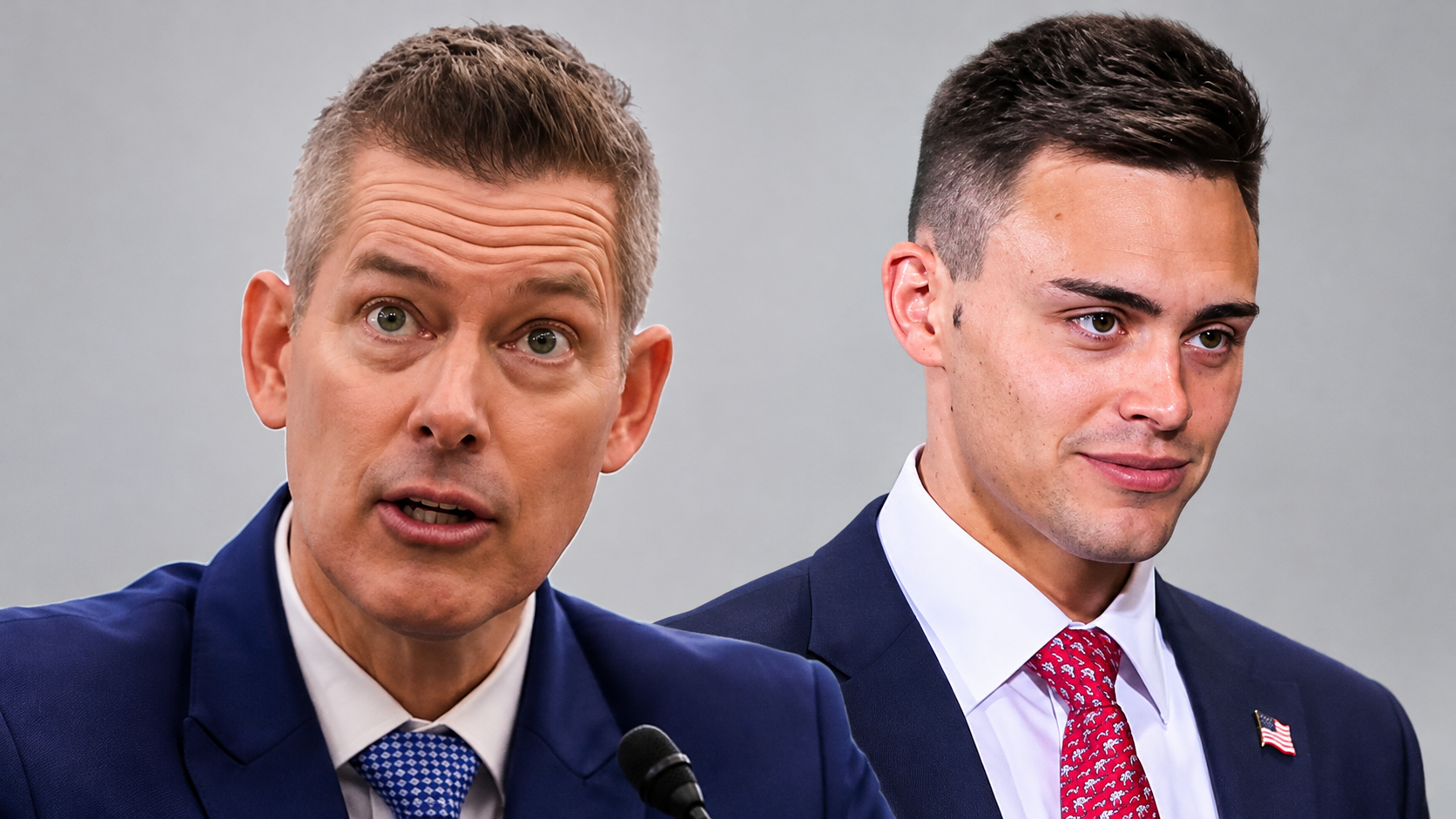
Air Space Intelligence, the company behind the Federal Aviation Administration’s new AI air traffic tool, gave money to the congressional campaign of Transportation Secretary Sean Duffy’s son in law. The donation came months before Duffy announced the company had won a federal contract worth up to $875.9 million. The connection is getting new attention after a nationwide ground stop kept planes on the ground across the country on Friday. That came just three days after the company’s system went live at every major air traffic control center in the country.
The son in law is Michael Alfonso, a 26 year old Republican who won Wisconsin’s 7th Congressional District on Nov. 3. Alfonso is married to Duffy’s eldest daughter, Evita. He won the same northern Wisconsin seat Duffy held before leaving Congress in 2019. Trump endorsed Alfonso, and when he is sworn in, he will be the youngest member of the House.
In March 2026, Air Space Intelligence’s corporate PAC gave $2,500 to Alfonso’s campaign, according to federal campaign finance filings first reported by The Bulwark. A corporate PAC is a political fund a company sets up so it can give money to candidates.
The political news that affects your wallet, your rights and your vote, broken down in plain language. Free in your inbox.
On June 22, Duffy announced that the Boston based company would build the FAA’s new AI powered traffic management system under a 12 year contract. The system is called SMART, short for Strategic Management of Airspace, Routes and Trajectories. It does not fly planes. It is an advisory tool that sends routing recommendations to human air traffic controllers, who decide whether to use them.
No evidence has surfaced that the donation influenced the contract, and the Transportation Department has not publicly addressed the overlap. Air Space Intelligence and Alfonso’s campaign did not respond to The Bulwark’s requests for comment.
Air Space Intelligence was not the only donor with business in front of Duffy’s department. The Bulwark found that at least 25 people who lobbied the Transportation Department during Duffy’s tenure gave Alfonso’s campaign a combined $41,750. Donors also included Delta Air Lines and Southwest Airlines, both regulated by the FAA, along with UPS and DHL, which answer to the department’s trucking safety regulators.
Duffy’s own money is also in the race. His old congressional campaign committee, which had sat unused since he left Congress, sent $1.5 million to Northwoods Future PAC, a super PAC backing Alfonso. A super PAC can raise and spend unlimited amounts to support a candidate as long as it does not coordinate directly with the candidate’s campaign.
The Air Space Intelligence system had been under scrutiny before Friday. In October, a group of House members wrote to Duffy and FAA Administrator Bryan Bedford, passing along concerns from air traffic controllers about the rollout. The letter said the frontline aviation safety workforce “had little to no input into SMART’s development.”
On Nov. 10, the FAA expanded SMART to all 22 of its Air Route Traffic Control Centers. Those are the facilities that guide planes at cruising altitude between airports.
Three days later, at 3:54 p.m. Eastern on Friday, Nov. 13, the FAA ordered a nationwide ground stop. That is an order keeping planes from taking off until the agency lifts it. The FAA cited “extraordinary circumstances and for reasons of safety.” The stop was lifted at 8:15 p.m. Thousands of flights were canceled, and Duffy said about 3,500 planes were already in the air when the order came down.
Duffy claims the new system played no part. “There’s no possible way SMART would have impacted what happened,” Duffy said, adding that SMART is not connected to the FAA’s core radar and flight tracking systems. He blamed aging equipment instead. “Our switches, our routers, actually got overloaded with data,” Duffy said.
Air Space Intelligence also denied involvement. In a post on its social media account, the company said the ground stop “is not based on or a result of the SMART system.”
Homeland Security Secretary Markwayne Mullin would not go that far. Asked whether SMART contributed to the outage, Mullin said, “You can’t rule out anything at this point,” and said investigators were “looking at that.” Mullin said there was no sign so far of a cyberattack. Former Transportation Department Inspector General Mary Schiavo said on CNN that she did not know whether the two were linked but called the timing “too much coincidence.”
As of Saturday, the official cause of the ground stop has not been confirmed. Nothing made public so far shows SMART caused it, and nothing has ruled it out.
For travelers, the stakes are plain. A government contractor whose software now touches routing for every major control center in the country gave money to the campaign of the transportation secretary’s son in law. Come January, Alfonso will vote on the budgets and oversight that shape how the FAA operates. Meanwhile, his father in law’s department decides which companies get paid to run the system that keeps planes in the air.