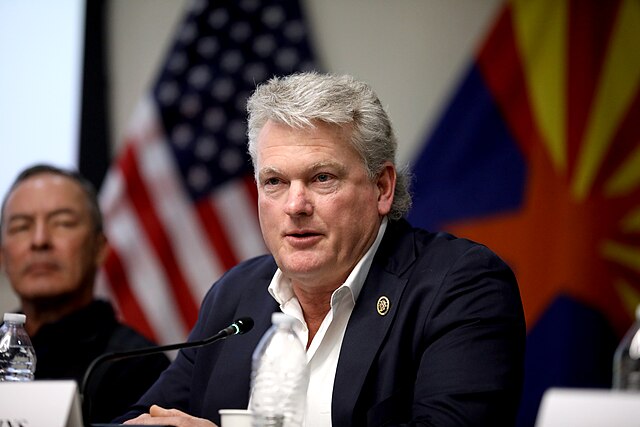
A House ethics investigation found that Republican Rep. Mike Collins’ congressional office improperly paid more than $10,000 in taxpayer funds to a woman romantically involved with his former chief of staff, violated federal law and failed to adequately oversee congressional spending.
The House Ethics Committee released its findings Monday, November 23, announcing that the Georgia Republican had agreed to return $2,880 to the U.S. Treasury to resolve the investigation.
According to the committee’s report, Collins’ office paid the woman $10,288.44 for 16 weeks of internship employment during 2023 and 2024. The Atlanta Journal-Constitution identified the woman as Caroline Craze, the then-girlfriend of former chief of staff Brandon Phillips.
The political news that affects your wallet, your rights and your vote, broken down in plain language. Free in your inbox.
Craze told investigators she was hired without submitting an application or participating in an interview. She also maintained a separate full-time job while receiving congressional compensation.
Investigators determined that Craze worked remotely for most of her internship and did not participate in the educational programming required under House internship rules. The committee also concluded that her compensation exceeded what was appropriate for the duties she performed.
The committee acknowledged that Craze performed legitimate work, including developing social media content for Collins’ office.
Investigators also discovered that Craze provided approximately 18 months of unpaid communications services outside her paid internship periods. The arrangement violated federal restrictions on accepting unauthorized volunteer services for official government business.
The House ethics investigation found no evidence that Collins was directly involved in hiring Craze but concluded that he failed to adequately supervise Phillips.
Collins disputed the committee’s determination that Craze had been overpaid. His attorneys argued that her compensation fell within congressional pay limits and that she provided valuable services to his office.
Investigators separately examined potentially improper travel reimbursements Phillips received through the Members’ Representational Allowance, the taxpayer-funded account lawmakers use to cover official congressional expenses.
Although the committee identified questionable expenditures, it could not conclusively establish that the funds had been misused and did not require Collins to reimburse those expenses.
Phillips, however, could face additional consequences.
In a separate report released Monday, the Ethics Committee recommended that the full House hold Phillips in contempt of Congress for refusing to comply with a subpoena requiring his testimony.
Investigators said Phillips stopped communicating with the committee, attempted to evade service of the subpoena and failed to appear for questioning.
The ethics complaint followed Collins throughout his unsuccessful campaign to unseat Democratic Georgia Sen. Jon Ossoff. Collins repeatedly dismissed the allegations and denied wrongdoing.
The findings underscore the responsibility members of Congress have to ensure taxpayer-funded salaries, travel reimbursements and other office expenditures comply with federal law and congressional regulations, even when those decisions are delegated to senior staff.
The committee has closed its investigation into Collins following the repayment agreement. Its contempt recommendation against Phillips remains subject to action by the full House.