Poli Alert Politics & Civics
Related Articles


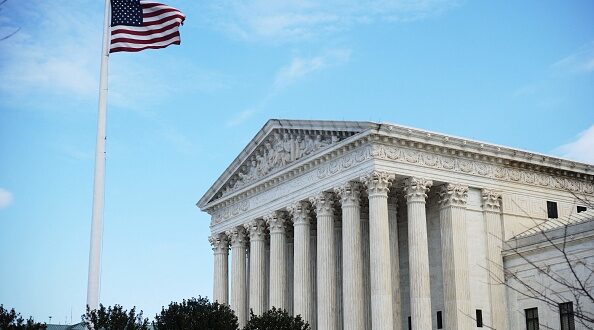
The U.S. Supreme Court on Tuesday reaffirmed the constitutional guarantee of birthright citizenship, striking down President Donald Trump’s executive order that sought to deny automatic U.S. citizenship to children born in the United States to undocumented immigrants and certain temporary visa holders.
In a 5-4 decision on constitutional grounds, the court ruled that the 14th Amendment protects the long-established principle that nearly every child born on American soil is a U.S. citizen. A separate 6-3 majority also concluded the executive order violated federal law.
The ruling represents one of the most significant judicial setbacks for Trump’s second-term agenda, blocking an effort that would have fundamentally altered the nation’s citizenship laws for the first time in more than 150 years.
Chief Justice John Roberts authored the majority opinion, joined by Justice Amy Coney Barrett and the court’s three liberal justices. Justice Brett Kavanaugh disagreed that the Constitution itself resolved the issue but agreed the executive order conflicted with federal statute, providing the decisive sixth vote to invalidate the policy.
“Citizenship, then and now, was the right to have rights — to freely participate in our political community,” Roberts wrote. “The Framers of the Fourteenth Amendment extended that promise to ‘every free-born person in this land.’ We keep that promise today.”
The decision preserves the legal framework established by the Supreme Court’s landmark 1898 ruling in United States v. Wong Kim Ark, which held that children born in the United States are citizens regardless of their parents’ immigration status, except for limited exceptions such as children of foreign diplomats.
Executive Order Sought Major Shift in Citizenship Policy
Trump signed the executive order on his first day back in office, directing federal agencies to deny citizenship documents to children born after Feb. 19, 2025, if their parents were in the country illegally or were present under temporary visas for work, study, tourism or humanitarian protection.
Administration officials argued that the Citizenship Clause of the 14th Amendment applies only to individuals who owe complete political allegiance to the United States. During oral arguments, Solicitor General D. John Sauer contended that unrestricted birthright citizenship encourages illegal immigration and so-called “birth tourism.”
“We’re in a new world now … where 8 billion people are one plane ride away from having a child who’s a U.S. citizen,” Sauer told the justices.
Immigrant rights organizations countered that the administration’s interpretation contradicted the Constitution’s text, Supreme Court precedent and more than a century of federal practice.
Lawyers for the American Civil Liberties Union argued that the phrase “subject to the jurisdiction thereof” has historically applied only to narrow exceptions, including children born to foreign diplomats.
Conservative Court Divides
The ruling produced an unusual ideological split.
Justices Clarence Thomas, Samuel Alito and Neil Gorsuch dissented, arguing the court improperly expanded the scope of the 14th Amendment.
Thomas wrote that the amendment, originally adopted after the Civil War to secure equal rights for formerly enslaved Americans, has since been “repurposed for political projects that the Reconstruction Congress did not support.”
Although Kavanaugh rejected the majority’s constitutional reasoning, he agreed that Trump’s executive order violated existing federal law governing citizenship.
The ruling follows another major Supreme Court defeat for Trump earlier this year, when the justices struck down key elements of his tariff policy.
Broad National Impact
Legal experts said Trump’s proposal would have transformed U.S. immigration and citizenship policy.
According to estimates submitted to the court, roughly 250,000 children each year would have been denied automatic citizenship under the executive order. Over two decades, that number could have exceeded 5 million.
Scholars warned the policy risked creating a permanent class of people born in the United States without citizenship, with many potentially becoming stateless if they were unable to obtain citizenship through their parents’ countries of origin.
The United States remains one of about three dozen countries that grant citizenship based primarily on birth within national territory, a principle known as jus soli. Most nations instead base citizenship primarily on the nationality or legal status of a child’s parents.
The decision ensures that longstanding constitutional protections remain in place and prevents one of the most sweeping proposed changes to American citizenship law in modern history.