Poli Alert Politics & Civics
Related Articles


The Trump administration was preparing Friday for a possible new round of military strikes against Iran, according to sources familiar with the planning, as tensions escalated despite ongoing diplomatic talks aimed at preventing a broader regional war.
No final decision on military action had been made as of Friday afternoon, officials said, but defense and intelligence agencies were actively preparing contingency plans in case President Donald Trump authorizes renewed attacks.
The developments prompted changes to the president’s Memorial Day weekend schedule. Trump announced on social media that “circumstances pertaining to Government” would prevent him from attending his son Donald Trump Jr.’s wedding this weekend. The president had originally planned to spend the holiday weekend at his golf club in New Jersey, but will instead return to the White House.
Multiple sources said some U.S. military and intelligence personnel canceled Memorial Day leave in anticipation of possible strikes.
Defense officials have also begun updating recall rosters at overseas military installations while rotating some troops out of the Middle East amid concerns over potential Iranian retaliation against American forces and allies in the region.
The preparations come after weeks of fragile calm following an early April ceasefire between the U.S. and Iran that temporarily paused direct military exchanges and opened the door to indirect negotiations.
White House spokeswoman Anna Kelly said Friday that Trump’s position remained unchanged.
“The President has made his redlines abundantly clear: Iran can never possess a nuclear weapon, and they cannot keep their enriched uranium,” Kelly said in a statement.
“The President always maintains all options at all times, and it is the job of the Pentagon to be ready to execute any decision the Commander-in-Chief could make,” she added.
The White House has framed the military preparations as leverage intended to pressure Tehran into accepting a final diplomatic agreement.
According to sources familiar with the negotiations, the latest U.S. proposal was delivered to Iran on Wednesday along with a warning that rejecting what officials described as a “final offer” could trigger renewed military operations.
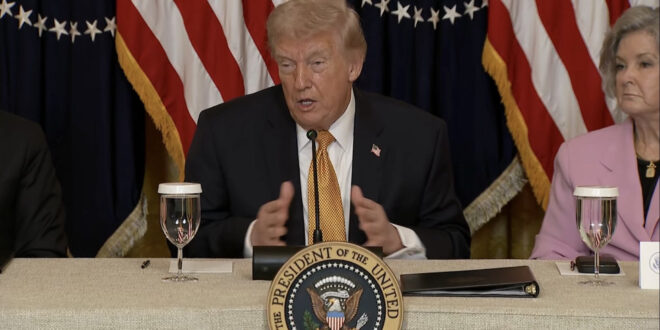
“Iran is dying to make a deal,” Trump told reporters Friday. “We’ll see what happens.”
Trump said earlier this week that he planned to give Tehran “a couple of days” to respond to the proposal, adding that administration officials were “pretty impressed” with Iranian negotiators while still seeking guarantees strong enough to prevent future conflict.
A response from Tehran is expected soon through Pakistan, which has been serving as a key intermediary between the two governments.
Before departing for India on Friday, Secretary of State Marco Rubio said the administration still preferred diplomacy over military escalation.
Rubio said progress had been made during talks but acknowledged major disagreements remain unresolved.
He also revealed discussions with NATO allies in Sweden about potential military plans to reopen the Strait of Hormuz if Iran refuses to allow safe passage through the critical shipping route.
Rubio referred to those contingency discussions as “Plan B.”
The Strait of Hormuz remains one of the world’s most strategically important oil transit routes, and fears of disruption have rattled global energy markets for months.
Iran’s Islamic Revolutionary Guard Corps warned Wednesday that any new strikes by the United States or Israel could dramatically widen the conflict.
In a statement, the IRGC threatened “crushing blows … in places you cannot even imagine” if military attacks resume.
Meanwhile, political tensions are also rising in Washington over Trump’s authority to continue military operations without congressional approval.
House Republicans on Thursday abandoned plans to hold a vote on legislation that would have limited the president’s war powers against Iran after concluding they lacked sufficient votes to stop the measure from advancing.
The debate follows growing unease among some lawmakers in both parties over the risk of a prolonged regional conflict and the lack of a formal congressional authorization for war.