Poli Alert Politics & Civics
Related Articles


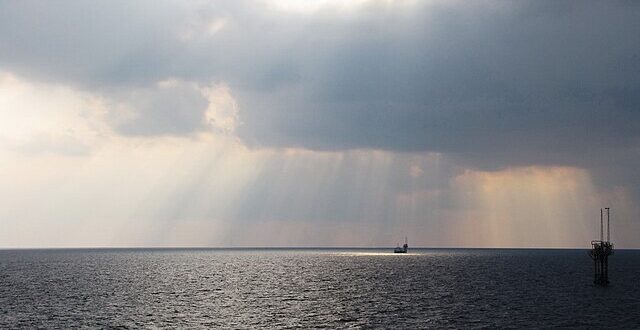
President Donald Trump said Sunday that the United States will begin guiding commercial vessels through the Strait of Hormuz, announcing a new operation aimed at easing a maritime bottleneck caused by the ongoing conflict with Iran.
Trump said the effort, which he named “Project Freedom,” will begin Monday and is intended to help countries not directly involved in the conflict move ships safely through the critical shipping corridor.
“For the good of Iran, the Middle East, and the United States, we have told these Countries that we will guide their Ships safely out of these restricted Waterways,” Trump wrote on Truth Social.
The move comes as global shipping has been severely disrupted by Iran’s blockade of the strait, one of the world’s most important energy transit routes. Since the conflict began, Iran has largely restricted passage to its own vessels, while the U.S. has enforced a counter-blockade since April.
Trump framed the escort mission as a humanitarian effort, saying it would help “people, companies, and Countries that have done absolutely nothing wrong.”
At the same time, he warned that any interference with U.S. operations would be met with force. “If it’s interrupted, it will have to be dealt with forcefully,” he said.
Oil prices dipped following the announcement, with crude falling roughly 2% as markets responded to the possibility of improved shipping access through the region.
Still, analysts remain cautious, noting that continued instability around the strait could keep energy prices elevated even if limited passage resumes.
Trump’s announcement came hours after a cargo vessel near the strait was attacked by multiple small craft, according to the British military, underscoring the ongoing risks to commercial shipping.
The International Maritime Organization has previously condemned attacks on commercial vessels in the region, calling for the immediate release of seized ships and protection of civilian mariners.
The maritime operation unfolds against the backdrop of a fragile ceasefire between Washington and Tehran. While active fighting has paused, the prospects for a long-term agreement remain unclear.
Trump said negotiations with Iran are ongoing and “could lead to something very positive,” but he has also expressed skepticism about a recent proposal from Tehran to end the war.
He reiterated over the weekend that the U.S. could resume military strikes if talks fail, signaling that the conflict remains unresolved.
The administration’s actions have also drawn scrutiny in Washington, where lawmakers are pressing Trump to seek congressional authorization for continued military involvement as the conflict passes the 60-day mark outlined in the War Powers Resolution.
Trump has argued that such approval is unnecessary given the current ceasefire, a position disputed by some members of Congress.
For now, the success of “Project Freedom” — and the stability of global shipping lanes — will depend on whether the ceasefire holds and whether tensions in the region escalate again.
With negotiations ongoing and military options still on the table, officials say the situation in and around the Strait of Hormuz remains highly volatile.