Poli Alert Politics & Civics
Related Articles

The U.S. military campaign against Iran may have already cost roughly $50 billion, according to U.S. officials familiar with internal assessments, a figure that significantly exceeds the Pentagon’s public estimate and underscores the growing financial burden of the conflict.
The higher estimate — about double the $25 billion cited by Pentagon officials in congressional testimony this week — reflects costs not fully captured in official figures, including destroyed equipment, infrastructure damage and long-term replenishment needs.
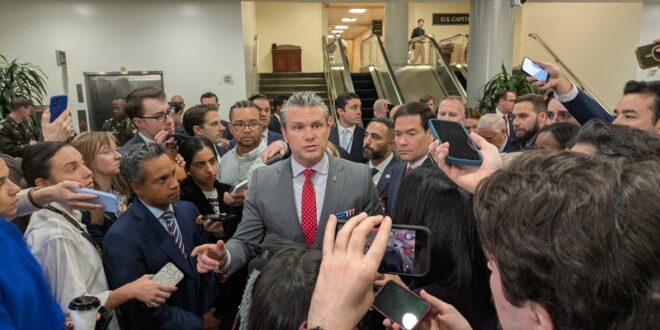
During hearings on Capitol Hill, Pentagon officials, including Defense Secretary Pete Hegseth and Joint Chiefs Chairman Dan Caine, defended the department’s broader $1.5 trillion budget request while discussing the ongoing campaign known as Operation Epic Fury.
Acting Pentagon comptroller Jules Hurst told lawmakers the war has cost about $25 billion so far, primarily driven by munitions spending. But officials speaking privately said that figure does not account for key categories of loss.
Among them: the destruction of at least 24 MQ-9 Reaper drones — sophisticated unmanned aircraft that can cost more than $30 million each — highlighting how quickly battlefield losses can escalate overall costs.
The discrepancy between public and internal estimates has drawn scrutiny from lawmakers, particularly Democrats who have questioned whether the administration is fully accounting for the war’s financial impact.
Sen. Chris Coons said he was “certain” the $25 billion figure was too low, pointing to the cost of sustaining forces in the region over two months of operations.
Sen. Richard Blumenthal pressed Pentagon officials on what was included in the estimate, particularly regarding military construction and base damage. Hurst acknowledged uncertainty, saying future costs depend on how U.S. force posture evolves.
Defense officials have emphasized that the publicly cited figure represents only a partial accounting, with additional costs still being assessed.
When asked about the economic impact on Americans, Rep. Ro Khanna pressed Hegseth on rising fuel and food prices tied to the conflict. Hegseth did not provide a direct estimate, instead responding, “What is the cost of an Iranian nuclear bomb?”
Experts say the true cost of modern warfare extends well beyond immediate battlefield expenses. Center for Strategic and International Studies defense analyst Mark Cancian noted that fuel consumption, logistics, and equipment replacement all contribute to the long-term price tag.
Replenishing munitions alone could take years, he said, particularly as pre-war stockpiles were already considered insufficient.
The economic ripple effects are also being felt domestically. The American Enterprise Institute estimates that higher fuel and fertilizer costs tied to the conflict could add roughly $150 per month to household expenses.
The Pentagon is expected to submit a supplemental funding request to Congress in the coming months as it refines its estimate of the war’s total cost.
Lawmakers are likely to intensify oversight of the administration’s accounting, particularly as the conflict continues without a clear long-term resolution and pressures mount on both the federal budget and American consumers.