

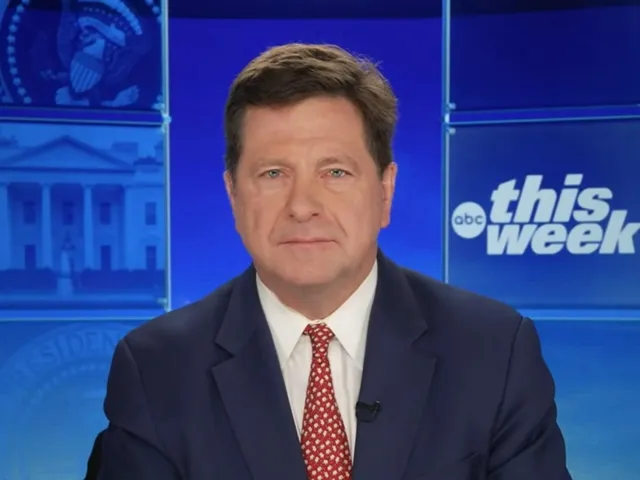
Director of National Intelligence Jay Clayton refused to acknowledge that the U.S. Capitol was attacked on January 6, 2021, during a Sunday interview with ABC News, despite extensive evidence documenting the violence that unfolded as Congress met to certify Joe Biden’s presidential election victory.
During an appearance on ABC’s “This Week” on November 22, Clayton was pressed by host Jonathan Karl about whether the events of January 6 constituted an attack on the Capitol.
“I’m not going to relitigate that issue here,” Clayton responded.
The political news that affects your wallet, your rights and your vote, broken down in plain language. Free in your inbox.
When Karl continued questioning him, Clayton acknowledged that violence had occurred but declined to characterize the events as an attack.
“You can call it what you want,” Clayton said.
The exchange raised questions about the willingness of senior Trump administration officials to acknowledge the documented events of January 6, when a mob of Donald Trump’s supporters breached the Capitol, assaulted law enforcement officers and forced lawmakers to suspend proceedings certifying the 2020 presidential election.
The January 6 Capitol attack has been documented through congressional investigations, criminal prosecutions, police testimony and extensive video footage. Rioters broke through security barriers, entered restricted areas of the building and clashed with officers attempting to protect lawmakers and congressional staff.
Approximately 140 officers from the U.S. Capitol Police and Metropolitan Police Department were assaulted during the violence, according to federal authorities.
The attack interrupted a constitutionally required proceeding in which Congress formally counts electoral votes. Lawmakers were evacuated or instructed to shelter as rioters entered the building.
Congress eventually reconvened and certified Biden’s victory in the early morning hours of January 7.
Clayton’s refusal to use the word “attack” comes as other Trump administration nominees have faced similar questions about January 6.
During a Senate confirmation hearing on November 19, Michael LoSapio, Trump’s nominee to lead the Cybersecurity and Infrastructure Security Agency, said he did not believe January 6 was an attack.
The agency, commonly known as CISA, is responsible for helping protect federal networks, critical infrastructure and election systems from cyber and physical threats.
LoSapio’s remarks drew attention because the agency he was nominated to lead works with state and local officials to protect election infrastructure, making the government’s recognition of threats to democratic institutions particularly relevant to the position.
Clayton occupies an even broader national security role. As director of national intelligence, he oversees coordination across the federal intelligence community and serves as a principal intelligence adviser to the White House.
The position requires assessing threats to national security and providing intelligence to senior government officials.
Clayton’s comments did not dispute that violence occurred on January 6. Instead, he declined to adopt the description of the events as an attack, even when questioned directly.
That refusal contrasts with the findings of the bipartisan Senate investigation into security failures at the Capitol and the House select committee investigation, which examined the events leading up to and during the violence.
Federal prosecutors also brought criminal charges against more than 1,500 defendants in connection with January 6, including cases involving assaults on police officers, destruction of property and obstruction of congressional proceedings.
Trump, who has repeatedly sought to recast the events of January 6, issued sweeping pardons and commutations for people convicted or charged in connection with the Capitol riot after returning to office in January 2025.
Those actions did not erase the documented events or change the historical record of what occurred inside the Capitol.
Clayton’s remarks also come as the administration continues placing nominees before Congress for positions involving national security, law enforcement and government oversight.
Senators have used confirmation hearings to question nominees about the 2020 election and January 6, including whether they recognize Biden’s victory and the violence directed at Congress.
Clayton’s refusal to describe January 6 as an attack leaves unanswered why the nation’s top intelligence official would not use that characterization for an event that disrupted the constitutional transfer of presidential power.