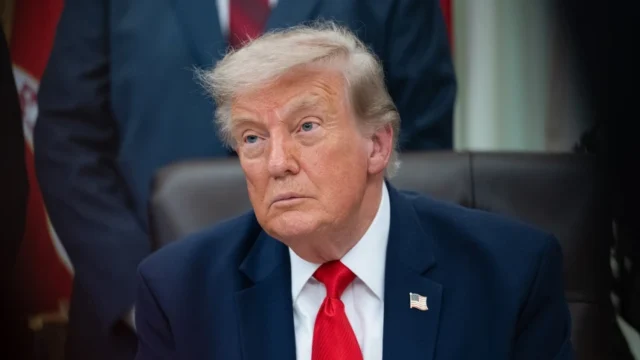
Donald Trump has renewed his support for a 10 percent credit card interest rate cap, saying he is willing to work with Democrats in the incoming Congress to lower borrowing costs for millions of Americans.
During a Saturday interview with Fox News, Trump expressed support for limiting how much credit card companies can charge consumers in interest.
“I would do it. These credit card companies have made a lot,” Trump said.
The political news that affects your wallet, your rights and your vote, broken down in plain language. Free in your inbox.
The comments revive a proposal Trump promoted during his 2024 presidential campaign and again in January 2026. Despite his previous calls for action, Congress has not enacted a nationwide 10 percent limit.
The proposal could provide substantial savings for Americans carrying credit card balances, particularly households that rely on credit cards to cover everyday expenses.
Under current federal law, there is no general nationwide interest rate ceiling of 10 percent for credit cards. Many lenders charge annual percentage rates above 20 percent, making it expensive for borrowers to pay down outstanding balances.
A 10 percent cap would substantially change how credit card companies calculate interest charges, although its actual impact would depend on how Congress structures the legislation.
According to The Associated Press, the median credit card interest rate was approximately 22.2 percent in an August survey by the Federal Reserve Bank of New York. That is more than twice the rate Trump is proposing.
For example, a consumer carrying a $5,000 balance at a 22 percent annual interest rate would accumulate approximately $92 in interest over one month, assuming the balance remained unchanged. At 10 percent, that amount would fall to about $42.
The savings could be particularly significant for borrowers who make regular payments but struggle to reduce their balances because of accumulating interest.
Researchers who examined Trump’s original proposal estimated that a nationwide 10 percent cap could save American consumers approximately $100 billion annually in interest payments, according to the AP. Their analysis also suggested that credit card companies could remain profitable under the restriction, although some customer benefits might be reduced.
The proposal comes as Americans continue carrying historically high levels of credit card debt.
Figures from the Federal Reserve Bank of New York show that outstanding credit card balances reached approximately $1.23 trillion in the third quarter of 2025. Separately, the Consumer Financial Protection Bureau reported that approximately 195 million Americans held credit cards in 2024 and were charged a combined $160 billion in interest.
Trump’s latest comments also create an opportunity for cooperation with Democrats, who will control both chambers of Congress beginning in January.
Sen. Elizabeth Warren, D-Mass., who is expected to lead the Senate Banking Committee, has repeatedly advocated restrictions on credit card interest rates.
Responding to Trump’s remarks Saturday, Warren said, “Let’s cap credit card interest rates and save Americans money.”
Warren has previously indicated that she would be willing to work with Trump on the issue. Rep. Maxine Waters, D-Calif., a senior member of the House Financial Services Committee, has also supported efforts to limit credit card borrowing costs.
The proposal has attracted some Republican support as well.
Sen. Josh Hawley, R-Mo., has introduced legislation seeking to restrict credit card interest rates and previously called for Congress to pass a bipartisan measure providing relief to borrowers.
However, support from lawmakers in both parties does not guarantee that legislation will advance.
Banks and credit card companies have strongly opposed mandatory interest rate caps, arguing that restricting the amount lenders can charge would make it more difficult to extend credit to borrowers considered financially risky.
Financial institutions have warned that a 10 percent ceiling could lead to lower credit limits, canceled accounts, stricter lending requirements and reductions in rewards programs.
Those concerns are especially relevant for consumers with limited credit histories or lower credit scores, who often face higher borrowing costs.
Whether those consequences would occur on the scale predicted by the banking industry remains disputed. Research cited by the AP suggests lenders could continue operating profitably under a 10 percent cap, although the effects would vary across borrowers and credit card products.
Trump previously sought a temporary, one-year limit, rather than a permanent restriction. During his latest interview, Fox News host Kayleigh McEnany specifically asked about a one-year cap.
The administration has not announced a new legislative agreement, a timetable for implementation or detailed rules governing which credit card accounts would qualify.
Congress would also need to determine whether the cap would apply to existing balances, newly issued credit cards or both.
For consumers, the immediate situation remains unchanged. Credit card companies can continue charging interest under existing laws and account agreements because Trump’s remarks do not establish a new legal limit.
The next major development will come when Democrats take control of Congress in January and lawmakers determine whether to advance legislation.
Any measure approved by the House and Senate would still require Trump’s signature to become federal law.
For now, Trump’s announcement signals renewed interest in a proposal that could affect millions of borrowers, but its future depends on whether Democrats, Republicans and the administration can agree on legislation despite opposition from the banking industry.