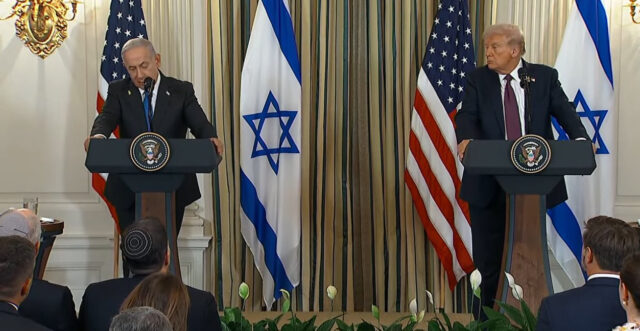
Donald Trump is weighing new military strikes on Iran as Israeli officials push for another major attack, raising the possibility of renewed fighting in the Middle East following months of conflict between the United States, Israel and Iran.
The potential military operation comes as U.S. officials assess intelligence about Iran’s efforts to rebuild its military capabilities. However, disagreements within the Trump administration over the intelligence and the risks of further escalation have complicated discussions about whether to authorize another round of attacks.
According to reporting by The New York Times on Thursday, November 19, Israeli officials have urged the United States to support a renewed air campaign against Iran. Trump has not made a final decision, and no new military operation has been publicly authorized.
The political news that affects your wallet, your rights and your vote, broken down in plain language. Free in your inbox.
Israeli Prime Minister Benjamin Netanyahu is reportedly seeking a military campaign lasting between four and seven days, aimed at further weakening Iran’s ability to threaten Israel and its regional interests.
The discussions come amid questions about whether previous military operations achieved their intended objectives and whether additional strikes would significantly reduce Iran’s military capabilities.
U.S. and Israeli officials are particularly concerned about reports that Iran is rebuilding portions of its missile and drone programs, which have been central to its military strategy and its ability to retaliate against regional adversaries.
The administration is also reviewing intelligence suggesting Iran could be pursuing chemical or biological weapons capabilities. However, those assessments remain disputed, and the publicly available information does not establish that Iran has developed or deployed such weapons.
Those unresolved intelligence questions could become central to any decision to launch another military campaign.
A renewed attack could also prompt retaliation against American military personnel, U.S. installations and regional allies. Iran has previously demonstrated its ability to respond to military strikes through missile and drone attacks, creating concerns that another confrontation could expand beyond its initial targets.
The possibility of additional military action also raises questions about Trump’s authority to launch strikes without congressional approval.
Under the Constitution, Congress has the power to declare war, while the president serves as commander in chief of the armed forces. Presidents have historically ordered limited military operations without formal declarations of war, but the scope and duration of those operations have frequently generated disputes over executive authority.
The War Powers Resolution of 1973 requires the president to notify Congress within 48 hours of introducing U.S. forces into hostilities under covered circumstances. It generally requires military operations to end within 60 days, with an additional 30-day withdrawal period, unless Congress authorizes continued involvement or another statutory exception applies.
Any extended military campaign against Iran could renew congressional debate over whether Trump needs explicit authorization before expanding American involvement in the conflict.
The financial consequences could also reach beyond the battlefield. Additional fighting involving Iran could disrupt commercial shipping and energy markets, particularly around the Strait of Hormuz, a major passageway for global oil shipments.
Disruptions to that route could affect international oil prices and potentially increase gasoline and transportation costs for American consumers.
For now, the central question is whether Trump will authorize another military operation or pursue alternatives intended to prevent further escalation.
The White House has not publicly announced a final decision on new strikes, and the timing, targets and scope of any potential operation remain uncertain.