 Poli Alert Politics & Civics
Related Articles



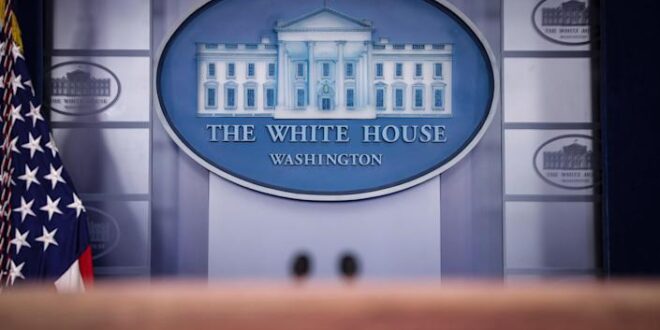
The White House press pool has become the center of a growing legal and constitutional dispute between President Donald Trump and news organizations after CNN, MS NOW and Politico were barred from the White House and the television pool suspended coverage of the president.
The three news organizations sued the Trump administration Monday, arguing that the government violated their First Amendment protections by revoking their access because of their reporting. They also argue that the sudden loss of their credentials violated due-process protections under the Fifth Amendment.
The lawsuit came after Trump announced Friday that he was banning the three outlets from the White House, accusing them of publishing “FAKE NEWS.” Reporters for the organizations were denied entry Saturday, and their White House credentials were disabled.
The administration has defended the decision, saying White House press access is a privilege rather than a right. The legal dispute now puts the government’s authority to control access to presidential events against constitutional protections for freedom of the press.
Television Pool Suspends Coverage
The dispute escalated Monday when CNN was scheduled to serve as the television pool outlet covering Trump’s events.
The television pool, which includes five major broadcasters, said it would suspend network pool coverage rather than replace CNN after the White House prevented the network from carrying out its assigned duties.
The pool exists because space and security restrictions prevent every journalist from traveling with the president or attending every event. A small group of reporters and camera crews rotates coverage and shares material with the broader White House press corps.
CNN was also scheduled to travel with Trump to New York for the United Nations General Assembly. The White House’s scheduling information did not include the network, prompting the pool to say it would not assign a replacement.
The decision effectively left television networks without their normal pooled coverage of the president’s activities.
The dispute was particularly visible Monday when Trump inaugurated a new White House helipad. Major television networks did not provide their usual pool coverage as the standoff over CNN’s exclusion continued.
Why the Press Pool Matters
The White House press pool is designed to provide shared access to the president when physical space is limited.
Pool reporters can accompany the president to locations including the Oval Office, Air Force One, presidential motorcades and other events. They provide written reports, photographs, video and audio that can be distributed to news organizations that cannot be physically present.
The arrangement has historically been administered by journalists through the White House Correspondents’ Association, although the Trump administration changed the process last year and asserted greater control over which journalists receive access.
The current dispute therefore goes beyond the three organizations that were banned.
The central legal question is whether the government may exclude journalists from limited presidential access because officials object to the content or viewpoint of their reporting.
CNN, MS NOW and Politico contend that the government cannot use press credentials to retaliate against news organizations for their coverage. The White House argues that access to the president is not an unconditional right.
First Amendment Questions
The First Amendment prohibits the government from abridging freedom of speech or of the press. Courts have also considered whether government officials may impose restrictions on access to government-controlled spaces when those restrictions are based on viewpoint or retaliation.
The outlets’ lawsuit argues that the Trump administration crossed that line by revoking their access after Trump criticized their reporting. Legal experts cited by Reuters said government officials can impose reasonable restrictions on press access but face constitutional problems if access is denied because officials disagree with a news organization’s viewpoint.
The administration has argued that the outlets can continue reporting on Trump from outside the White House and that journalists have no guaranteed right to question the president in person.
A federal judge is expected to consider the news organizations’ request for emergency relief. The case could determine whether the administration can continue enforcing the ban while the broader lawsuit proceeds.
A Broader Fight Over Presidential Press Access
The dispute is the latest in a series of conflicts between the Trump administration and news organizations over access to government officials.
The Associated Press previously sued after the administration restricted its access to the Oval Office, Air Force One and other presidential events following the AP’s decision not to adopt Trump’s preferred name for the Gulf of Mexico. A federal appeals court later ruled that the administration could not broadly exclude the AP from White House access because of its editorial decision.
The current case involves a different set of facts but raises a similar question: how much discretion does a president have to determine which journalists can receive limited physical access to the White House?
For the press organizations involved, the issue is not simply whether they can continue reporting from outside the White House. Their lawsuit argues that government-controlled access cannot be conditioned on producing coverage acceptable to the president.
For the administration, the case centers on its authority to determine who receives access to presidential events and facilities.
The dispute now moves to federal court, where judges will determine whether the administration’s actions crossed constitutional limits.

